
Have you ever wondered about those beautiful gems and minerals you see in rock shops? The magic of crystal formation happens deep within Earth’s crust, where heat and pressure work together to create these stunning natural wonders.
Natural crystals form when liquid rock cools down slowly and minerals group together in organized patterns. You can find amazing examples of this process in places like the Cave of Crystals in Mexico, where giant selenite crystals grew to be over 30 feet long.
Your favorite crystals might have taken thousands of years to form through different methods. Some grew when hot mineral-rich liquids cooled down gradually, while others formed when solutions dried up and left minerals behind. This slow process creates the perfect conditions for crystals to develop their unique shapes and colors that make them so special.
The Basics of Crystals
Crystals form when atoms or molecules line up in regular, repeating patterns to create solid materials with specific shapes and structures.
If you want a closer look at that process, see how a crystal forms.
Defining Crystals and Their Unique Characteristics
A crystal is a special type of solid material where atoms arrange themselves in neat, orderly patterns. You can spot a crystal by its flat surfaces and sharp edges, which form naturally due to this internal arrangement.
When you look at most crystalline solids, like table salt or quartz, you’ll notice they have smooth, flat faces that meet at specific angles. These faces show you what’s happening inside at the atomic level.
Not all solids are crystals. Some materials, called amorphous solids like glass or plastic, don’t have this organized internal structure. Their atoms are arranged randomly instead of in patterns.
The patterns in crystals repeat in three dimensions, like building blocks stacked together. These patterns give crystals their special properties, including their:
- Regular geometric shapes
- Flat, smooth surfaces
- Specific melting points
- Ability to split along certain planes
Crystal Systems and Structures
Crystals form in specific patterns based on their atomic arrangements and symmetry elements. These patterns create unique shapes and structures that help scientists classify and study different minerals.
Understanding Crystal Lattice and Systems
Crystal lattices are the building blocks of crystal formation. You can picture them as 3D grids where atoms or molecules connect in repeating patterns. These patterns form seven main crystal systems: cubic, tetragonal, orthorhombic, hexagonal, trigonal, monoclinic, and triclinic.
The cubic system has equal length axes that meet at right angles, like a sugar cube. You’ll find this in table salt and diamonds.
Hexagonal crystals form six-sided shapes, like snowflakes. Water ice often forms in this system.
Orthorhombic crystals have three different length axes at right angles. You can see this structure in sulfur and topaz.
The Role of Symmetry in Crystals
Symmetry plays a key role in how crystals look and grow. Think of it as nature’s way of creating mirror images within the crystal.
There are 219 crystallographic space groups that describe all possible crystal symmetries. These groups help you identify and classify crystals based on their internal structure.
Different crystal systems show different types of symmetry:
- Cubic crystals have 4 three-fold axes
- Monoclinic crystals have one axis at an angle
- Triclinic crystals show the least symmetry
Your ability to identify crystal symmetry helps predict how the crystal will grow and what properties it might have.
Formation of Crystals
Crystals form when atoms and molecules come together in organized patterns. The process requires specific conditions like temperature, pressure, and time to create these beautiful geometric structures.
The Crystallization Process
When you dissolve a substance like salt in water, the molecules spread out evenly. As the water evaporates, these molecules start to bump into each other more often. They begin to stick together in a process called nucleation.
The first tiny crystal acts like a seed. More molecules attach to it in regular patterns, building larger and larger structures. Each type of crystal has its own special shape based on how its atoms connect.
Factors Influencing Crystal Growth
Temperature plays a big role in how fast crystals grow. Warmer solutions usually make crystals form more quickly, while cooler temperatures can create larger crystals.
The amount of dissolved material matters too. A more concentrated solution helps crystals grow bigger and faster.
Space and time are important factors. Crystals need room to grow without being disturbed. Some crystals form in minutes, while others take years to reach their full size.
Key Growth Factors:
- Temperature
- Concentration
- Space
- Time
- Purity of solution
- Stability of environment
Types and Varieties of Crystals
Crystals form in seven basic systems that create their unique shapes and structures. Each crystal type has specific properties based on its chemical makeup and how its atoms connect.
Distinctive Categories of Crystals
The cubic crystal system creates perfect cube-shaped crystals like pyrite and salt. Hexagonal crystals, such as quartz and beryl, have six-sided shapes.
You’ll find tetragonal crystals forming in four-sided columns, while orthorhombic ones take rectangular shapes.
Some crystals form through heat and pressure deep underground, while others grow slowly in water-filled cavities. The way they form affects their final appearance and properties.
Mineral and Gemstone Crystals
Quartz is one of the most common crystal types on Earth. You can find it in clear, pink, purple (amethyst), and other colors.
Corundum creates both rubies and sapphires – the only difference is their color. Rubies are red, while sapphires come in blue and other shades.
Popular gemstone crystals include:
- Emerald (green beryl)
- Diamond (pure carbon)
- Tourmaline (multiple colors)
Many crystals form in clusters or points. Some grow as single large specimens, while others create delicate formations with multiple points.
Physical Properties of Crystals
Crystals display unique physical features based on their atomic arrangements. These arrangements affect how strong they are, how they handle light, and their reactions to heat.
The Durability and Strength of Crystalline Solids
Your crystal’s strength comes from its unit cell – the smallest repeating pattern of atoms inside. Each type of crystal has its own special atomic arrangement, which gives it unique properties.
Some crystals, like diamonds, can withstand very high pressure because their atoms form tight, strong bonds. The way these atoms link together creates a stable molecular structure.
You can test a crystal’s hardness using the Mohs scale. Diamonds rank at 10 (the hardest), while soft crystals like talc rank at 1.
Optical and Thermal Properties
When light hits your crystal, amazing things happen. The atomic arrangement inside splits light into different colors, creating beautiful rainbow effects called pleochroism.
Some crystals change color when heated up or cooled down. This happens because temperature changes affect the spaces between atoms in the crystal structure.
Your crystal might feel cool to touch because many crystals are good at conducting heat through their ordered atomic patterns. They can also react differently to heat on different sides due to their geometric structure.
Many crystals are transparent, but some block light completely. This depends on how tightly packed their atoms are and how the atoms are arranged in the unit cell.
Crystals in Nature and Environment
Nature creates amazing crystals in many places, from deep underground caves to high mountain peaks. These formations happen when specific conditions like temperature, pressure, and minerals come together.
From Snowflakes to Rock Formations
Each snowflake you see is a unique ice crystal, formed as water freezes in cold air. No two snowflakes are exactly alike because they form under slightly different conditions as they fall.
You can find crystals in many types of rocks. Igneous rocks form when hot magma cools down, creating crystals like the ones you see sparkling in granite.
Metamorphic rocks get their crystals when heat and pressure change existing rocks. This process can turn plain limestone into marble with beautiful crystal patterns.
Geodes and Crystal Caves
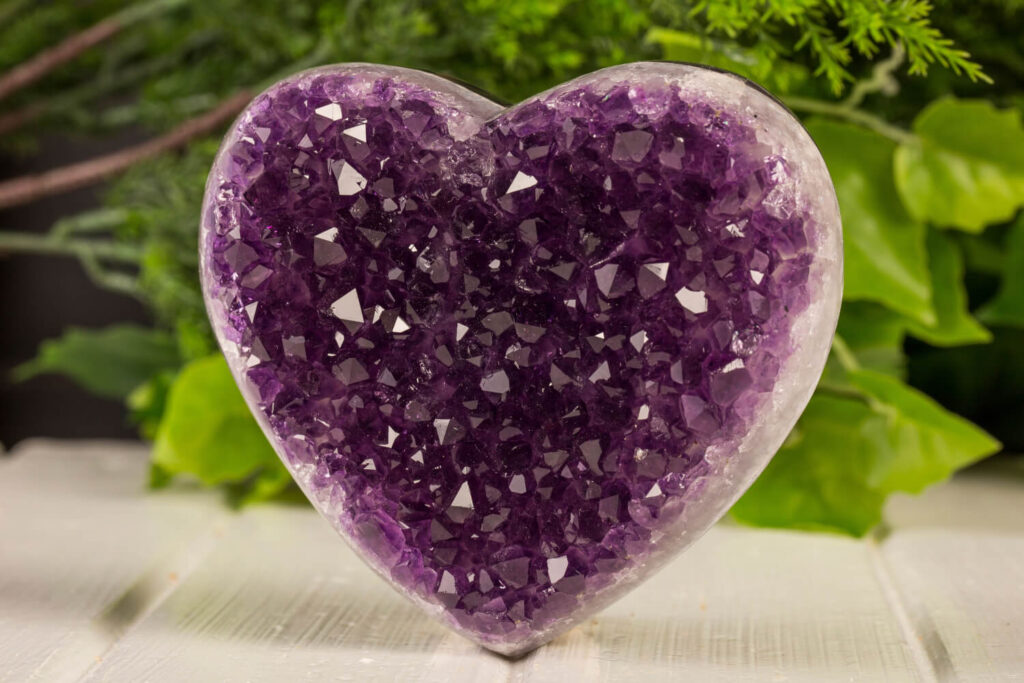
Geodes are like nature’s treasure chests. When you crack open these round rocks, you’ll find hollow spaces lined with sparkly crystals, often in purple or clear colors.
Crystal caves form when mineral-rich water seeps through rock over thousands of years. The water leaves minerals behind that slowly build up into large crystal formations.
You can spot these caves in many places around the world. Some famous ones have crystals as tall as you are! The caves stay at specific temperatures that let the crystals keep growing bigger over time.
Crystals in Everyday Life
Crystals play a huge role in modern life, from the silicon chips in your phone to the sparkly jewelry on your wrist. These organized structures of atoms show up in more places than you might expect.
Industrial and Technological Uses of Crystals
Your electronic devices depend on crystal technology to work. Silicon crystals form the heart of computer chips and solar panels. These tiny crystalline structures process information and convert sunlight into electricity.
Quartz crystals keep time in your watches and help your phone maintain accurate timing. When electricity passes through them, they vibrate at exact frequencies.
Crystal materials like silicon dioxide are essential in making ceramics and glass. Many industrial tools use synthetic crystals because they’re harder and more precise than natural ones.
Crystals in Decor and Jewelry
You’ll find crystals adding sparkle to homes and fashion everywhere. Crystal glass catches light beautifully in chandeliers and fancy drinking glasses.
Natural gems like emeralds form when minerals crystallize deep underground. These precious stones become stunning pieces of jewelry.
Krystallos – the ancient Greek word for ice – gave crystals their name. Today, “bling” refers to the dazzling effect of light bouncing off crystalline surfaces.
Decorative crystals bring natural beauty to your space. You might display raw crystals on shelves or wear them as pendants.
Extraction and Synthesis of Crystals
The world of crystal production spans from deep mine shafts to high-tech laboratories. These methods create both raw gems and precisely engineered materials for modern technology.
Mining and Harvesting Natural Crystals
Natural crystals form in the Earth’s crust under specific conditions of heat, pressure, and time. You’ll find most crystal mines in areas with rich geological activity.
The most common mining methods include:
- Open pit mining: Surface excavation for shallow deposits
- Underground mining: Deep tunneling for hidden crystal veins
- Placer mining: Collection from streams and riverbeds
Professional miners use specialized tools to extract crystals carefully. They look for signs like specific rock formations and mineral veins to locate crystal deposits.
Laboratory-Grown Crystals and Their Applications
Scientists create lab-grown crystals through controlled processes that copy nature’s methods. These synthetic crystals are perfect for technology and industrial uses.
The main growth techniques include:
- Solution growth: Crystals form as chemicals dissolve and re-form
- Melt growth: Materials are heated and cooled slowly
- Vapor deposition: Crystals build up from gas
You can find lab-grown crystals in:
- Computer chips
- Laser equipment
- Jewelry
- Scientific instruments
The quality control in labs lets you get crystals with fewer flaws than natural ones. This makes them great for precise technical applications.
Unique Crystal Phenomena
Crystals display amazing features that make them special in nature, from their stunning colors to their unusual atomic patterns.
Coloration and Inclusions in Crystals
Your crystal’s color comes from tiny amounts of different elements mixed into its structure. These impurities create the rich purple of amethyst and the deep blue of sapphire.
Some crystals change color when you look at them from different angles. Fluorite is a great example – you might see purple, green, or blue depending on how you hold it.
Natural crystals often have things trapped inside them as they grow. You can find water bubbles, bits of other minerals, or even tiny pieces of graphite that create interesting patterns.
Quasicrystals: A New Frontier
Quasicrystals break the normal rules of crystal patterns. While regular crystals repeat their patterns exactly, quasicrystals follow special designs that never quite repeat the same way.
You can spot quasicrystals by their unusual symmetry – they often show patterns that scientists once thought impossible in crystals.
Scientists have found quasicrystals in nature and can make them in labs. These strange crystals might help create new materials with unique properties that you could use in everything from non-stick pans to stronger metals.
The Art and Science of Crystallography
Crystallography reveals the hidden patterns of atoms inside crystals through specialized tools and mathematical methods. Scientists use this field to map out crystal structures and understand their unique properties.
Deciphering the Atomic Structure through Crystallography
When you look at a crystal, you’re seeing the result of atoms arranged in regular, repeating patterns. Scientists use X-ray diffraction to peek inside these structures.
The atomic arrangement in crystals follows specific systems. The two most common are cubic (like table salt) and hexagonal (like snowflakes).
Your understanding of crystal structures helps predict their physical properties. For example, diamonds are super hard because their carbon atoms form tight, strong bonds in a cubic pattern.
The Importance of Miller Index in Crystal Faces
Miller indices help you identify and label different faces of a crystal using three simple numbers. These numbers tell you exactly how the crystal face cuts through the main crystal axes.
You can use Miller indices to predict where crystals might split or break. A crystal tends to break along planes with simple Miller indices, like (100) or (110).
These numbers also help you figure out how light bounces off crystal faces. Gem cutters use this knowledge to create the most sparkly diamonds and precious stones.
Professional crystal growers use Miller indices to control crystal shapes during production. This helps create better computer chips and optical devices.
Cultural and Historical Significance of Crystals
People across many civilizations have treasured crystals for their beauty and perceived powers. These stones have shaped spiritual practices, healing traditions, and cultural beliefs for thousands of years.
Crystals in Ancient Lore and Modern Spirituality
Ancient Egyptians used crystals like lapis lazuli and turquoise in their jewelry and sacred ceremonies. They believed these stones could protect them and bring good health.
The Greeks viewed crystals as divine tools. They used clear quartz to connect with their gods and enhance spiritual journeys.
In Chinese culture, jade held special importance. People wore it for protection and believed it brought wisdom and balance to their lives.
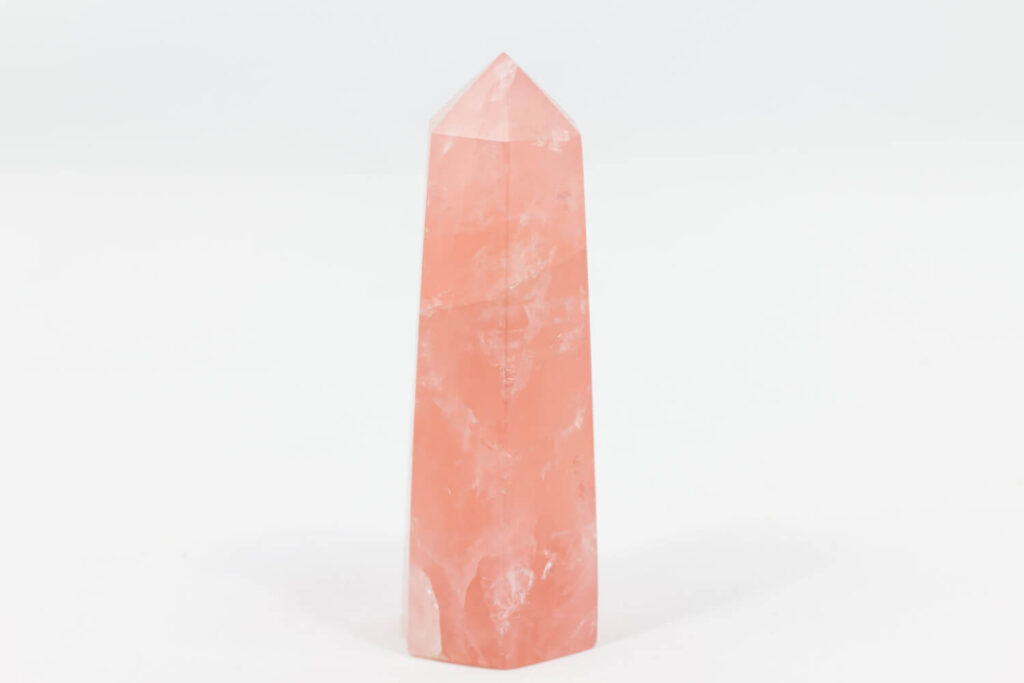
Today, many people use crystals for meditation and energy work. You might find rose quartz on someone’s desk for love and healing, or amethyst by their bed for peaceful sleep.
Notable Crystals and Their Historical Context
Turquoise played a key role in Native American traditions. Tribes used it in ceremonies and believed it brought good fortune.
Malachite was popular in ancient Egypt. Egyptians ground it into powder for eye makeup and thought it protected against negative energy.
Crystal healers often work with these traditional stones:
- Clear quartz for spiritual growth
- Amethyst for peace
- Rose quartz for love
- Jade for wisdom
The Sumerians were among the first to write about crystals. They included them in magical formulas and healing practices.