
Looking for a stunning purple gemstone to add to your jewelry collection? Amethyst might be the perfect choice. This beautiful crystal belongs to the quartz family and comes in many shades of purple, from light pink-purple to deep violet.
The largest amount of amethyst comes from Brazil, which produces about two-thirds of the world’s supply. You can also find high-quality amethyst in Uruguay, Zambia, Madagascar, and Russia. Each location produces stones with unique features and color variations.
The word amethyst comes from Greek roots meaning “not drunk” – ancient Greeks thought these crystals could prevent drunkenness. They even made drinking vessels from amethyst. Today, people value this gem more for its beauty than its supposed powers. When you wear amethyst jewelry, you’re carrying on a tradition that goes back thousands of years.
The Allure of Amethyst
The striking beauty of amethyst makes it one of the most beloved gemstones in the world. Its rich purple color and brilliant shine have made it a favorite in jewelry for thousands of years.
Purple Hues and Beauty
The color of amethyst ranges from light lavender to deep royal purple. When you look at high-quality amethyst, you’ll notice a vibrant, glass-like shine called vitreous luster.
The most prized amethysts display:
- Deep, rich purple coloring
- Crystal-clear transparency
- Even color distribution
- Strong sparkle and brilliance
Natural light brings out amethyst’s best features. You can see subtle color variations when turning the stone, from soft violet to intense purple-red hues.
Amethyst in Jewelry Design
As February’s birthstone, amethyst adds elegance to many jewelry styles. You’ll find this versatile gem in:
Popular Amethyst Jewelry Pieces:
- Statement rings with large center stones
- Delicate pendant necklaces
- Drop earrings
- Vintage-inspired brooches
The gem’s durability makes it perfect for everyday wear. You can pair amethyst jewelry with both casual and formal outfits since its purple color complements most wardrobes.
Custom jewelry designers often choose amethyst for its affordability and impressive looks. Your amethyst pieces will maintain their beauty with basic care and cleaning.
Geological Formation
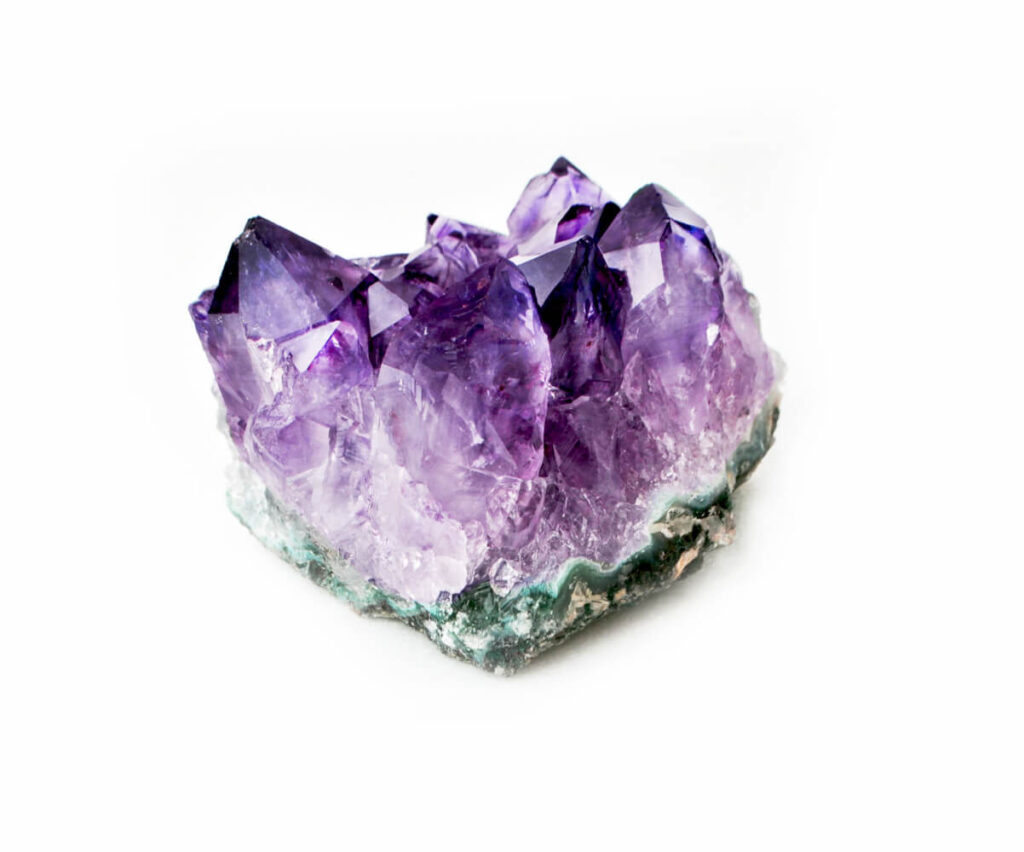
Amethyst forms through amazing natural processes deep in the Earth. The purple gem starts as simple silicon and oxygen atoms that grow into beautiful crystals inside rocks.
From Silicon to Crystal
Every amethyst starts as silicon dioxide, just like regular quartz. Iron atoms mix into the crystal structure while it grows, giving amethyst its famous purple color.
Your favorite amethyst started forming millions of years ago when heat and pressure squeezed silicon and oxygen atoms into a specific pattern. This pattern creates the six-sided crystal shape you see in amethyst points.
The crystals grow very slowly as more silicon dioxide molecules stick together in layers. Each new layer follows the same pattern as the one before it.
Mineral-Rich Fluids and Cavities
Hot water filled with dissolved minerals flows through cracks in volcanic rocks. These mineral-rich fluids carry the building blocks needed to form amethyst.
When the hot fluids find empty spaces in the rock called geodes, they start to cool down. As the temperature drops, crystals begin to form on the walls of these cavities.
You can often find amethyst in geodes because these hollow spaces give the crystals room to grow. The bigger the cavity, the larger the crystals can become.
The cooling process happens very gradually, which lets the crystals form their clean, sharp shapes. Some amethyst geodes can take thousands of years to fill with crystals.
Amethyst Mining Practices
Mining amethyst requires special care and techniques to extract these beautiful purple crystals from deep within the earth. Modern miners use both traditional and advanced methods to bring these gems to the surface.
Global Sources
You can find amethyst mines scattered across many continents. Brazil leads the world in amethyst production, with huge deposits in the state of Minas Gerais. The city of Ametista do Sul has earned the nickname “Amethyst City” due to its rich purple treasures.
Zambia and Uruguay also produce high-quality amethyst crystals. In the United States, you’ll discover amethyst mines in Arizona, North Carolina, and Georgia. The Four Peaks Mine in Arizona is famous for its deep purple gems.
Russia and India have important mining areas too. Each region uses mining methods suited to their local geology and terrain.
Underground Ventures
When you go underground to mine amethyst, you’ll need special tools and techniques. Miners use picks, shovels, and sometimes power tools to break through the hard basalt rock where amethyst forms.
The crystals often grow inside hollow spaces called geodes. These natural formations need careful handling to avoid damage.
Modern mines use tunnel systems with proper supports and ventilation. Some operations employ small explosives to crack open rock walls, but this requires great skill to protect the crystals.
Safety equipment is essential: hard hats, steel-toed boots, and proper lighting help protect miners working underground.
Your local regulations might affect how you can mine. Many areas require permits and environmental protection measures.
Characteristic Features
Amethyst has distinct traits that make it a captivating and valuable gemstone. The crystal’s most striking features are its rich purple colors and excellent durability.
Color and Clarity
Your amethyst can range from light lavender to deep royal purple. The best quality stones show a rich, pure purple shade without brown or gray tints. Color zoning is common – you might notice bands or patches of different purple intensities in the same crystal.
Most amethysts are transparent to translucent. High-quality pieces let light pass through easily, creating beautiful sparkle and shine.
The purple color comes from iron and natural radiation in the crystal structure. Sunlight can fade your amethyst over time, so it’s best to store it away from direct light.
Physical Properties
You’ll find amethyst has impressive durability with a Mohs hardness of 7, making it great for everyday jewelry wear.
Your amethyst will have these key properties:
- Specific gravity: 2.65-2.66
- Refractive index: 1.544-1.553
- Birefringence: 0.009
Amethyst shows pleochroism, meaning it displays different purple shades when viewed from different angles. This creates an interesting optical effect as you move the stone.
The crystal breaks with a conchoidal fracture pattern, similar to broken glass. This property helps jewelers shape and cut the stone into beautiful gems.
Classification and Quality
The best amethyst gems display rich purple colors and excellent clarity, though specific traits vary based on where they come from. Quality stones can come from multiple locations around the world.
Grading the Gemstones
You’ll find amethyst quality depends mainly on color intensity and clarity. The most valuable stones show deep, saturated purple hues without being too dark or too light.
Clarity plays a big role in grading. Many high-quality amethysts are “eye-clean,” meaning you can’t see inclusions without magnification.
Top-grade stones from Brazil and Siberia command the highest prices. Siberian amethyst is especially prized for its deep purple color with flashes of red and blue.
Experts grade amethyst clarity on a scale from Flawless to Slightly Included (SI). Even SI-grade stones can be beautiful while being more affordable.
Rare Varieties
Some special amethyst types stand out from regular stones. Ametrine combines purple amethyst and golden citrine colors in a single crystal – these unique gems come mainly from Bolivia.
You might spot “cathedral amethyst” formations where tall crystal points form a pyramid shape. These sought-after specimens are popular with collectors.
African amethysts, especially from Zambia, often show a distinctive raspberry purple color. While beautiful, they tend to have more inclusions than Brazilian stones.
Russian amethysts are known for their deep purple color with strong red flashes. These gems are increasingly rare in today’s market.
Cutting and Shaping
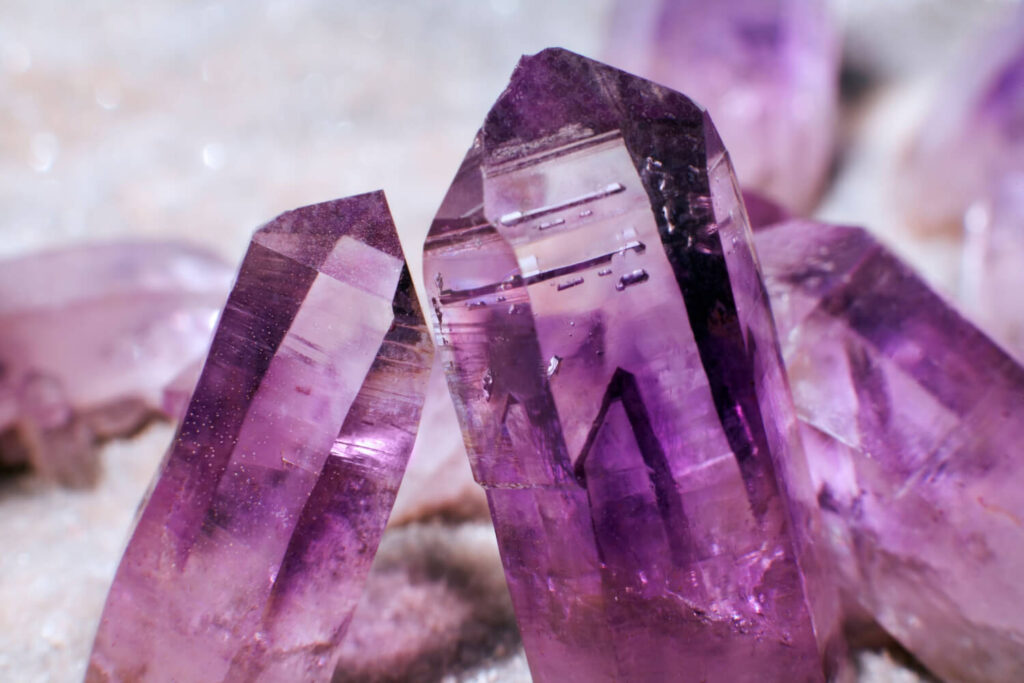
The process of cutting and shaping amethyst transforms rough crystals into beautiful gems that sparkle in jewelry. Expert craftspeople use special tools and techniques to bring out the stone’s natural purple color and shine.
Faceting Techniques
Your amethyst’s cut plays a big role in how much it sparkles. Gem cutters start by studying the rough crystal to find the best way to show off its color and clarity.
The most common cuts for amethyst are oval, round, and pear shapes. Each cut creates different patterns of light reflection through the stone.
Cutters use special wheels to grind flat surfaces called facets into the gem. The more facets, the more sparkly your stone will be. Most amethysts have between 58 and 70 facets.
Maintaining the Luster
Your amethyst’s shine needs proper care to stay bright and beautiful. Clean your stone with mild soap and warm water using a soft brush.
Keep your amethyst away from harsh chemicals and sudden temperature changes. These can damage the stone’s surface and make it look dull.
Store your amethyst pieces separately from other jewelry. The stone ranks 7 on the hardness scale, but can still get scratched by harder gems.
Polish your amethyst only with approved gem cloths. Regular cleaning and careful handling will help maintain its natural purple glow for years to come.
Global Significance
Amethyst holds deep meaning across many cultures and plays a big role in the world’s gem trade. Its rich purple color has made it a favorite among people worldwide.
Cultural and Historical Relevance
Ancient Greeks linked amethyst with preventing drunkenness – the word “amethyst” actually means “not drunk” in Greek.
Christian bishops and clergymen have worn amethyst rings since medieval times. The purple stone represents spiritual wisdom and is used during Lent and Advent seasons.
Many cultures believe amethyst brings good luck and healing powers. You’ll find it in royal jewelry collections across Europe and Asia.
In the United States, amethyst serves as the official state gemstone of South Carolina and Georgia.
Economic Impact
Uruguay stands out as a top producer of high-quality amethyst. Their stones show deep purple colors that gem collectors love.
Brazilian amethyst mines create thousands of jobs and bring in significant revenue. The country exports both raw crystals and polished gems.
Zambian amethyst has gained popularity in recent years. Its rich purple color and excellent clarity make it valuable in the global market.
You can find Russian amethyst in many famous museum collections. The Ural Mountains produce some of the world’s most sought-after specimens.
Local communities near amethyst mines often depend on gem trading for their livelihood. Small-scale miners and artisans create unique pieces for tourists and collectors.
Technical Insights
Amethyst’s stunning purple color comes from a mix of special ingredients in its crystal structure. The way light bounces through these crystals creates its famous beauty.
Chemical and Optical Properties
Amethyst is made of silicon dioxide (SiO2), just like regular quartz. Iron atoms and trace elements sprinkled inside the crystal structure give it that amazing purple color you love.
Your amethyst crystal has a hexagonal crystal system. When you look closely, you’ll see it has a glassy shine and scores a 7 on the Mohs hardness scale.
The crystal shows what scientists call pleochroism – meaning its color changes slightly when you view it from different angles.
Each crystal contains tiny amounts of iron in its chemical makeup. The iron gets changed by natural radiation, creating those rich purple shades.
Want to spot a real amethyst? It won’t dissolve in normal acids or bases, and it typically doesn’t glow under UV light (no fluorescence).
The deeper the purple, the more iron and trace elements are packed into your crystal’s structure. This is why you’ll see amethysts ranging from light lilac to deep royal purple.
Metaphysical Attributes
Amethyst’s rich purple hue connects deeply with spiritual awareness and inner peace. Many people believe this crystal holds special powers for emotional balance and spiritual growth.
Symbolism and Healing
Your connection with amethyst can help bring calm and clarity to your daily life. Many crystal enthusiasts place amethyst by their bed to promote peaceful sleep and ward off bad dreams.
When you meditate with amethyst, hold it near your forehead or crown to enhance your spiritual awareness. The violet crystal is known to work with your upper chakras – especially the third eye and crown.
Crystal healers often use amethyst to help reduce stress and anxiety. You might notice a sense of emotional balance when carrying this stone or wearing it as jewelry.
Believed Benefits:
- Mental clarity
- Stress relief
- Spiritual growth
- Better sleep
- Emotional balance
Place amethyst in your meditation space or work area to create a peaceful environment. The stone’s gentle energy can help you feel more centered during busy or challenging days.