
Crystals can be beautiful, meaningful additions to home decor when you use them with the same care you would give to art, lighting, plants, or textiles. The best approach is to choose a room’s mood first, then select crystals that fit the color palette, scale, and purpose of the space.
Quick verdict: Using crystals for the home and interior design works best when you treat them as both decor accents and intentional objects. Choose crystals that match the mood of each room, place them where they look natural, and keep safety, sunlight sensitivity, and cleaning needs in mind. Start with a few versatile pieces such as clear quartz, amethyst, rose quartz, selenite, black tourmaline, or citrine rather than filling every surface.
This guide walks you through room-by-room placement, styling steps, crystal choices by design goal, common mistakes, and care basics so your crystal decor feels intentional instead of cluttered.
How To Use Crystals In Home Decor: The Simple Approach
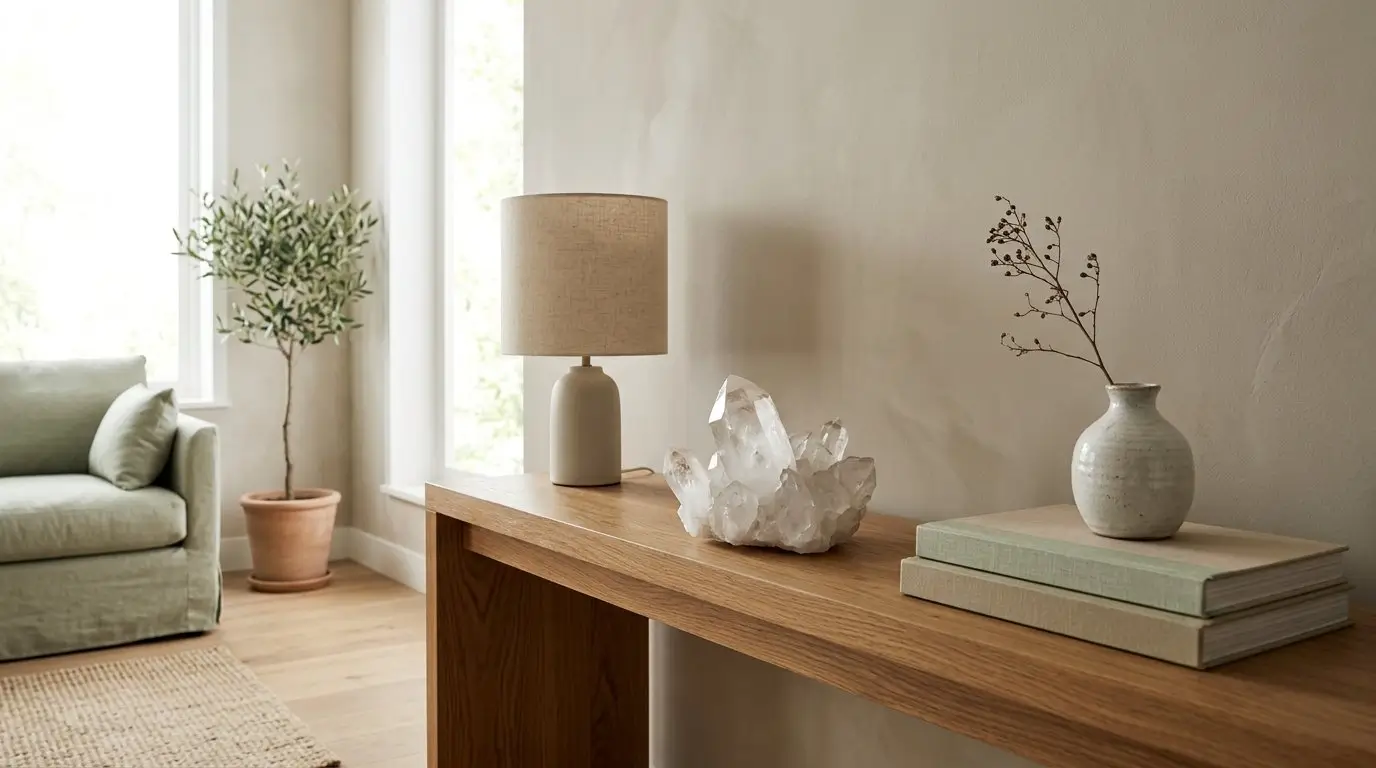
Using crystals in home decor is not about covering every shelf with stones. It is about choosing pieces that add beauty, texture, color, and personal meaning to a room. A crystal can work like a sculptural object, a color accent, a focal point, or a small symbolic reminder of the feeling you want to invite into the space.
A simple way to start is to follow this four-part method:
- Choose the mood of the room. Decide whether the space should feel calm, grounded, romantic, focused, welcoming, creative, or energizing.
- Pick a crystal that fits that mood and palette. Amethyst is often used for calm spaces, rose quartz for softness, clear quartz for clarity, black tourmaline for grounding symbolism, and citrine for warmth.
- Place it with design balance. Think about scale, color, height, and negative space. A large amethyst geode may work well on a bookshelf, while a small rose quartz heart may look better on a tray or vanity.
- Maintain it properly. Keep crystals dusted, protect delicate stones from direct sunlight or water, and move them if they become impractical or unsafe.
Crystals can be obvious or subtle. You might place amethyst on a nightstand, rose quartz in a bedroom, clear quartz on a desk, black tourmaline near an entryway, or citrine in a workspace or living area. Some people also like to set a simple intention with each piece, such as “I want this room to feel peaceful” or “I want this desk to support focus.” That can make the object feel more personal without expecting guaranteed spiritual outcomes.
From an interior design perspective, restraint matters. One beautiful quartz cluster on a stack of books often looks more polished than ten small stones scattered across a table.
Before You Start: Materials, Safety, And Design Basics
Before styling crystals around your home, gather a few simple materials and think through placement. This helps your decor look intentional and keeps fragile or sensitive pieces protected.
Useful materials include:
- Selected crystals in sizes that suit your space
- A tray, shallow bowl, or decorative dish
- A soft cloth for dusting
- A small display stand for slabs, spheres, or statement pieces
- A shelf, book stack, or riser for height
- A plant pot, candleholder, ceramic vessel, or framed photo to pair with the crystal
- Optional labels or a small intention card if you enjoy a personal setup
Design basics to keep in mind
Color harmony: Choose crystals that either blend with the room or create a deliberate accent. Rose quartz pairs well with soft neutrals, pinks, creams, and warm woods. Amethyst adds purple contrast to neutral, gray, or jewel-toned spaces. Citrine and carnelian work beautifully with brass, terracotta, tan leather, and warm wood.
Scale: A tiny tumbled stone can disappear on a large coffee table, while a large geode can overwhelm a small nightstand. Match the crystal’s size to the surface.
Texture: Crystals add natural texture. Raw clusters feel earthy and organic, polished spheres feel sleek, agate slices feel artistic, and selenite wands feel minimal and luminous.
Symmetry vs. organic placement: Symmetrical placement looks formal and calming, such as two matching stones on either side of a mantel. Organic groupings feel relaxed, especially when paired with plants, books, and ceramics.
Negative space: Leave empty space around your crystal so it can be seen. If every surface is filled, even a beautiful piece can look like clutter.
Finish and room style: Polished stones often suit modern, glam, or minimalist interiors. Raw crystals fit boho, earthy, rustic, or eclectic rooms. Display stands can make statement pieces feel curated.
Safety and care cautions
Crystals are decorative objects, but some need practical care. Keep small, sharp, or fragile pieces away from young children and pets. Avoid placing heavy geodes or towers on unstable shelves, narrow ledges, or furniture that is easily bumped. Do not put water-soluble or delicate stones in water features, plant water, humid areas, or fountains unless you have confirmed they are safe for water.
Some crystals may fade or change with prolonged direct sunlight. Amethyst, rose quartz, citrine, fluorite, and celestite are commonly kept out of harsh sun for long-term display. If you love them near a window, choose indirect light or rotate them occasionally.
When buying crystals, choose pieces you genuinely like rather than following trends. If ethical sourcing information is available, consider it. The best crystal for your home is one that fits your space, your budget, your values, and your sense of beauty.
Room-By-Room Crystal Placement Guide
The easiest way to use crystals for the home and interior design is to match each room with a clear design goal. A bedroom may need softness and restfulness, while an entryway may need grounding and a sense of welcome. Use the table below as a practical starting point.
| Room | Design Goal | Crystal Ideas | Placement Ideas | Cautions |
|---|---|---|---|---|
| Entryway | Grounded, welcoming, clear transition | Black tourmaline, smoky quartz, clear quartz | Console table, catchall tray, shelf near the door | Keep pieces out of the walkway; avoid fragile stones where bags or keys may knock them over |
| Living room | Relaxed, social, balanced | Amethyst, selenite, agate, clear quartz | Coffee table, bookshelf, side table, mantel | Avoid overcrowding surfaces; keep tall pieces stable |
| Bedroom | Soft, calm, restful, romantic | Rose quartz, amethyst, moonstone, lepidolite | Nightstand, dresser, vanity, tray | Avoid clutter near the sleep area; keep sharp or heavy pieces away from bed edges |
| Kitchen or dining area | Warm, bright, inviting | Citrine, clear quartz, carnelian, green aventurine | Dining centerpiece, open shelf, indirect windowsill | Avoid heat, grease, steam, and unstable counter edges |
| Home office | Focused, clear, structured | Fluorite, pyrite, clear quartz, hematite | Desk corner, shelf, paperweight, book stack | Do not overload your work surface |
| Bathroom | Clean, spa-like, refreshing | Clear quartz, ocean jasper, agate | Vanity tray, dry shelf, decorative dish | Humidity can affect some stones; avoid selenite, malachite, and calcite in wet areas |
| Meditation or quiet corner | Reflective, peaceful, intentional | Selenite, amethyst, clear quartz, smoky quartz | Floor basket, altar shelf, small table | Keep pathways clear and candles away from delicate items |
Entryway
The entryway sets the tone for the rest of the home. Many people use black tourmaline or smoky quartz here because these stones are traditionally associated with grounding and protective symbolism. Clear quartz can also work if you want a brighter, cleaner look.
Place crystals on a console table, inside a small bowl with keys, or on a shelf near the door. Avoid putting them directly on the floor where they can be kicked, stepped on, or bumped by bags.
Living room
Living rooms can handle larger and more decorative crystal pieces. An amethyst cluster on a bookshelf, a selenite wand on stacked books, or an agate slice on a stand can add texture and visual interest. Clear quartz works with almost any palette and can be styled in both modern and natural interiors.
If your living room already has many accessories, choose one focal crystal rather than several small pieces. A single statement stone often looks more refined.
Bedroom
For bedrooms, choose softer colors and calmer shapes. Rose quartz is popular for bedrooms and vanities because it is traditionally associated with love, softness, and emotional warmth. Amethyst, moonstone, and lepidolite are also commonly used in restful spaces.
Keep the nightstand practical. If you already have a lamp, book, water glass, and phone charger, add only one small crystal or use a tray to contain everything.
Kitchen and dining area
Crystals in the kitchen should be easy to clean and safely placed. Citrine, carnelian, and green aventurine can bring warm or fresh color to dining areas, open shelves, or breakfast nooks. A bowl of polished stones can work as a centerpiece if it does not interfere with meals.
Avoid placing crystals beside the stove, sink, or areas where grease and heat build up. Direct sunlight on a kitchen windowsill may also fade sensitive stones over time.
Home office
A home office benefits from crystals that look organized rather than distracting. Fluorite, clear quartz, pyrite, and hematite are often used in workspaces for their associations with clarity, focus, structure, and grounding.
Place one piece at the back corner of the desk, beside a monitor, or on a nearby shelf. If the crystal gets in the way of writing, typing, or paperwork, it is not in the right spot.
Bathroom
Bathrooms can look beautiful with crystal accents, but humidity matters. Clear quartz, agate, and ocean jasper are better choices for dry bathroom display than delicate, water-sensitive stones. Keep crystals on a vanity tray, shelf, or windowsill away from standing water.
Avoid placing selenite in the bathroom because it can be damaged by moisture. Malachite and calcite also need extra care around water.
Matching crystals to interior design styles
For minimalist interiors, choose one or two pale crystals such as clear quartz, selenite, or white agate. For boho spaces, use raw clusters, warm stones, woven trays, and plants. For modern rooms, polished spheres, towers, or geometric stands can feel clean and sculptural.
For traditional interiors, use crystals sparingly with books, brass accents, or antique-style trays. For earthy homes, choose smoky quartz, jasper, agate, and warm minerals. For glam spaces, amethyst, pyrite, quartz clusters, and agate slices can add shine without overwhelming the room.
Step-By-Step: Styling Crystals So They Look Intentional
A crystal display looks best when it feels like part of the room rather than something randomly placed on a surface. Follow these steps to style crystals in a polished, practical way.
Step 1: Choose the feeling or function of the space
Start by naming what you want the room to support. A bedroom might call for calm, softness, and rest. A home office may need focus and structure. A living room might need warmth and connection. An entryway may need a grounded, welcoming feeling.
This step keeps your choices focused. Instead of buying every crystal that looks interesting, you are choosing decor that supports the purpose of the room.
Step 2: Select 1 to 3 crystals
Choose one to three crystals that fit both the room mood and color palette. For example:
- Calm bedroom: rose quartz, amethyst, or moonstone
- Focused office: clear quartz, fluorite, or hematite
- Warm living room: citrine, carnelian, or agate
- Grounded entryway: black tourmaline, smoky quartz, or obsidian
If you are new to crystal decor, start with one main piece per room. You can always add more later.
Step 3: Decide the crystal’s role
Ask whether the crystal is a focal point, an accent, or a hidden personal object.
A focal point is large or eye-catching, such as an amethyst geode on a bookshelf. An accent is smaller and supports a vignette, such as a quartz point beside a candle. A hidden personal object might be a small tumbled stone tucked in a drawer, under a tray, or near your workspace as a private reminder.
Not every crystal needs to be displayed prominently. Sometimes subtle placement feels more natural.
Step 4: Use simple grouping rules
Crystals often look better when grouped with other decor instead of sitting alone in the middle of a surface. Try:
- Odd-number groupings, such as three objects together
- Varied heights, such as a crystal, a candle, and a small vase
- A tray to make small items feel collected
- Books to elevate a crystal cluster
- Plants to soften the look
- Ceramics, bowls, or textiles for contrast
For example, place a selenite wand on stacked books with a small ceramic bowl beside it, or style a clear quartz cluster next to a trailing plant on a shelf.
Step 5: Balance sparkle and natural texture
Crystals naturally draw attention because they reflect light and have unusual shapes. Balance that visual energy with calmer materials. Pair shiny quartz with matte ceramics, soft linen, wood, or greenery. Pair a rough stone with polished metal or glass if the room needs refinement.
Avoid making the space look like a shop display. If all the crystals are lined up in rows, the room may feel more like a collection shelf than a designed interior. Break up the display with books, framed art, candles, or empty space.
Step 6: Set an intention if you like
If you enjoy the spiritual side of crystals, you can set a simple intention when placing them. Keep it personal and grounded. For example:
- “I want this bedroom to feel peaceful.”
- “I want this desk to support clear thinking.”
- “I want this entryway to feel calm and welcoming.”
- “I want this corner to remind me to slow down.”
This can make the crystal feel more meaningful without treating it as a guaranteed solution to a problem.
Step 7: Review the room from the doorway
Once everything is placed, step back and look at the room from the doorway. Ask yourself:
- Does the crystal support the room’s mood?
- Is it easy to see without dominating everything?
- Is the surface still usable?
- Is the piece safe from being knocked over?
- Does the color work with the rest of the room?
- Does the arrangement feel calm or cluttered?
Adjust as needed. Move a crystal to a tray, raise it on books, pair it with a plant, or remove extra pieces until the room feels balanced.
Styled vignette examples
For a living room shelf, try an amethyst cluster beside a framed photo and a small plant. For a desk, use a clear quartz point as a paperweight near a notebook. For a vanity, place rose quartz on a tray with perfume and a candle. For a coffee table, style an agate slice on a stand beside books and a low ceramic dish.
Best Crystals For Different Home Design Goals
Choosing crystals by design goal is easier than memorizing long lists of meanings. Start with the atmosphere you want, then choose stones that fit both the mood and the room.
For calm spaces
Amethyst, lepidolite, and blue lace agate are often associated with calm, softness, and quiet reflection. They work well in bedrooms, reading corners, meditation spaces, and low-traffic shelves.
Use these stones with soft fabrics, warm lamps, pale woods, and muted colors. Avoid placing too many purple or blue stones in one small area if your room already has a strong color scheme.
For warmth and welcoming energy
Citrine, carnelian, sunstone, and honey calcite bring warm tones that can make a room feel cheerful and inviting. Many people use these stones in living rooms, dining rooms, breakfast nooks, or creative spaces.
Pair them with brass, rattan, terracotta, tan leather, wood, and creamy neutrals. Since some yellow and orange stones can be affected by sunlight, avoid long-term harsh sun exposure unless you are comfortable with possible fading.
For grounding and protection symbolism
Black tourmaline, smoky quartz, hematite, and obsidian are commonly used for grounding and protective symbolism. These darker stones can also be visually useful because they add contrast and depth to a room.
Try them near an entryway, on a low shelf, beside a desk, or in a quiet corner. Because many dark stones have a strong visual presence, one or two pieces are usually enough.
For love and softness
Rose quartz, rhodonite, and pink opal are popular for bedrooms, vanities, dressing areas, and cozy corners. Their soft pink tones pair well with cream, beige, blush, gray, white, and warm metallics.
A small rose quartz bowl on a vanity, a tumbled stone on a nightstand tray, or a polished piece beside a framed photo can add a gentle, personal touch.
For clarity and focus
Clear quartz, fluorite, and pyrite are often chosen for desks, study areas, studios, and creative corners. Clear quartz is especially versatile because it works with nearly any style. Fluorite adds color and structure, while pyrite offers a metallic, sculptural look.
Use these stones sparingly on a desk. The goal is to support a clear workspace, not to add more visual noise.
For visual impact
If your main goal is design impact, consider agate slices, large quartz clusters, amethyst geodes, labradorite, or selenite lamps. These pieces can function like art objects.
Scale and budget matter here. A large statement crystal should have enough space around it and a stable surface beneath it. If a large geode is not practical, a smaller agate slice on a stand or a polished labradorite piece can still create a strong effect.
Before choosing any display piece, consider durability, sunlight, water sensitivity, and how easy it will be to dust. A crystal that looks beautiful but is hard to maintain may not be the best choice for a busy surface.
Mistakes, Troubleshooting, And How To Know It Works
Even beautiful crystals can look awkward if they are placed without a plan. Use these common mistakes and fixes to refine your setup.
Mistake: using too many crystals in one room
Too many crystals can make a room feel cluttered, especially if they are scattered across every surface. Edit down to the pieces that support the room’s purpose. Keep your favorites and move extras to another room, a drawer, or a rotating seasonal display.
Mistake: placing delicate crystals in harsh conditions
Direct sun, humidity, heat, and high-traffic areas can damage or destabilize certain crystals. Move sunlight-sensitive stones away from intense windows. Keep water-sensitive crystals away from bathrooms, sinks, and plant water. Place heavy pieces on sturdy furniture, not narrow shelves.
Mistake: choosing only for meaning
A crystal may have a meaning you love, but it still needs to work with the room’s color, size, and style. If a stone clashes with your interior, try a smaller version, a different finish, or a placement where it feels more subtle.
Mistake: creating clutter on functional surfaces
Desks, kitchen counters, nightstands, and bathroom vanities need to remain usable. If crystals are getting in the way, use a tray, bowl, shelf, or one focal piece instead of several small items.
Troubleshooting awkward displays
If a crystal looks random, give it a base. Put it on stacked books, a tray, a small dish, or a display stand. If it looks too small, group it with a candle, plant, or framed photo. If it looks too shiny, pair it with matte ceramics or natural textiles. If it feels too busy, remove surrounding objects and add negative space.
If a display still does not work, move the crystal to a quieter surface. Sometimes the issue is not the crystal; it is the room, lighting, or nearby decor.
Care basics
Dust crystals with a soft cloth. Avoid harsh cleaners. Research water safety before rinsing any stone, because some crystals can dissolve, rust, crack, or become damaged when wet. Refresh placements seasonally if your home decor changes, or rotate pieces when a room starts to feel visually stale.
Result check
Your crystal decor is working when the room feels more intentional, visually balanced, safe, and easy to use. The crystals should support the room’s mood without creating clutter or inconvenience. They should look like part of the design, not an afterthought.
FAQ
Where should I place crystals in my home for the best decor effect?
Place crystals where they support the room’s purpose and can be seen safely: entry trays, bookshelves, coffee tables, nightstands, desks, mantels, and vanity trays. Avoid walkways, unstable shelves, wet areas, and surfaces that already feel cluttered.
Which crystals are best for a living room?
Amethyst, clear quartz, agate, and selenite are versatile living room choices. Use a statement piece on a bookshelf, a small cluster on a coffee table tray, or an agate slice on a stand for visual interest.
Can I put crystals in the bathroom?
Yes, but choose carefully. Clear quartz, agate, and ocean jasper can work well on dry shelves or vanity trays. Avoid water-sensitive stones such as selenite, malachite, and calcite in humid or wet areas.
How many crystals should I use in one room?
Start with one to three crystals per room. One focal piece often looks more intentional than many small stones. If the room feels busy, edit down and use trays, bowls, or shelves to contain the display.
Do crystals need to match my interior design style?
They do not need to match perfectly, but they should feel intentional. Consider color, scale, finish, and placement. Raw stones suit earthy or boho rooms, while polished crystals often work well in modern, glam, or minimalist spaces.
Which crystals should not be placed in direct sunlight?
Amethyst, rose quartz, citrine, fluorite, and celestite are commonly kept out of prolonged direct sunlight because they may fade or change over time. Use indirect light for long-term display, especially near bright windows.