
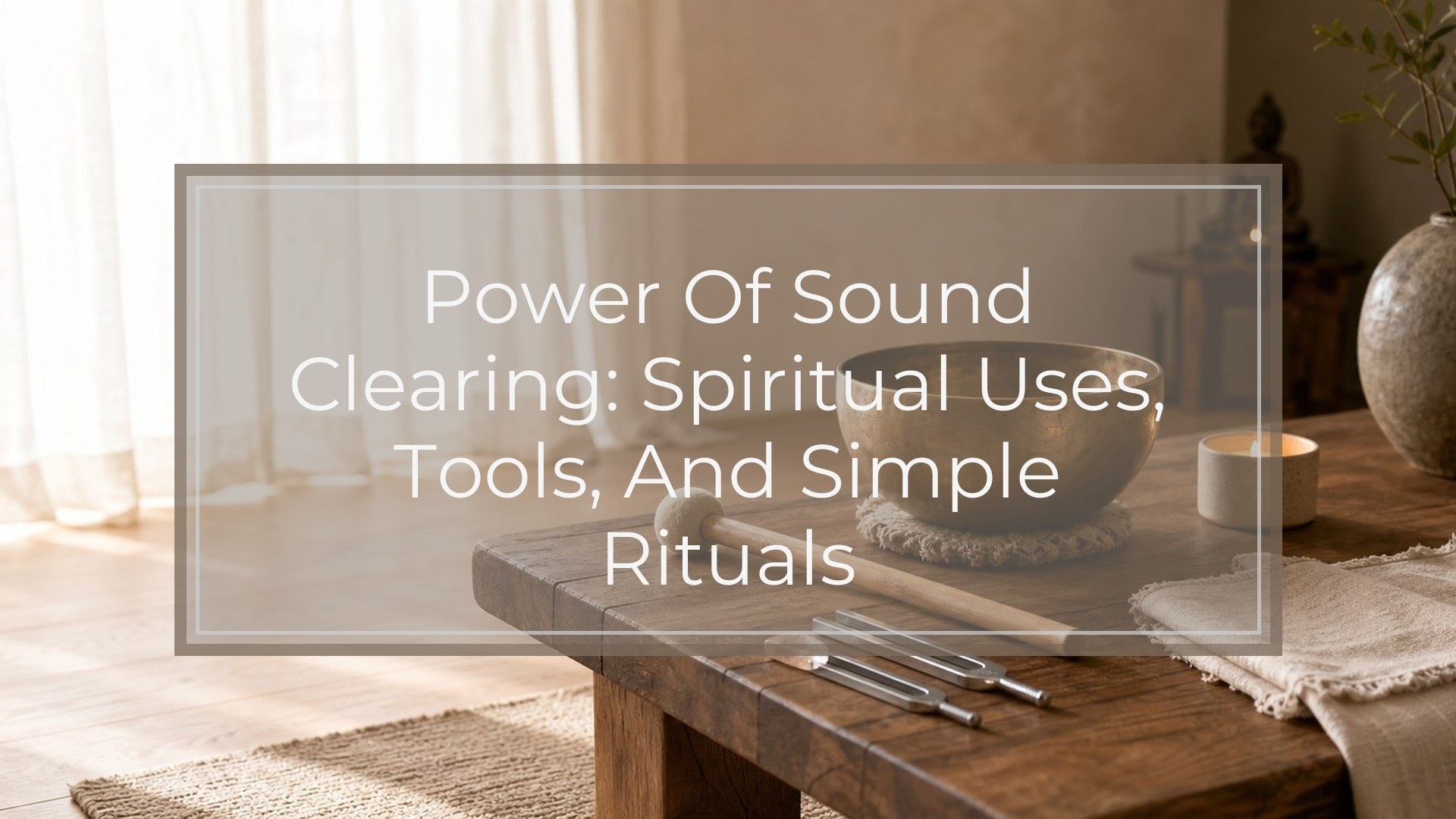
Sound clearing is a spiritual cleansing practice that uses vibration, tone, rhythm, or voice to shift the feeling of a room, object, or personal energy field. Instead of using smoke, water, salt, or herbs, you use sound as the clearing medium. A bell, singing bowl, chime, drum, tuning fork, or even your own voice can become the tool.
The power of sound clearing comes from its simplicity: sound moves through space, reaches corners, and gives your attention a clear focus. Many people use it after stress, arguments, guests, heavy emotions, or before meditation and ritual. It does not need to be complicated. A few intentional sounds, made with care and awareness, can help a space feel lighter, calmer, and more settled.
What Is Sound Clearing?
Sound clearing is the practice of using sound intentionally to refresh or cleanse energy. In spiritual terms, the sound acts like a wave moving through still air. It helps break up what feels stagnant, heavy, chaotic, or dull.
A simple mental model is this: imagine a room after a long, tense day. The furniture has not changed, but the atmosphere feels thick. Sound clearing gives you a way to “stir” that atmosphere and reset your relationship to the space.
This practice can be quiet and gentle, like a small bell at a doorway, or deep and immersive, like a singing bowl or drum. The key is not volume alone. Intention, attention, and consistency matter more than making the loudest possible sound.
Why Sound Is Used in Spiritual Cleansing
Sound is used in spiritual cleansing because it is active, noticeable, and easy to direct. When you ring a bell or tone a bowl, the sound travels outward. You can hear where it begins, how it fills the space, and when it fades. That makes it useful for focused spiritual work.
Many people experience sound as a bridge between the physical and energetic. You can feel vibration in your hands, chest, or floor, while also sensing a change in mood or atmosphere. Spiritually, this makes sound a natural symbol for movement, release, and renewal.
Sound also supports presence. If your mind wanders during cleansing, the tone gives you something to return to. Each ring, beat, or hum becomes a reminder: “I am here, and I am clearing this space with care.”
What Sound Clearing Can Be Used for
Sound clearing can be used anytime you want to refresh energy without smoke, fragrance, or elaborate supplies. It is especially helpful in shared homes, apartments, offices, or rooms where smoke cleansing is not practical.
Common uses include clearing a room before meditation, prayer, journaling, yoga, tarot, crystal work, or sleep. You might also use sound after an argument, illness, stressful workday, or emotionally intense conversation. Some people clear their front door to symbolically reset what enters the home.
Sound can also mark transitions. For example, ringing a bell at the start of a ritual can signal that ordinary time is shifting into sacred time. A few tones at the end can close the practice and return the room to calm.
Common Sound Clearing Tools and How They Feel
Different sound clearing tools create different moods. None is automatically “best.” The right tool is the one you can use comfortably, respectfully, and consistently.
Bells and chimes feel bright, clean, and precise. They are easy for beginners because one ring can fill a small area quickly. Singing bowls feel rounder and more immersive, with tones that linger. Drums feel earthy and rhythmic, making them useful when you want a stronger sense of movement. Tuning forks are more subtle and focused, often used near objects, crystals, or the body’s energy field. The voice is the most accessible tool of all; humming, chanting, toning, or speaking a clear intention can be deeply personal.
| Tool | Best For | How It Often Feels |
|---|---|---|
| Bell | Doorways, corners, quick resets | Bright, clear, sharp |
| Chime | Gentle room clearing | Light, airy, peaceful |
| Singing bowl | Meditation spaces, altars | Deep, smooth, lingering |
| Drum | Moving heavy or stuck energy | Grounded, steady, strong |
| Tuning fork | Crystals, objects, focused work | Subtle, precise, clean |
| Voice | Personal energy, intention setting | Intimate, direct, flexible |
If you are unsure where to begin, choose a small bell, chime, or your voice.
How to Do a Simple Sound Clearing Ritual

Begin by choosing your tool and deciding what you want to clear. Your intention can be simple: “I clear this space of stagnant energy and invite peace, clarity, and protection.”
- Prepare the space. Open a window or door if possible. This gives the clearing a symbolic exit point. Tidy obvious clutter if it feels distracting, but do not wait for the room to be perfect.
- Ground yourself. Stand still, breathe slowly, and notice your feet on the floor. Hold your sound tool with respect. If using your voice, place a hand on your heart or belly.
- Start at the entrance. Ring, strike, hum, or tone near the doorway. Imagine the sound creating a clean threshold.
- Move clockwise or intuitively. Walk around the room, sounding near corners, windows, mirrors, closets, and areas that feel heavy. Corners are often a focus because they symbolically collect stillness.
- Listen between sounds. Let each tone fade before making another. Notice whether the room feels dense, calm, open, or unchanged.
- Finish with intention. Return to the center or doorway. Make one final sound and say something like, “This space is clear, peaceful, and supportive.”
Keep your first ritual short. Three to seven minutes is enough for most beginners. The goal is not perfection; it is focused, respectful practice.
Sound Clearing for Crystals, Objects, and Personal Energy
Sound clearing is not only for rooms. You can use it to cleanse crystals, jewelry, spiritual tools, secondhand items, or objects that feel energetically “full.”
For crystals, place them near a singing bowl, bell, chime, or tuning fork and let the sound wash over them. This is especially helpful for delicate stones that should not be placed in water or salt.
For personal energy, sound around your body without touching yourself with the tool. Move from head to feet, or from front to back, using gentle tones. You can also hum steadily and imagine the vibration softening tension around you. Keep the volume comfortable, especially near the ears.
How to Know When Sound Clearing Is Working

Sound clearing is subtle, so look for grounded signs rather than dramatic proof. A room may feel lighter, quieter, more spacious, or easier to breathe in. You may feel calmer, more focused, or more willing to spend time there.
The sound itself may also seem to change. Some practitioners notice that a bell or bowl feels dull at first, then clearer as they continue. Whether you interpret that spiritually or simply as deeper attention, it can guide your practice.
The most useful question is: “Does this space feel more supportive now than before?”
Mistakes to Avoid When Practicing Sound Clearing
Avoid using sound aggressively. Louder is not always better, and harsh noise can make a space feel more unsettled. Be mindful of neighbors, pets, children, and anyone sensitive to sound.
Do not rush through the ritual while expecting instant transformation. Sound clearing works best when paired with attention and intention.
Avoid treating tools from specific cultures as costumes or trends. Use simple tools respectfully, learn their background when relevant, and do not claim traditions you have not studied.
Finally, do not use sound clearing as a replacement for practical action. If a space feels heavy because it is cluttered, unsafe, or conflict-filled, cleansing should support real-world care, not replace it.
FAQ
What Should a Beginner Know First About Power of Sound Clearing?
A beginner should know that the power of sound clearing comes from intentional vibration, not complicated rules. You can begin with a bell, chime, bowl, or your voice. Focus on one clear purpose, move slowly, and let the sound help refresh the energy of the space.
What Matters Most When Evaluating Power of Sound Clearing?
What matters most is how the practice affects the atmosphere and your awareness. After clearing, notice whether the room feels calmer, lighter, or more settled. Also notice your own state. Sound clearing is most useful when it helps you become present and intentional.
What Mistakes Should Readers Avoid with Power of Sound Clearing?
Avoid making the sound too loud, rushing, or using tools without respect. Do not expect guaranteed results or use cleansing to avoid practical needs like cleaning, communication, or rest. Keep the practice comfortable, mindful, and appropriate for the people and animals around you.
What Is the Next Logical Step After Learning About Power of Sound Clearing?
The next step is to try a short ritual in one room. Choose a simple tool, set one intention, and clear for three to seven minutes. Then write down how the room felt before and after. This helps you build confidence through direct experience.