
Pink crystals are stones whose soft pink color is commonly associated with love, compassion, emotional healing, tenderness, and the heart. In crystal meanings, they are often used for self-love, forgiveness, calming emotional stress, attracting gentle relationships, and supporting a more open-hearted outlook. While many pink crystals share heart-centered symbolism, they are not all the same. Rose quartz is the classic stone of unconditional love, rhodonite is often linked with emotional repair, pink opal supports softness and inner peace, and pink tourmaline is connected with heart protection and loving energy. The best pink crystal depends on your intention: comfort, romance, self-worth, emotional balance, or spiritual gentleness.
What Are Pink Crystals?
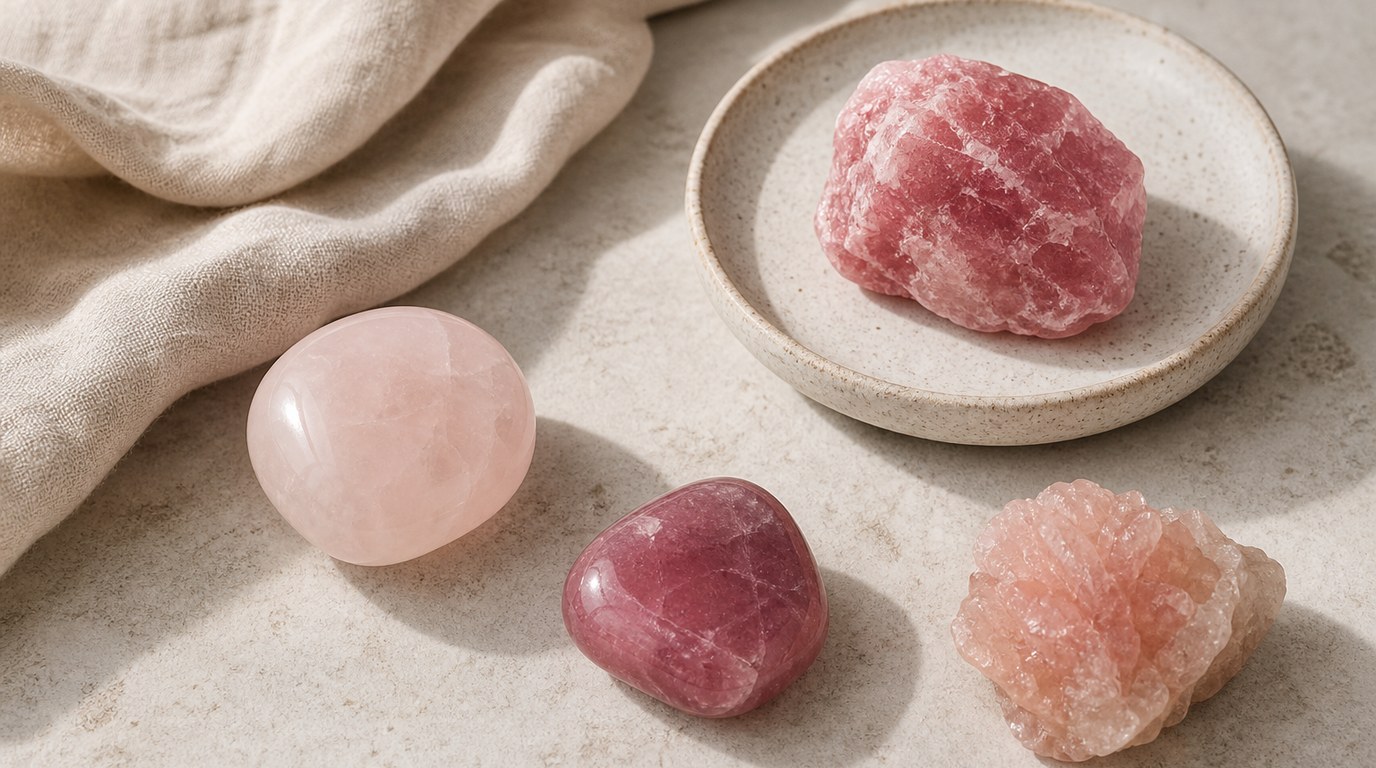
Pink crystals are a color-based category of crystals rather than one mineral family. Their shared feature is their pink tone, which may range from pale blush and peach-pink to deep rose, raspberry, or magenta.
In spiritual crystal meanings, pink is usually connected with the heart, affection, emotional safety, compassion, and receptivity. For this reason, pink crystals are often chosen by people working with self-love, relationship healing, grief support, forgiveness, or gentle emotional growth.
Their meanings come from a mix of color symbolism, traditional crystal associations, and the unique properties assigned to each stone. A pink crystal may feel soft and soothing, bright and energizing, or deeply nurturing depending on its type.
How Pink Crystals Are Classified
The clearest way to understand pink crystals is by their energetic emphasis: what kind of heart-centered support each stone is believed to offer. This keeps the category organized instead of treating every pink stone as interchangeable.
Most pink crystals fall into a few practical groups. Some are calming and nurturing, such as rose quartz and pink opal. Some are more active and restorative, such as rhodonite and rhodochrosite. Others emphasize spiritual love, emotional protection, or refined heart energy, such as pink tourmaline, kunzite, and morganite.
This guide classifies pink crystals by intention first, then explains the major types. That way, you can compare them by meaning and choose one that fits your emotional or spiritual goal.
Types of Pink Crystals and Their Meanings
Use this table as a quick map of the major pink crystals. Each type has a distinct emphasis, even though many share themes of love and emotional healing.
| Pink crystal | Core meaning | Best fit |
|---|---|---|
| Rose quartz | Unconditional love and self-love | Beginners, comfort, compassion |
| Rhodonite | Emotional repair and forgiveness | Healing old wounds |
| Pink opal | Softness and inner peace | Sensitive emotions, calm |
| Pink tourmaline | Heart protection and loving energy | Boundaries, emotional strength |
| Kunzite | Spiritual love and openness | Meditation, gentle release |
| Morganite | Devotional love and trust | Relationships, heart expansion |
| Rhodochrosite | Joy, self-worth, emotional courage | Confidence and inner-child work |
| Pink calcite | Soothing emotional balance | Stress relief and tenderness |
Major Pink Crystals to Know
Rose quartz is the best-known pink crystal and the most beginner-friendly. It symbolizes unconditional love, self-acceptance, compassion, and emotional comfort. People often choose rose quartz when they want to be gentler with themselves, soften resentment, or invite more kindness into relationships. It is a good first pink crystal because its meaning is simple, broad, and easy to work with.
Rhodonite has a stronger, more restorative energy in crystal symbolism. It is associated with emotional repair, forgiveness, and rebuilding after hurt. If rose quartz is about soft love, rhodonite is about doing the emotional work that allows love to return. It is often chosen for heartbreak, conflict recovery, or learning to respond with patience instead of reactivity.
Pink opal is linked with peace, sensitivity, and emotional soothing. It is a gentle choice for people who feel overwhelmed, tender, or emotionally drained. Pink opal is often used for calming the heart after stress and supporting quiet self-care. Its meaning is less about romance and more about inner softness.
Pink tourmaline is connected with heart-centered strength. It is often described as loving but protective, making it useful for people who want to remain open-hearted without absorbing every emotion around them. Pink tourmaline fits intentions around emotional boundaries, compassion, and resilient love.
Kunzite is a pale pink to lilac-pink crystal associated with spiritual love, emotional release, and heart awakening. It is often used in meditation or reflective practices because its meaning feels spacious and refined. Kunzite is a good choice when you want to release emotional tension while staying gentle with yourself.
Morganite is commonly linked with trust, devotion, and graceful love. Its soft peach-pink tone gives it an association with warmth, sincerity, and emotional openness. Morganite is often chosen for relationship intentions, especially when the goal is not attraction alone but deeper trust, patience, and mutual care.
Rhodochrosite has a vivid pink color and a more joyful emotional meaning. It is associated with self-worth, playfulness, emotional courage, and inner-child healing. Rhodochrosite is a useful pink crystal when the goal is to reconnect with joy after sadness or to build confidence in being fully seen.
Pink calcite is a soothing stone associated with emotional balance, tenderness, and gentle release. It is less intense than rhodochrosite and often feels more like emotional decompression. Pink calcite is a good match for stress relief, compassion practices, and softening harsh self-talk.
Pink Crystal Meanings by Intention
If your intention is self-love, start with rose quartz or pink calcite. Rose quartz supports broad compassion, while pink calcite helps soften inner criticism.
For emotional healing, choose rhodonite or rhodochrosite. Rhodonite supports forgiveness and repair; rhodochrosite emphasizes self-worth and emotional courage.
For calm and comfort, pink opal is the gentlest choice, especially when emotions feel raw or overstimulated.
For relationships, morganite and rose quartz are strong options. Morganite focuses on trust and devotion, while rose quartz supports kindness and openness.
For heart protection, pink tourmaline is a better fit than very soft stones because it combines love with emotional strength.
For spiritual heart work, kunzite is often the clearest match.
How to Choose a Pink Crystal
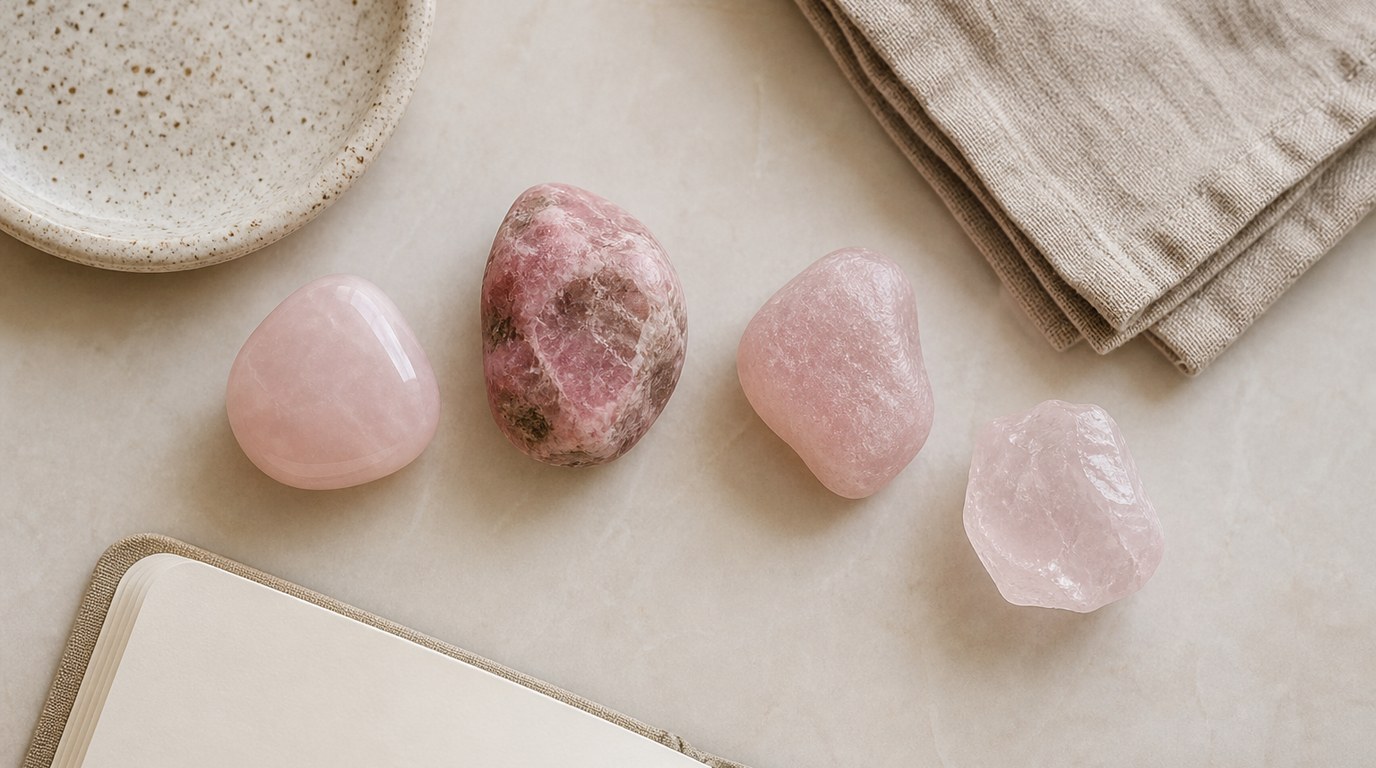
Choose a pink crystal by naming your intention first. If you simply want a loving, beginner-friendly stone, rose quartz is the easiest starting point. If you are working through pain, rhodonite may be more specific. If you need calm, pink opal or pink calcite may feel better.
Also notice the emotional tone you want. Some pink crystals are soft and comforting; others are active and strengthening. A person seeking rest may not need the same stone as someone rebuilding confidence.
Color depth can also guide your choice symbolically. Pale pink stones often feel gentle and soothing, while deeper pink stones are commonly linked with stronger emotional movement, courage, or passion.
Simple Ways to Use Pink Crystals
You can use pink crystals in simple, meaning-based practices. Hold one during meditation and focus on a phrase such as “I receive compassion” or “I release resentment.” Place a calming stone like pink opal or rose quartz near your bedside for a softer emotional atmosphere.
For journaling, keep rhodonite, rhodochrosite, or pink calcite nearby while reflecting on forgiveness, self-worth, or emotional patterns. In relationship work, use rose quartz or morganite as a reminder to practice patience, honesty, and kindness.
Key Takeaway
Pink crystals are best understood as a heart-centered color category with different emotional roles. They commonly symbolize love, compassion, healing, calm, and openness, but each type has its own emphasis.
For a first pink crystal, rose quartz is the classic choice. For deeper emotional repair, consider rhodonite or rhodochrosite. For calm, choose pink opal or pink calcite. For trust, protection, or spiritual love, look to morganite, pink tourmaline, or kunzite.
FAQ
What Should a Beginner Know First About Pink Crystals?
A beginner should know that pink crystals are usually associated with the heart, love, compassion, and emotional healing. Rose quartz is the easiest starting point, but other pink stones have more specific meanings, such as rhodonite for forgiveness or pink opal for calm.
What Matters Most When Evaluating Pink Crystals?
The most important factor is your intention. If you want comfort, choose a softer stone like rose quartz or pink opal. If you want emotional repair, rhodonite may fit better. For confidence, rhodochrosite is often a stronger symbolic match.
What Mistakes Should Readers Avoid with Pink Crystals?
Avoid assuming all pink crystals mean the same thing. They share heart-centered symbolism, but their uses differ. Also avoid choosing only by appearance if you are working with crystal meanings. A beautiful stone is helpful, but the intention should guide the choice.
What Is the Next Logical Step After Learning About Pink Crystals?
The next step is to choose one pink crystal that matches your current emotional goal. Start with a simple practice, such as holding it during meditation or journaling with it nearby, and notice whether its meaning supports the quality you want to cultivate.