
Curious about spirit communication tools? You might wonder about the differences between Ouija boards and pendulum boards. Both tools have unique ways of helping you connect with energies and get answers to your questions.
A pendulum board works best for personal, private readings with yes-or-no questions, while a Ouija board is designed for group sessions and can provide more complex responses through its planchette and letter system. You can use a pendulum by yourself in a quiet space, making it perfect for daily guidance or quick answers.
Your choice between these tools depends on what you want to achieve. Pendulums offer a simple, focused approach that many find less intimidating than Ouija boards. The pendulum’s gentle swinging motions create a peaceful experience, unlike the more social nature of Ouija board sessions where multiple people often participate.
Exploring the Origins
Both Ouija boards and pendulum boards emerged from humanity’s deep desire to communicate with spirits and seek guidance from beyond. These tools have fascinating histories that span different cultures and time periods.
History of the Ouija Board
The Ouija board first appeared in ancient China around 1100 AD, where people used a device called a planchette to talk with the dead.
The modern Ouija board took shape in America during the 1800s, when interest in Spiritualism was at its peak. People gathered in parlors to try connecting with departed loved ones.
In 1890, businessmen Charles Kennard and Elijah Bond patented the first official Ouija board. They sold it as both a spiritual tool and a fun parlor game.
The name “Ouija” came from combining the French word “oui” and German word “ja” – both meaning “yes.” This clever marketing choice helped make the board appeal to a wider audience.
Origins of the Pendulum Board
Pendulum boards started as simple tools using weighted objects on strings or chains. Ancient Egyptian priests used pendulums to get answers from their gods.
You can find evidence of pendulum use in many cultures – from Celtic druids to Roman fortune tellers. Each group developed their own ways of reading the swings and movements.
The modern pendulum board combines the traditional pendulum with written letters and symbols. This makes it easier for you to get clear answers from your readings.
Unlike Ouija boards, pendulum boards are usually meant for one person to use alone. They’re seen as more personal tools for spiritual guidance and divination.
Understanding the Tools
Both Ouija boards and pendulum boards help you connect with spiritual energies, though they work in different ways and have distinct designs.
Components and Design
A Ouija board is typically rectangular and features letters, numbers, and words like “yes” and “no” printed on its surface. You use a heart-shaped or triangular planchette that slides across the board to spell out messages.
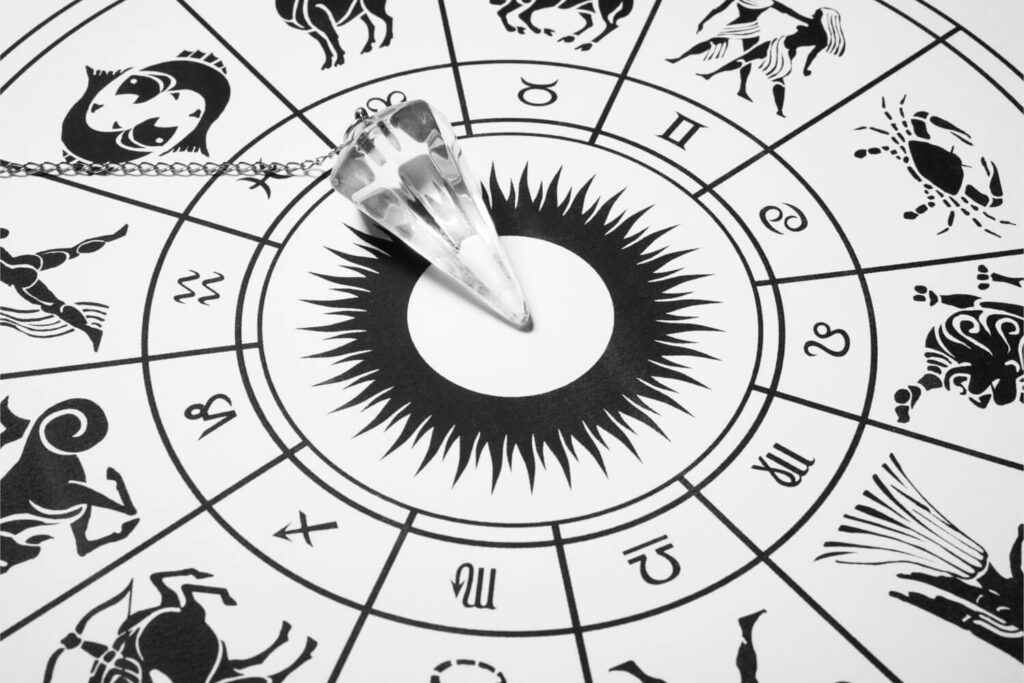
Pendulum boards are usually circular and have simpler designs. They display options like “yes,” “no,” and sometimes directional markers or other symbols. You’ll need a separate pendulum – often a crystal or metal weight on a chain or string.
Mechanisms of Operation
With a Ouija board, you place your fingers lightly on the planchette. The planchette moves to different letters and numbers to form messages. Many people believe spirits guide these movements.
A pendulum works through subtle swinging motions. You hold the pendulum steady above the board and ask questions. The way it swings – forward and back, side to side, or in circles – points to different answers on the board.
The pendulum method feels more controlled and personal. You can even use a pendulum without a board by assigning meaning to different swing patterns.
Methods of Communication
Spirit communication tools like Ouija boards and pendulums have unique ways of delivering messages. Each method needs careful attention and practice to interpret correctly.
Interpreting Messages from the Ouija
The Ouija board uses a planchette – a heart-shaped or triangular piece that you and other participants place your fingers on. The planchette moves across letters, numbers, and words printed on the board.
Start with simple yes/no questions to establish a connection. Watch as the planchette spells out words by moving from letter to letter.
Keep a notebook handy to write down letters as they come through. Sometimes the messages move quickly, and it’s easy to lose track.
The planchette might circle the board before answering or move to “Hello” or “Goodbye.” These movements can signal the start or end of your session.
Deciphering Pendulum Motions
Your pendulum will establish its own pattern of movement for “yes” and “no” responses. Common patterns include swinging forward and back for yes, side to side for no.
Ask your pendulum to show you its “yes” movement. Then ask for its “no” movement. Write these patterns down for future reference.
Pendulum boards often have a circle of letters and numbers. Let your pendulum swing naturally over the board to spell out messages.
For best results, hold the pendulum chain between your thumb and index finger. Keep your elbow resting on a table to minimize hand movement.
Cultural Impact and Usage
Spirit boards have shaped beliefs and practices around communicating with the beyond, becoming fixtures in both entertainment and spiritual practices.
Representation in Media
Movies and TV shows often portray Ouija boards as gateways to dangerous supernatural forces. You’ll see them featured in horror films like The Exorcist and Ouija, where they typically lead to haunting or possession. Board games and video games have also incorporated spirit board themes into their designs.
TV shows frequently use spirit boards as plot devices to create suspense or supernatural storylines. These dramatic portrayals have influenced public perception, making many people view Ouija boards with fear or skepticism.
Modern Day Practices
You can find spirit boards used in various ways today. Some people treat them as party games or entertainment, while others incorporate them into serious spiritual practices.
Pendulum boards have gained popularity in new age and metaphysical communities. Many practitioners use them for personal guidance and meditation rather than spirit communication.
If you want to try one yourself, this guide shows how to use a crystal pendulum board step by step.
Online communities and social media have created new spaces for sharing experiences with both types of boards. You’ll often see TikTok videos and YouTube channels dedicated to spirit board sessions and tutorials.
Some modern witchcraft practitioners prefer pendulum boards, viewing them as safer tools for spiritual work compared to Ouija boards.