
Meditation crystals for kids can be used as simple, optional focus tools during breathing, quiet time, bedtime, or emotional check-ins. They are not magic fixes, and they should not replace comfort, communication, medical care, or professional mental health support when a child needs it. For many families, a smooth stone gives a child something concrete to hold while practicing calm attention.
The best approach is gentle and age-appropriate: choose safe, smooth, non-toxic stones; keep sessions short; let the child opt in; and use crystals as part of a larger mindfulness routine. A crystal may support the ritual, but the real practice is breathing, noticing feelings, and building a sense of safety.
Why Parents Use Crystals in Kids’ Meditation
Parents often look for meditation crystals for kids when a child has trouble settling down, feels big emotions, resists quiet time, or enjoys tactile objects. A crystal can give the hands something to do while the mind practices slowing down. For some children, holding a stone feels easier than simply being told to “relax.”
In a child-friendly routine, the crystal is best treated as a mindfulness anchor. It can help a child notice texture, temperature, weight, color, and breath. This makes meditation feel less abstract.
Crystals can also make calming routines feel special. A child may enjoy choosing “today’s quiet stone” or placing a crystal beside a bedtime book. The goal is not to convince a child that the crystal has power over them, but to create a peaceful cue: when we hold this stone, we pause, breathe, and listen inward.
How to Choose Meditation Crystals for Kids
Choose crystals based on your child’s age, temperament, and the setting where the crystal will be used. For younger children, prioritize larger, smooth, tumbled stones that are not easy to swallow. Avoid sharp points, delicate clusters, flaky minerals, or stones that shed dust.
For a child who likes touch, choose a polished stone with a comforting shape. For a visually oriented child, color may matter more. For a child who gets overstimulated, choose one simple stone instead of a large collection.
Also consider the routine. A bedtime crystal should feel soothing and not too exciting. A morning focus stone can be a little brighter or more energizing. A feelings check-in stone should be easy to hold while talking.
Most importantly, let the child have a say. If they dislike a stone, it is not the right fit, no matter how commonly it is recommended.
Best Meditation Crystals for Kids and When They Fit
For bedtime or winding down, amethyst is a common choice. It is often associated with calm, rest, and quiet reflection. A child can place a smooth amethyst on a bedside table or hold it during three slow breaths before sleep. Keep expectations modest: it may support the bedtime ritual, but it should not be presented as something that makes sleep happen.
For emotional comfort, rose quartz can fit well. Its soft pink color is often connected with kindness, self-compassion, and gentle feelings. It may be useful during a “heart breath” practice where a child holds the stone near the chest and names one kind thing about themselves or someone else.
For grounding after a busy day, hematite or smoky quartz may help as a symbolic “heavy stone” for settling. These can work for children who feel scattered after school or activities. Ask the child to notice the stone’s weight in their palm while slowly pressing their feet into the floor.
For confidence before school, practice, or a new activity, citrine or tiger’s eye may fit. These stones are often associated with courage, confidence, and steady attention. Use them briefly: one minute of holding the stone while saying, “I can try one step at a time.”
For simple focus during homework or reading, clear quartz can be used as a neutral attention stone. Place it nearby and invite the child to touch it when they notice their mind wandering. The crystal is a reminder, not a pressure tool.
Simple Crystal Meditation Practices for Children
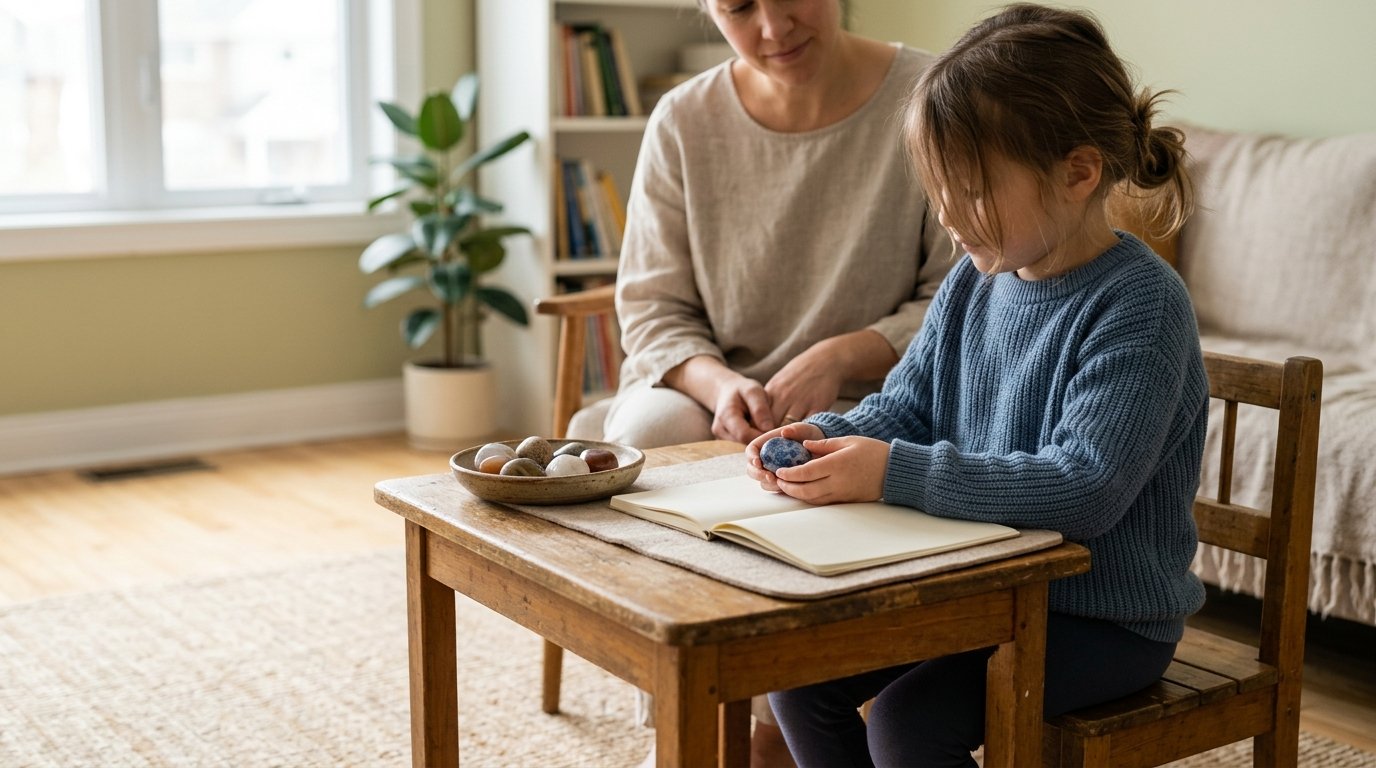
Keep crystal meditation short, concrete, and playful. Many children do best with one to five minutes, especially at the beginning.
Try a five-senses crystal pause. Ask your child to hold a smooth stone and notice: What color is it? Is it warm or cool? Heavy or light? Smooth or bumpy? Does it feel different after holding it for a minute? This builds mindful attention without needing silence for long.
Try breathing with the stone. The child holds the crystal in both hands. On the inhale, they gently squeeze or notice the stone. On the exhale, they soften their shoulders. Repeat three to five times.
Try a feelings check-in. Place two or three safe stones nearby and ask, “Which one matches how you feel today?” Let the child explain or simply choose. This can open conversation without forcing it.
For bedtime, use a goodnight stone ritual. The child holds the crystal, names one good moment from the day, one hard moment, and one thing they are ready to let go of. Then the stone goes in a safe place, such as a dish or shelf.
For younger children, guide the practice aloud. Older children may prefer privacy or a simple prompt card.
Safety Guidelines for Kids Using Crystals
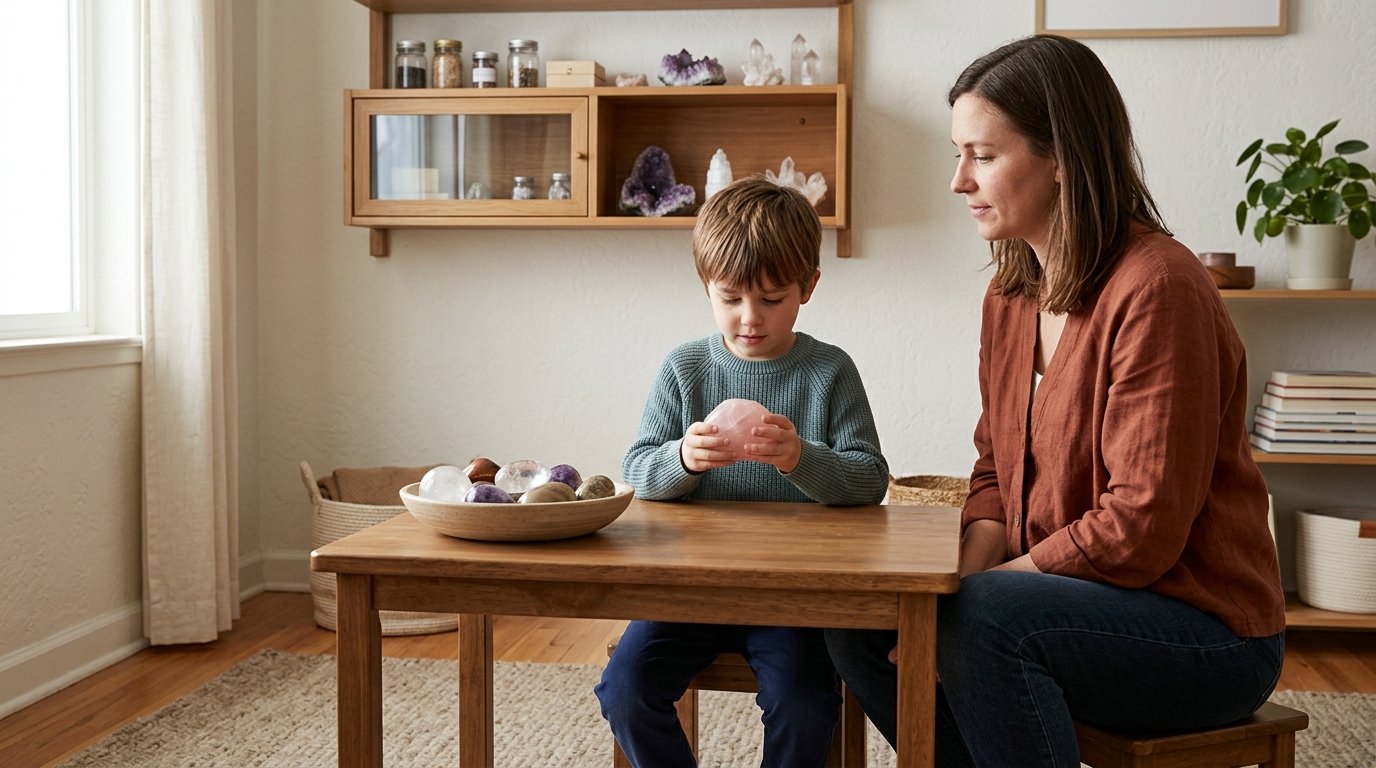
Safety matters more than crystal meaning. Do not give small stones to babies, toddlers, or children who may put objects in their mouth. Even older children should be supervised until you know they can use crystals safely.
Choose smooth, stable stones. Avoid sharp crystal points, breakable clusters, rough edges, and fragile minerals. Some crystals can contain substances that are not safe for licking, soaking, or handling roughly. If you are unsure about a mineral, keep it as a display item only or choose a common polished option from a reputable seller.
Do not put crystals in bathwater or drinking water for children. “Crystal-infused” water is not necessary and may be unsafe depending on the stone.
Clean crystals in a practical way: wipe them with a soft cloth, and wash hands after handling if needed. Store them in a small pouch, bowl, or box when not in use.
Finally, watch the emotional tone. Crystals should not be used to dismiss a child’s feelings. If a child is anxious, sad, angry, or overwhelmed, the crystal can support a calming moment, but they still need listening, reassurance, and appropriate help.
How to Introduce Crystals Without Pressure
Start by offering, not instructing. You might say, “Would you like to hold a quiet stone while we breathe?” If the child says no, accept it. Mindfulness works best when it feels safe, not forced.
Let your child choose from two or three safe options. Too many crystals can make the activity feel distracting. Keep language simple: “This stone can remind us to slow down,” rather than “This stone will calm you.”
Notice what your child naturally enjoys. Some children love the ritual; others prefer a stuffed animal, drawing, music, or movement. The best tool is the one your child can use comfortably.
A Simple Starter Routine for This Week
Choose one safe, smooth crystal and one time of day. Bedtime, after school, or before homework are good starting points.
For seven days, try this two-minute routine:
- Sit together comfortably.
- Let your child hold the crystal.
- Take three slow breaths.
- Ask, “How does your body feel right now?”
- End with one kind sentence, such as “I am learning to pause.”
After a week, ask your child what they liked, disliked, or would change. Keep the parts that feel supportive and drop the rest.
FAQ
What Should a Beginner Know First About Meditation Crystals Kids?
Beginners should know that crystals are optional focus tools, not guaranteed solutions. For kids, the value is usually in the calming routine: holding a smooth stone, breathing slowly, naming feelings, and feeling supported by a parent or caregiver.
What Matters Most When Evaluating Meditation Crystals Kids?
Safety, age fit, and your child’s comfort matter most. Choose larger smooth stones, avoid sharp or fragile pieces, supervise use, and let your child opt in. A crystal that feels interesting and calming to your child is more useful than one with a popular meaning.
What Mistakes Should Readers Avoid with Meditation Crystals Kids?
Avoid promising that crystals will fix anxiety, sleep, behavior, or focus. Also avoid small stones for young children, crystal water, sharp points, and forcing meditation when a child is upset. Use crystals to support connection, not to replace listening or care.
What Is the Next Logical Step After Learning About Meditation Crystals Kids?
Pick one safe crystal and one simple routine, such as three breaths before bed or a short feelings check-in after school. Try it for a week, observe your child’s response, and adjust gently based on what feels supportive.