
Pendulum stands are handy tools that can make using a pendulum easier and more accurate. They keep your pendulum steady and let it swing freely. This helps you get clearer answers when you’re doing divination or energy work.
To use a pendulum stand, place it on a flat surface and hang your pendulum from it. Make sure the pendulum can move without hitting anything. You can put a pendulum chart underneath to help read the answers. Using a stand lets you focus on asking questions without worrying about holding the pendulum still.
Pendulum stands come in different styles. Some are simple Y-shaped holders, while others have fancy designs. Pick one that feels right to you. The most important thing is that it keeps your pendulum stable so you can tune into its movements. With practice, a pendulum stand can become a trusted part of your divination toolkit.
Understanding Pendulum Stands
Pendulum stands are useful tools for holding and displaying pendulums. They come in different styles and have been used for centuries in various practices.
Types of Pendulum Stands
Wood stands are common and offer a natural look. Metal stands provide durability and a modern feel. Some stands have a single hook, while others have multiple hooks for hanging several pendulums.
Glass or crystal stands add elegance to your space. Portable stands fold up for easy travel. Adjustable stands let you change the height of your pendulum.
Some stands have a dish or tray at the base to catch falling pendulums. Others include storage compartments for keeping extra pendulums or charts.
History and Usage
Pendulum stands have been around for hundreds of years. In the past, they were often used by scientists to study gravity and motion. Today, many people use them for spiritual or healing practices.
You can use a stand to keep your pendulum safe when not in use. It also makes it easy to grab your pendulum quickly when you need it. Some people like to display their pendulums on stands as decorative items.
In group settings, stands can hold pendulums for multiple users. They’re helpful in workshops or classes about pendulum use. Stands also make great gifts for pendulum enthusiasts.
Setting Up Your Pendulum Stand
A good setup is key for accurate pendulum experiments. Pick a stable spot, put the stand together properly, and hang the pendulum just right. These steps will help you get started.
Choosing the Right Location
Find a flat, stable surface for your pendulum stand. A sturdy table or desk works well. Stay away from areas with air currents, like open windows or vents. These can mess up your results.
Pick a spot with enough room around it. You’ll need space to move and observe. Make sure there’s nothing in the way of the swinging pendulum.
Good lighting is important too. You want to see the pendulum clearly as it moves. Natural light is great, but a desk lamp can work if needed.
Assembling the Stand
Start with the base. It should be heavy and flat to keep things steady. Screw in the vertical rod tightly.
Next, attach the clamp to the rod. Make sure it’s at the right height for your pendulum. Tighten it well so it doesn’t slip.
If your stand has extra parts like a protractor or measuring tape, add those now. They can help you track the pendulum’s movement.
Double-check all connections. A wobbly stand can ruin your experiment.
Positioning the Pendulum
Tie your pendulum to a string or thin chain. The material should be light but strong.
Attach the free end to the clamp on your stand. Make sure it’s secure but can still swing freely.
Adjust the length of the string. This affects how fast the pendulum swings. For most experiments, start with about 1 meter.
Use a ruler to measure from the clamp to the center of the pendulum bob. Write down this length for your records.
Make sure the pendulum hangs straight down when at rest. If it’s tilted, your results might be off.
Operating the Pendulum
Using a pendulum stand involves starting the swing and adjusting it to achieve the desired motion. These steps help you get the most out of your pendulum setup.
Starting the Pendulum
To begin, place your pendulum on the stand. Make sure it hangs freely without touching anything. Gently pull the pendulum to one side, about 15-20 degrees from center. Let go and watch it swing.
For a smoother start, try the push method. Hold the pendulum still, then give it a small push. This works well for lighter pendulums.
You can also use the drop method. Lift the pendulum straight up, then release it. This creates a more dramatic swing.
Adjusting the Swing
To change the pendulum’s motion, alter its length. Shorten the string for faster swings. Lengthen it for slower, wider arcs.
Many stands have adjustable hooks or knobs. Use these to easily change the pendulum’s height.
You can also add or remove weight from the bob. More weight means a stronger swing. Less weight creates a gentler motion.
Try different starting points too. A wider initial angle leads to bigger swings. Smaller angles produce more controlled movement.
Remember, air currents can affect your pendulum. Close windows or move away from vents for steadier swings.
Pendulum Stand Maintenance
Keeping your pendulum stand in good condition is key to getting accurate readings. A well-maintained stand ensures smooth pendulum movement and reliable results.
Regular Cleaning
Clean your pendulum stand weekly to prevent dust buildup. Use a soft, dry cloth to wipe down the base and arm. For stubborn dirt, dampen the cloth slightly with water. Avoid harsh chemicals that could damage the stand’s finish.
Pay special attention to the hook or clasp that holds the pendulum. Make sure it’s free of debris that could affect the swing. If your stand has moving parts, oil them lightly every few months.
Store your stand in a clean, dry place when not in use. A cover can protect it from dust between sessions.
Troubleshooting Common Issues
Is your pendulum not swinging freely? Check the stand’s balance. Place it on a flat surface and adjust any wobbly legs.
If the pendulum keeps getting tangled, the chain might be too long. Try shortening it or using a different pendulum.
Squeaky joints? A tiny drop of oil can fix that. Just be careful not to use too much.
For wooden stands, watch out for cracks or warping. Keep them away from heat and humidity to prevent damage.
If your readings seem off, try recalibrating your pendulum with the stand. Hold it still, then ask a few yes/no questions to reset its movements.

Enhancing Your Practice
To get more from your pendulum stand, try using intentions and adding other tools. This can deepen your connection and improve your results.
Using Intentions with the Pendulum
Set a clear intention before you start. Think about what you want to learn or achieve. Take a few deep breaths to center yourself. Hold the pendulum and focus on your goal.
You can say your intention out loud or in your mind. For example: “I intend to receive guidance about my career path.” Or “I seek clarity on my next steps.”
Being specific helps. Instead of asking “Will I be happy?”, try “What can I do to increase my happiness this week?”
Write down your questions beforehand. This keeps you focused during the session.
Incorporating Other Tools
Add crystals to boost energy. Place them near your pendulum stand or hold them. Clear quartz amplifies intentions. Amethyst enhances intuition.
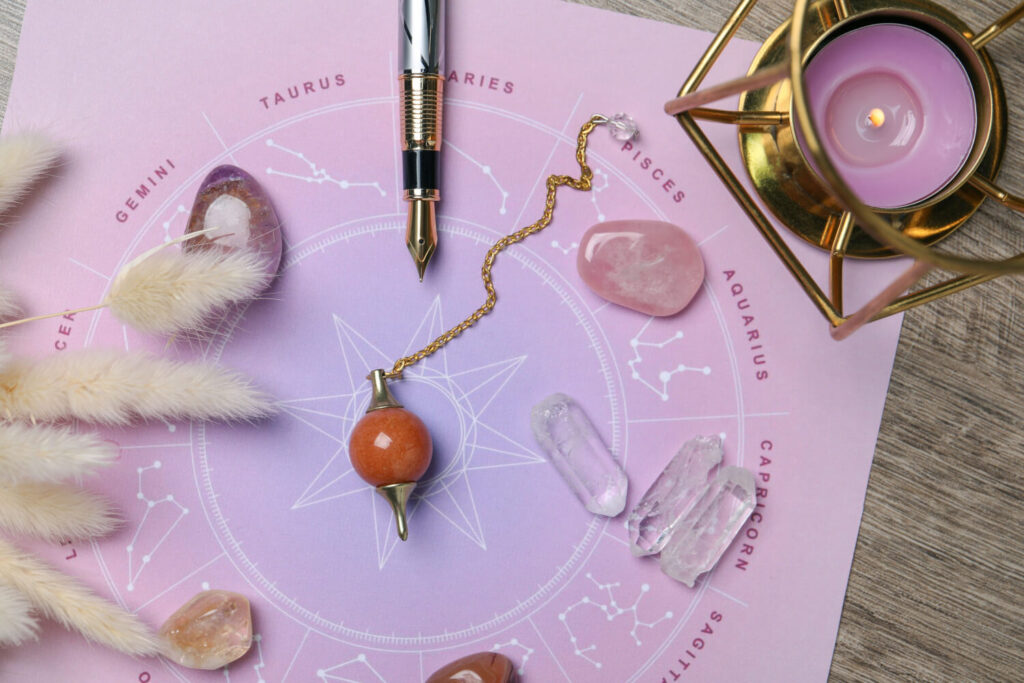
Use a pendulum board or chart. Draw or print one with labeled areas. This gives more detailed answers than simple yes/no questions.
Try aromatherapy. Light a candle or use essential oils. Lavender promotes calm. Peppermint sharpens focus.
Play soft background music. It can help you relax and tune in better.
Keep a journal nearby. Write down your insights after each session. This helps track patterns over time.
Safety Concerns
Using a pendulum stand can be fun and insightful, but it’s key to keep safety in mind. There are some important things to remember about handling the stand properly and knowing when it’s best not to use it.
Proper Handling
Always set up your pendulum stand on a flat, stable surface. This helps prevent tipping or falling, which could hurt you or damage the stand. Make sure the base is clean and free of debris. When attaching the pendulum, double-check that it’s securely fastened.
Hold the stand gently but firmly when moving it. Avoid sudden movements that might cause the pendulum to swing wildly. If you need to adjust the height, do it slowly and carefully.
Keep your pendulum stand away from edges of tables or shelves. This reduces the risk of accidental knocks or falls. When not in use, store the stand in a safe place where it won’t get bumped or knocked over.
When Not to Use the Pendulum Stand
Don’t use your pendulum stand if you’re feeling tired or unfocused. It’s best to be alert and clear-minded when working with it. Skip using it if you’re upset or stressed, as this can affect your results.
Avoid using the stand in crowded or busy areas. Too much movement around you can disturb the pendulum’s swing. It’s also not a good idea to use it outdoors on windy days.
If your stand seems wobbly or damaged, don’t use it until you’ve fixed or replaced it. Using a faulty stand could lead to inaccurate readings or accidents. Lastly, it’s wise to take breaks and not use the stand for very long periods to avoid eye strain or dizziness.
Advanced Techniques
Using a pendulum stand allows for more precise and complex readings. These methods can help you get deeper insights and improve your divination skills.
Precision Swinging
To get more accurate results, try using a pendulum stand with a weighted base. This keeps your hand steady and reduces outside movement. Place the stand on a flat surface away from drafts or vibrations.
You can also use a pendulum board with the stand. Draw a circle on paper and mark it with yes, no, and maybe. Put this under your pendulum for clearer answers.
Try asking more specific questions when using the stand. Instead of “Will I find love?”, ask “Will I meet someone special this month?” This narrows down the energy and can lead to more precise swings.
Interpreting Complex Movements
Watch for circular or figure-eight patterns in your pendulum’s swing. These often mean “I don’t know” or that the question is too complex.
If the pendulum moves in a new way, pause and ask what that movement means. Write down any new patterns you notice to build your own “pendulum language”.
You can also use the stand for chakra readings. Hold the pendulum over each energy center and note how it moves. Clockwise circles might mean open chakras, while counter-clockwise could show blocks.
Try using different pendulums with your stand. Some may work better for certain types of questions or energies. Keep a log of which ones give you the clearest answers.