
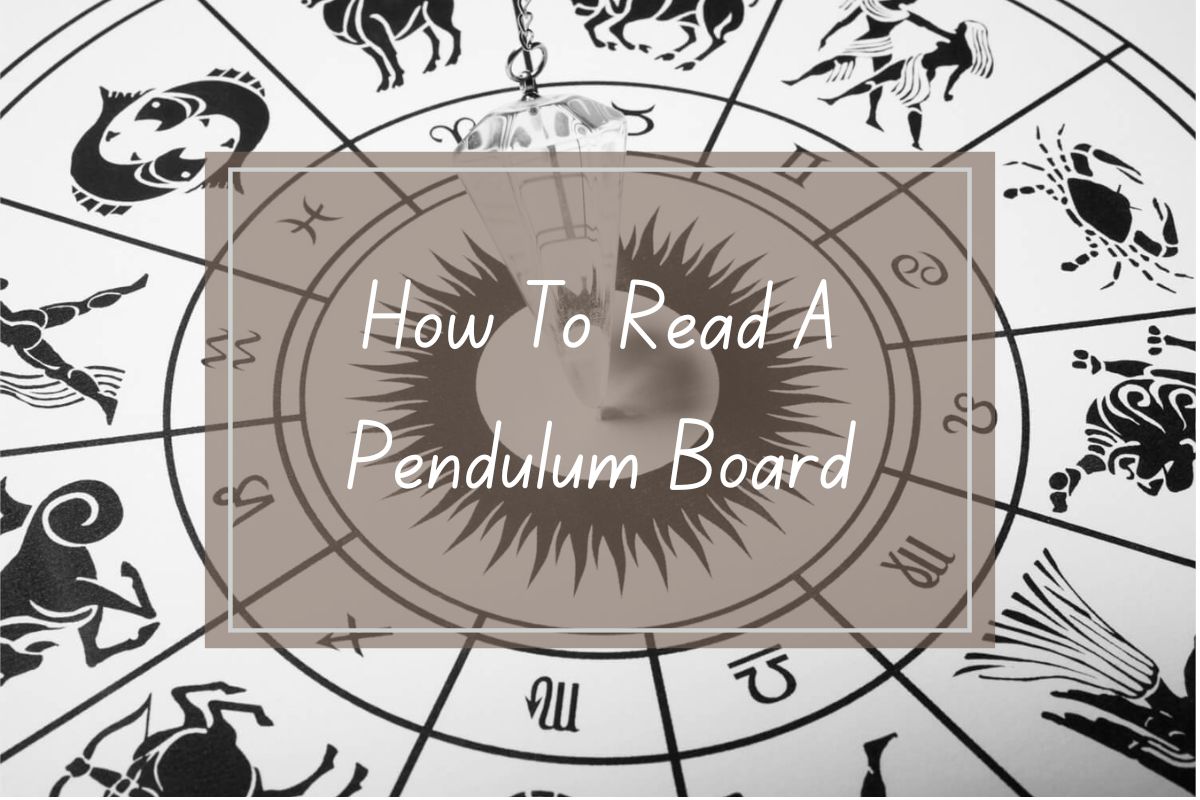
A pendulum board is a simple yet powerful tool for seeking answers and guidance. Unlike Ouija boards that need multiple people, you can use a pendulum board by yourself to get clear yes-or-no responses to your questions. The board features marked areas or symbols that help interpret the pendulum’s movements.
You can read a pendulum board by holding your pendulum steady above the center, asking clear questions, and watching which direction it swings – the movement patterns will point to answers marked on the board. Many people find that with practice, the pendulum responds more strongly and consistently to their energy.
Getting started is easy – you just need a pendulum, a board, and an open mind. Before each reading, take a few quiet moments to center yourself and set positive intentions. This helps create better connection with your intuition as you work with the board.
Understanding Pendulum Boards
A pendulum board is a divination tool that helps you get clear answers to your questions through the swinging movements of a pendulum. The board contains marked areas with words, numbers, or symbols that give meaning to the pendulum’s motion.
History and Purpose
Ancient civilizations used pendulums for seeking guidance and making decisions. The Egyptians used them to locate water sources, while European mystics relied on pendulums for healing work and finding lost objects.
The primary goal of a pendulum board is to connect you with your inner wisdom. It acts as a bridge between your conscious and subconscious mind.
These boards create a focused space for your pendulum work. They help you interpret the pendulum’s movements more precisely than working without a board.
Types of Pendulum Boards
Yes/No Boards: The simplest type, featuring basic areas for positive and negative responses. Perfect for beginners learning pendulum work.
Letter Boards: Include the alphabet for spelling out detailed messages. These boards let you receive more complex answers to your questions.
Chakra Boards: Feature the seven main energy centers of the body. They’re useful for energy healing and personal balance work.
Numeric Boards: Display numbers for getting specific quantities, dates, or percentages in your readings.
Each board type serves different purposes. You can start with a basic yes/no board and expand to other types as your skills grow.
Preparing for a Pendulum Reading
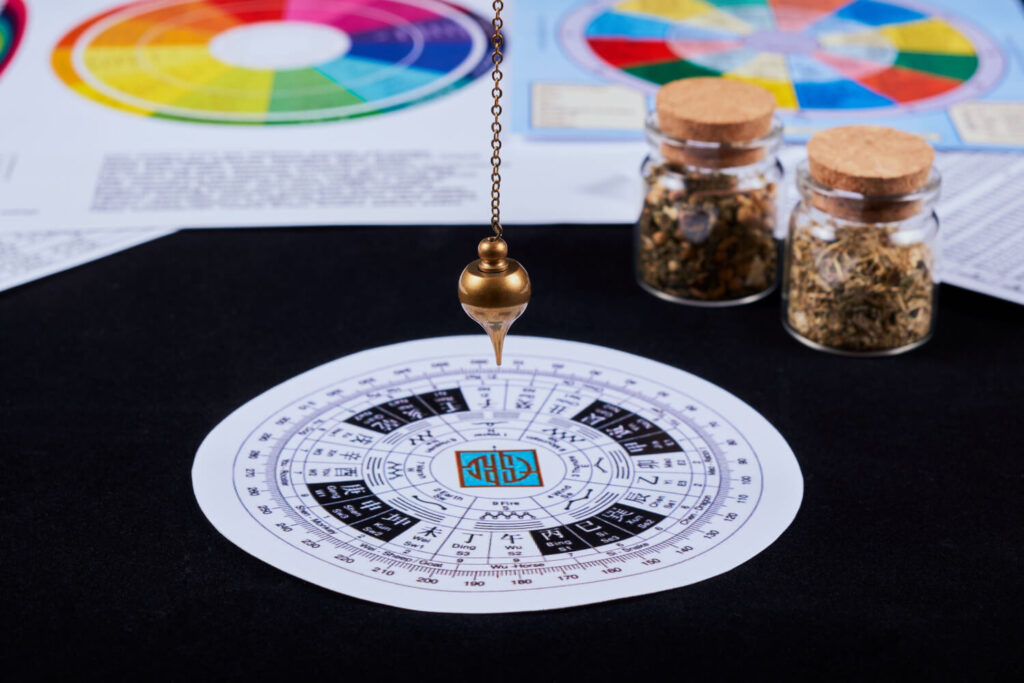
The right preparation creates a strong foundation for accurate and meaningful pendulum readings. A peaceful environment, clean tools, and positive mindset work together to enhance your connection with the pendulum’s energy.
Selecting Your Pendulum
Pick a pendulum that feels comfortable in your hand. Crystal pendulums are popular choices, with clear quartz being great for beginners.
Try holding different pendulums to find one that feels natural and balanced when you hold it. The weight should feel just right – not too heavy or too light.
Your pendulum might be made of metal, wood, or crystal. The material doesn’t matter as much as your personal connection to it.
Cleansing and Charging Your Tools
Clean your pendulum before each reading. Hold it under running water for 30 seconds, or place it in sunlight for an hour.
You can also cleanse your pendulum by:
- Placing it in a bowl of sea salt overnight
- Smudging with sage smoke
- Setting it on a clear quartz cluster
- Leaving it in moonlight
Charge your pendulum by holding it in your hands and focusing your energy into it. Take three deep breaths while thinking about your intention for using it.
Setting the Right Environment
Choose a quiet space where you won’t be interrupted. Turn off your phone and dim bright lights if possible.
Light a white candle or some calming incense to create a peaceful atmosphere. Lavender or sage scents work well for readings.
Set up your pendulum board on a flat surface. Make sure you can sit comfortably with good posture.
Take a few deep breaths to center yourself. A calm mind leads to clearer readings.
Interpreting Pendulum Movements
Reading pendulum movements requires attention to specific swing patterns and careful phrasing of your questions to get clear answers.
Common Movements and Meanings
Your pendulum will show distinct patterns when answering questions. A back-and-forth swing typically means “no,” while a forward/backward motion often indicates “yes.”
Clockwise circles usually signal positive or affirmative responses. Counter-clockwise movements frequently represent negative or opposing answers.
Some pendulums might show diagonal swings, which can mean “maybe” or “need more information.”
Watch for sudden changes in direction or irregular movements – these might mean you need to rephrase your question or take a break to reset your energy.
Asking Questions Effectively
Always start with simple yes/no questions to establish clear communication with your pendulum.
Frame your questions in a positive, clear way. Instead of “Should I not take this job?” ask “Would taking this job benefit me?”
Tips for clear readings:
- Ask one question at a time
- Stay calm and focused
- Keep questions specific
- Avoid leading questions
- Wait for definite movements
Give your pendulum time to settle between questions. If you get unclear responses, take a deep breath and try again with simpler phrasing.
After the Reading
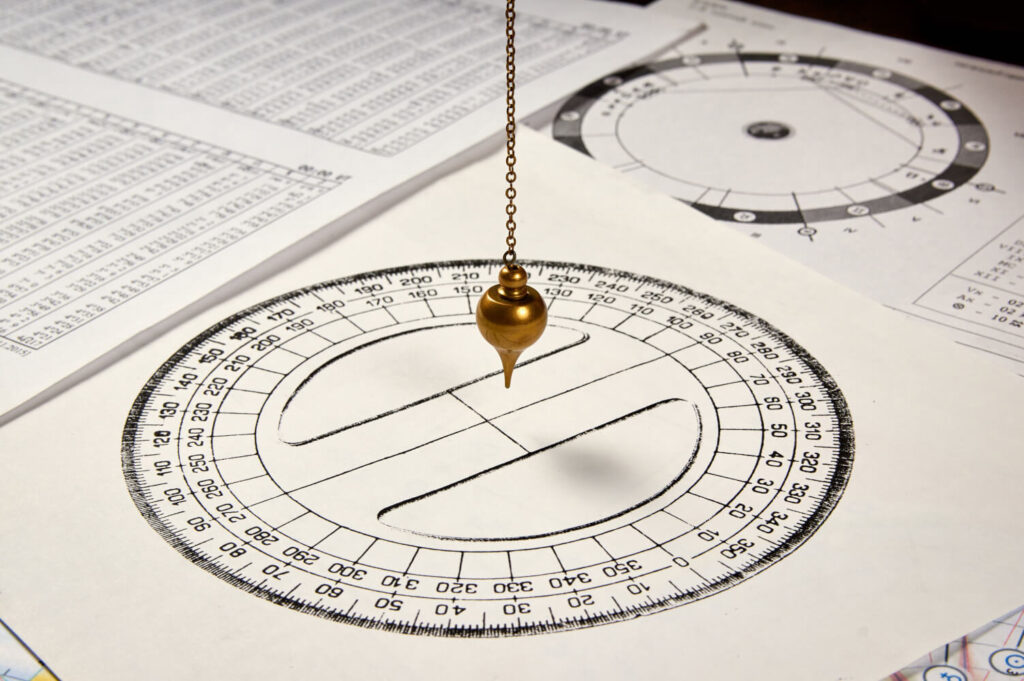
Taking proper steps after using your pendulum board helps you get better at divination and keeps your tools in good condition. Getting clear answers depends on good record-keeping, thoughtful reflection, and regular care of your equipment.
Recording Your Findings
Write down your questions and the pendulum’s answers in a dedicated notebook right after each session. Include the date, time, and any important details about your state of mind or environment.
Make note of the pendulum’s movements – was it strong and clear or weak and uncertain? This info helps you spot patterns over time.
Consider taking photos of complex board layouts or creating simple diagrams to remember specific positions.
Reflecting on the Answers
Take a few quiet moments to think about what the pendulum told you. Did any answers surprise you? Trust your gut feelings about the reading.
Compare the answers to what you already knew or suspected. Look for connections between different questions.
Give yourself time to process the information before making big decisions. Sometimes meanings become clearer after a day or two.
Caring for Your Pendulum Board
Clean your board gently with a soft, dry cloth after each use. Store it in a fabric pouch or box away from direct sunlight.
Keep your pendulum and board away from extreme temperatures and moisture. Never use harsh cleaners or chemicals.
Tip: Place a small crystal near your stored board to help maintain its energy. Clear quartz works well for this purpose.
Check your board regularly for wear and tear. Small scratches won’t affect readings, but deep gouges might need repair.