
Himalayan salt bath benefits are usually described in two connected ways: gentle body relaxation and symbolic energetic cleansing. A warm bath with mineral-rich pink salt can help you slow down, soften physical tension, and create a calm space for reflection. Spiritually, many people use it as a simple cleansing ritual to release heavy emotions, reset after stressful interactions, or mark a fresh start.
It is important to keep expectations realistic. A Himalayan salt bath is not a medical treatment, and it does not “detox” the body in a clinical sense. Its value comes from warmth, stillness, intention, sensory comfort, and the personal meaning you bring to the ritual.
What Is a Himalayan Salt Bath?
A Himalayan salt bath is a warm bath prepared with pink Himalayan salt, a natural rock salt often mined from the Punjab region near the Himalayas. It contains mostly sodium chloride, with trace minerals that give it its pink color.
The easiest mental model is this: the bath is both a physical soak and a symbolic cleansing container. The warm water relaxes the body, the salt creates a grounding sensory experience, and your intention gives the bath spiritual meaning.
Some people use Himalayan salt baths as part of self-care, while others use them before meditation, moon rituals, energy work, or after emotionally draining days. The practice is simple, beginner-friendly, and easy to adapt.
Himalayan Salt Bath Benefits
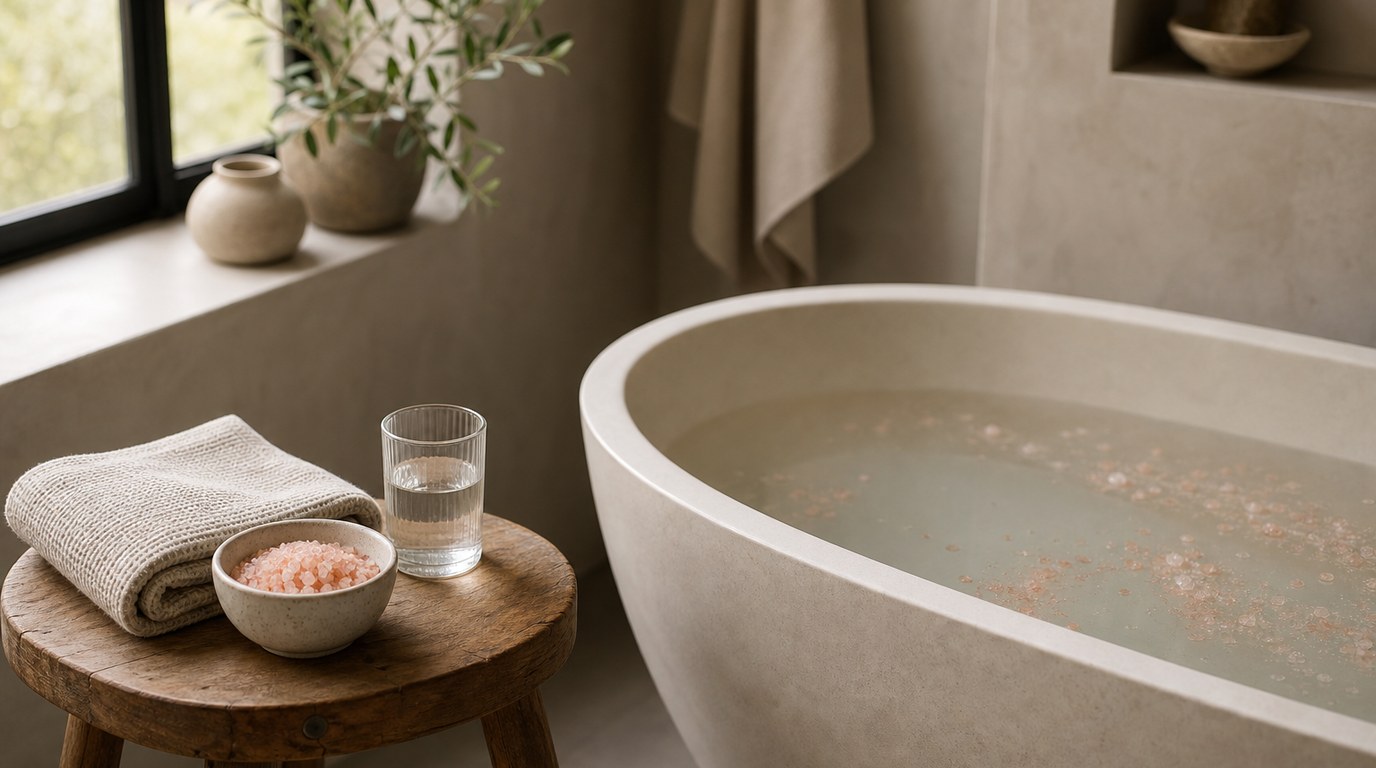
The most immediate benefit of a Himalayan salt bath is relaxation. Warm water can ease the feeling of tight muscles, support circulation to the skin, and signal to the nervous system that it is safe to slow down. If you feel tense after a long day, the bath can become a clear pause between stress and rest.
Another benefit is emotional reset. The act of soaking quietly, away from screens and demands, can help you process the day. For example, you might enter the bath feeling scattered and leave with a clearer sense of what you are ready to let go of.
For spiritual cleansing, Himalayan salt is often used symbolically to absorb, neutralize, or wash away stagnant energy. This is a belief-based practice, not a scientific claim, but it can be meaningful. Many people find that pairing salt water with intention helps them feel lighter, more grounded, and spiritually refreshed.
A Himalayan salt bath may also support better sleep routines. Taking a warm bath before bed can help the body transition into rest, especially when combined with dim lighting, slow breathing, and calming herbs or essential oils used safely.
Finally, the ritual can strengthen mindfulness. Because the bath is quiet and sensory, it encourages you to notice your breathing, body, thoughts, and emotions. That awareness is often where the deepest benefit begins.
Himalayan Salt Bath Benefits at a Glance
Use this quick guide to understand what a Himalayan salt bath may support and how to approach each benefit realistically.
| Benefit | How It May Help | Best Use |
|---|---|---|
| Relaxation | Warm water and quiet time help the body unwind | Evening self-care |
| Emotional reset | Creates space to pause and reflect | After stress or conflict |
| Spiritual cleansing | Symbolically releases stagnant energy | Before rituals or meditation |
| Grounding | Salt, water, and breath bring attention back to the body | When feeling scattered |
| Sleep support | Helps create a calming bedtime transition | 1–2 hours before bed |
How to Take a Himalayan Salt Bath
Start by filling your bathtub with warm water, not water that feels painfully hot. A comfortable temperature is especially important because salt baths can feel drying or intense if the water is too hot.
Add about 1/2 cup to 1 cup of fine or medium-grain Himalayan salt to a full bath. Swirl the water with your hand until the salt dissolves. Beginners may want to start with less salt and increase only if the bath feels good.
Soak for about 15 to 25 minutes. During the bath, breathe slowly and avoid using your phone. If you want a more peaceful atmosphere, dim the lights, light a candle safely, or play soft music.
After the bath, rinse off with fresh water if your skin feels salty or dry. Pat your skin gently with a towel and apply moisturizer if needed. Drink water afterward, especially if the bath was warm.
Keep the process simple. The bath does not need to be elaborate to be effective. Consistency, comfort, and intention matter more than adding many ingredients.
A Simple Himalayan Salt Bath Spiritual Cleansing Ritual
For a spiritual cleansing ritual, prepare your bath as usual with warm water and Himalayan salt. Before stepping in, take a moment to name your intention. Keep it clear and gentle, such as: “I release what is not mine to carry,” or “I return to peace, clarity, and protection.”
As you soak, imagine the water softening heavy energy around your body. With each exhale, picture stress, worry, or emotional residue leaving you and dissolving into the bathwater. You do not have to force a feeling; simply let the image support your focus.
Near the end of the bath, place one hand over your heart and one hand over your lower belly. Take three slow breaths and say thank you—to your body, to the water, and to your own willingness to reset.
When the water drains, visualize the old energy leaving with it. Step out slowly and do something grounding, such as drinking water or sitting quietly.
When to Use a Himalayan Salt Bath
A Himalayan salt bath is useful when you want a gentle reset rather than a complicated ritual. Many people take one after a stressful workday, an argument, travel, social overwhelm, or spiritual practice that feels energetically intense.
It can also be helpful before meditation, journaling, prayer, intention-setting, or a new moon or full moon ritual. If you are using it for sleep support, take the bath earlier in the evening so your body has time to cool down before bed.
For most people, once or twice a week is enough. Daily salt baths may dry the skin.
Safety Tips and Who Should Avoid Salt Baths
Avoid Himalayan salt baths if you have open wounds, irritated skin, or a skin condition that reacts badly to salt unless a healthcare professional says it is safe. If you are pregnant, have heart concerns, blood pressure issues, diabetes, dizziness, or any medical condition affected by heat, ask a qualified professional before using hot baths.
Do not make the water extremely hot, and get out if you feel lightheaded, weak, or uncomfortable. Keep drinking water nearby. Be careful when stepping out, as salt water can make the tub slippery.
Avoid using too much salt, especially as a beginner. More salt does not mean a stronger cleanse; it may simply irritate or dry your skin.
Himalayan Salt Bath Vs. Epsom Salt Bath
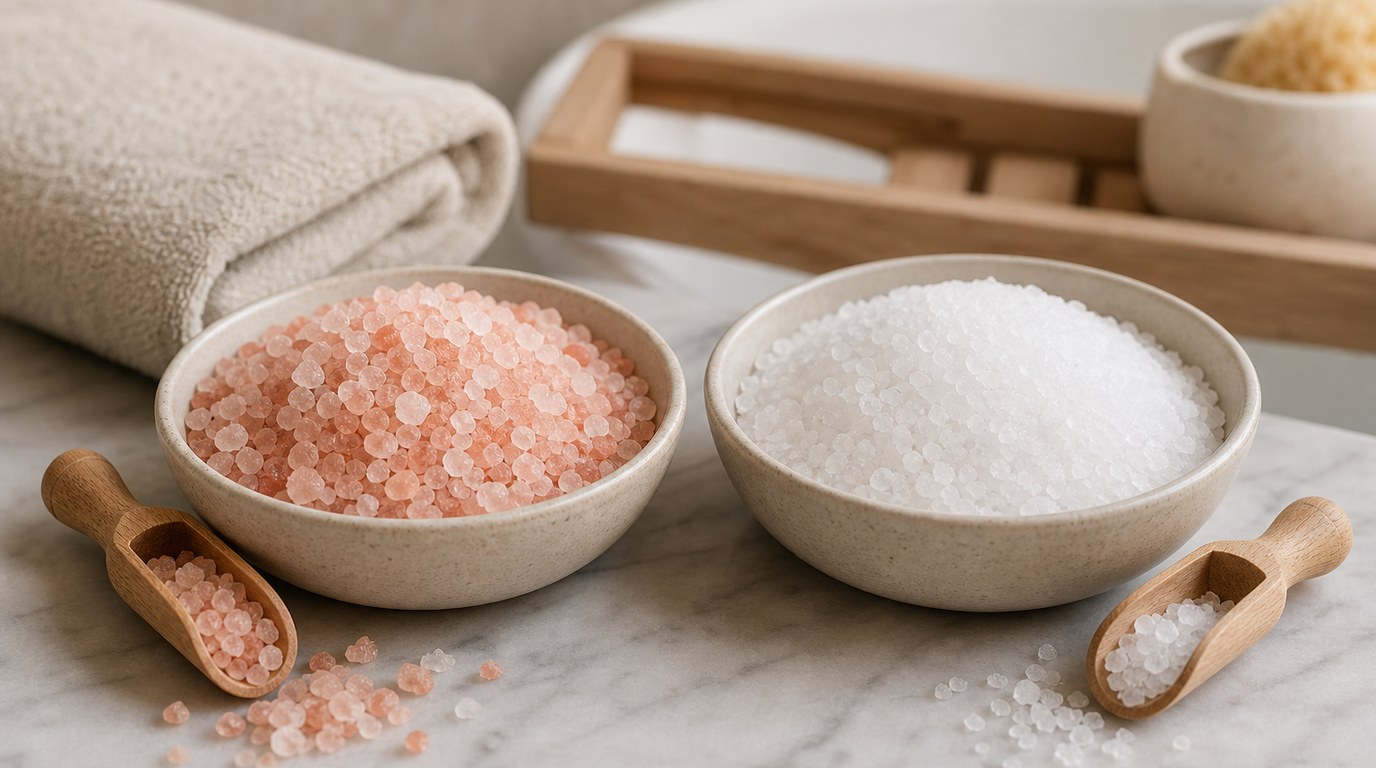
Himalayan salt and Epsom salt are often used for similar soaking rituals, but they are not the same. Himalayan salt is mostly sodium chloride and is often chosen for spiritual cleansing, grounding, and symbolic purification.
Epsom salt is magnesium sulfate and is commonly chosen for muscle-soak routines. If your focus is spiritual reset, Himalayan salt may feel more aligned. If your focus is post-workout soreness, many people prefer Epsom salt. Some bathers combine small amounts of both, as long as their skin tolerates it.
FAQ
What Should a Beginner Know First About Himalayan Salt Bath Benefits?
Beginners should know that Himalayan salt bath benefits are gentle and supportive, not medical or instant. Think of the bath as a calming ritual that combines warm water, salt, stillness, and intention. Start with a small amount of salt and notice how your body responds.
What Matters Most When Evaluating Himalayan Salt Bath Benefits?
The most important factors are comfort, safety, and realistic expectations. A Himalayan salt bath may help you relax, feel grounded, and create a sense of spiritual cleansing. It should not be viewed as a cure, detox treatment, or replacement for medical care.
What Mistakes Should Readers Avoid with Himalayan Salt Bath Benefits?
Avoid using water that is too hot, adding excessive salt, soaking too long, or expecting dramatic results from one bath. Also avoid salt baths if your skin is broken or irritated. Spiritually, do not overcomplicate the ritual; a clear intention is enough.
What Is the Next Logical Step After Learning About Himalayan Salt Bath Benefits?
The next step is to try a simple, safe bath with 1/2 cup of Himalayan salt, warm water, and a clear intention. Afterward, journal how you feel physically, emotionally, and energetically. This helps you decide when the practice is most useful for you.