
To create a sacred space for meditation, choose a quiet, comfortable spot, clear clutter, set a simple intention, arrange a supportive seat, and add a few meaningful items such as crystals, a candle, journal, or soft cloth. The space does not need to be large, expensive, or perfect. It only needs to help your body and mind recognize: “This is where I pause, breathe, and reconnect.” With repeated use, even a small corner, shelf, or portable tray can become a powerful meditation anchor.
Before You Begin: What Makes a Space Sacred?
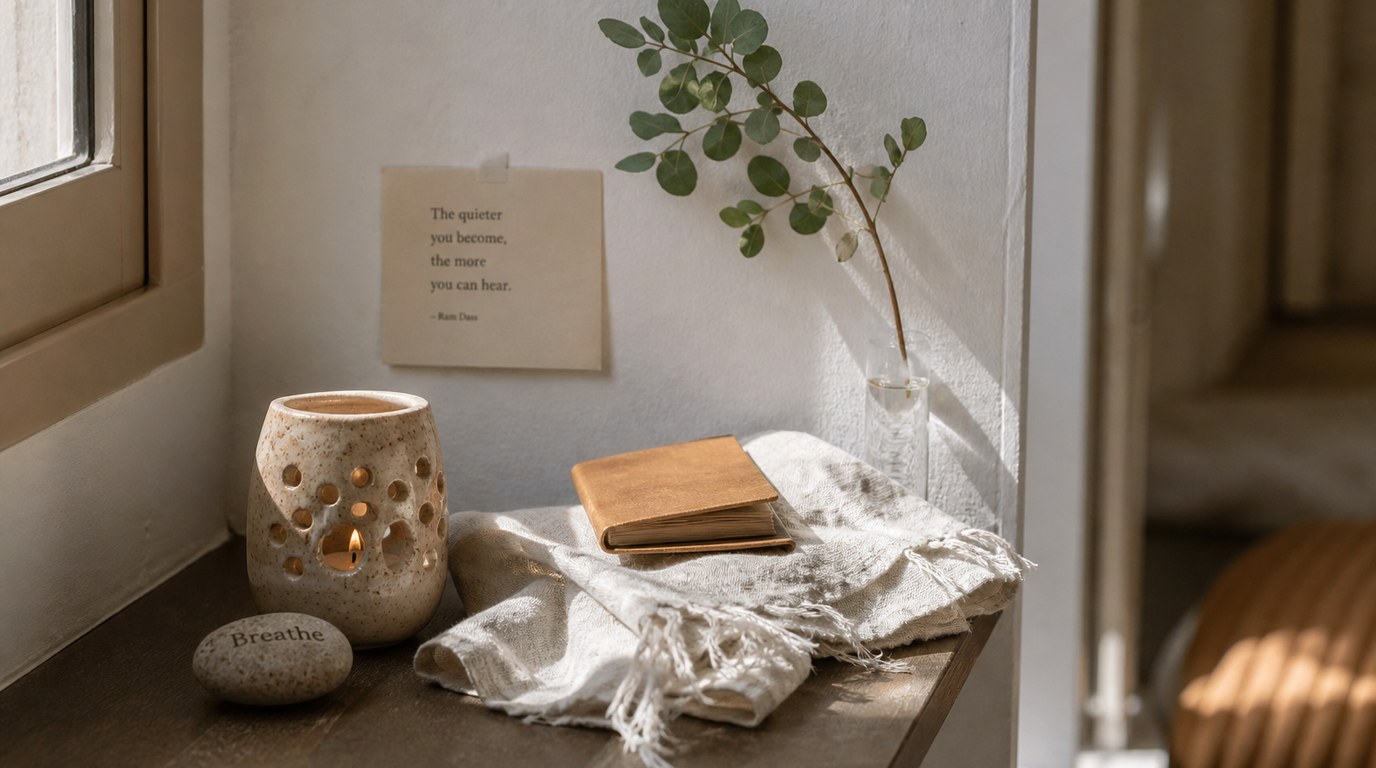
A sacred space is created through intention, consistency, and care—not expensive items. It can be a corner, shelf, windowsill, bedside area, or portable tray that you bring out when needed.
What makes it sacred is the meaning you give it and the way you use it. The goal is simple: help your mind and body recognize, “This is where I pause, breathe, and reconnect.” Beginners do not need a perfect altar or spiritual background. Start small, keep it clean, and let the space grow with your practice.
Prerequisites: Choose Your Space and Gather Simple Supplies
Choose a low-traffic location where interruptions are less likely. This might be a bedroom corner, a chair near a window, a closet nook, or a small area beside your bed.
Prioritize comfort, safety, cleanliness, and accessibility over aesthetics. A beautiful space you never use is less helpful than a plain one that supports daily practice.
Suggested supplies include:
- Cushion, mat, or supportive chair
- Small cloth or scarf
- One or more crystals
- Candle, LED candle, or soft lamp
- Journal and pen
- Incense, cleansing spray, or essential oil if tolerated
- Timer or meditation app
Practical warning: avoid smoke, open flames, and strong scents around pets, children, asthma, allergies, or shared living spaces. Optional tools should support meditation, not distract from it.
Step 1: Clear Clutter and Reset the Energy
Start by removing anything that pulls your attention away from meditation. Clear trash, unrelated items, visual clutter, laundry, paperwork, and anything that reminds you of chores or stress.
Wipe surfaces, shake out your mat, and open a window if possible. This physical reset often makes meditation easier because the nervous system has fewer distractions to track.
If you want an energetic cleanse without smoke, try:
- Ringing a bell or chime
- Taking three deep breaths into the space
- Making a sweeping motion with your hands
- Placing a small bowl of salt safely away from pets
- Using a gentle mist if it is safe for your home
Step 2: Set an Intention for the Space
Intention is the emotional and spiritual purpose of your meditation space. It tells your mind what this area is for and helps your practice feel focused.
Choose one clear quality you want to cultivate, such as calm, clarity, protection, self-love, grounding, or spiritual connection.
You can say:
> “May this space support stillness, clarity, and peace. When I sit here, I return to myself.”
Write your intention in a journal, on a small card, or on paper placed under a crystal. Keep it simple enough that you can remember it each time you sit down.
Step 3: Arrange Your Meditation Seat First
Before decorating, make the space functional. Place your cushion, mat, or chair where your body can sit comfortably for a few minutes without strain.
Support your spine and make sure your knees, hips, and lower back feel steady. If you sit on the floor, use a cushion to raise your hips. If a chair is better, let your feet rest flat on the floor.
Face a calming direction, such as a window, wall, altar, plant, or open space. Do not create a setup that looks beautiful but causes pain, numbness, or poor posture.
Step 4: Add Crystals with a Clear Purpose
Crystals can help create a sacred space for meditation when each one has a purpose. You do not need many. In fact, one crystal is enough if it supports your intention.
Beginner-friendly options include:
- Clear quartz for intention and focus
- Amethyst for calm and spiritual awareness
- Rose quartz for compassion and self-love
- Black tourmaline for grounding and protection
- Selenite for cleansing and peaceful energy
Simple placements work well. Put amethyst near your seat, black tourmaline near the entry or floor, clear quartz at the center, rose quartz on a heart-level shelf, and selenite on your altar.
Practical warning: some crystals are water-sensitive, fragile, or unsafe for elixirs. Do not put crystals in drinking water unless you have verified they are safe.
Step 5: Create a Small Altar or Focal Point
An altar is simply a focal point for attention and intention. It does not have to be religious. It can be a shelf, tray, windowsill, small table, or cloth on the floor.
Possible altar items include a candle, crystal, flower, photo, prayer card, affirmation, shell, bowl, statue, or seasonal object.
Use the rule of three to keep it simple:
- One grounding item, such as a stone, shell, or bowl
- One light or source item, such as a candle or lamp
- One intention item, such as a written affirmation
Avoid overcrowding the altar with items that require maintenance or become clutter.
Step 6: Engage the Senses Gently
Sensory cues can help your body understand that it is time to meditate. The key is to keep them gentle.
For light, use a soft lamp, candle, natural light, or dimmed room. For sound, try a chime, singing bowl, meditation timer, soft playlist, or silence. For scent, use incense, an essential oil diffuser, dried herbs, or no scent at all. For texture, add a blanket, rug, shawl, or natural fabric.
Practical warning: sensory elements should feel calming, not overwhelming. If a smell, sound, or light makes you tense, remove it.
Step 7: Bless, Dedicate, or Activate the Space
This step marks the transition from an ordinary area to a sacred meditation space. Use language and actions that fit your beliefs.
Stand or sit in the space. Take three slow breaths. Then speak your intention aloud.
You might say:
> “I dedicate this space to peace, presence, and inner guidance.”
Optional actions include ringing a bell, lighting a candle, placing your hands over your heart, or touching each crystal. Keep the ritual short and sincere. The purpose is not performance; it is presence.
Step 8: Use the Space Consistently
Start with 3 to 5 minutes daily or several times per week. Short, repeated practice is more powerful than waiting for a long perfect session.
Use the same opening cue each time. You might light a candle, take three breaths, ring a chime, place a hand on your heart, or touch a crystal before beginning.
Keep a journal nearby for one-line reflections, such as “I feel calmer,” “I was distracted,” or “I needed grounding today.” Consistency is what makes the space feel sacred over time. The more often you return, the stronger the association becomes.
How to Know Your Sacred Space Is Working
Your sacred space is working if it helps you settle more easily. Signs include fewer distractions, more willingness to meditate, calmer breathing, and a growing sense of comfort or safety when you sit there.
It does not need to feel mystical every time. Some days may feel peaceful, while others feel ordinary or restless. The real result is a reliable place that helps you return to presence. If your space makes meditation feel more approachable, it is doing its job.
Common Mistakes and Troubleshooting
Mistake: making the space too complicated.
Fix it by removing half the items and keeping only what supports practice.
Mistake: choosing an uncomfortable spot.
Improve seating, warmth, lighting, or privacy before adding more decor.
Mistake: waiting for the perfect room.
Use a tray, shelf, or portable meditation kit instead.
Mistake: using smoke or scent without considering health or shared space.
Try sound, breath, or visual cleansing.
Mistake: letting the area become storage.
Reset it once a week.
Mistake: feeling like you are doing it wrong.
Return to intention and consistency. A sacred space is built through use, not perfection.
Simple Portable Sacred Space Option
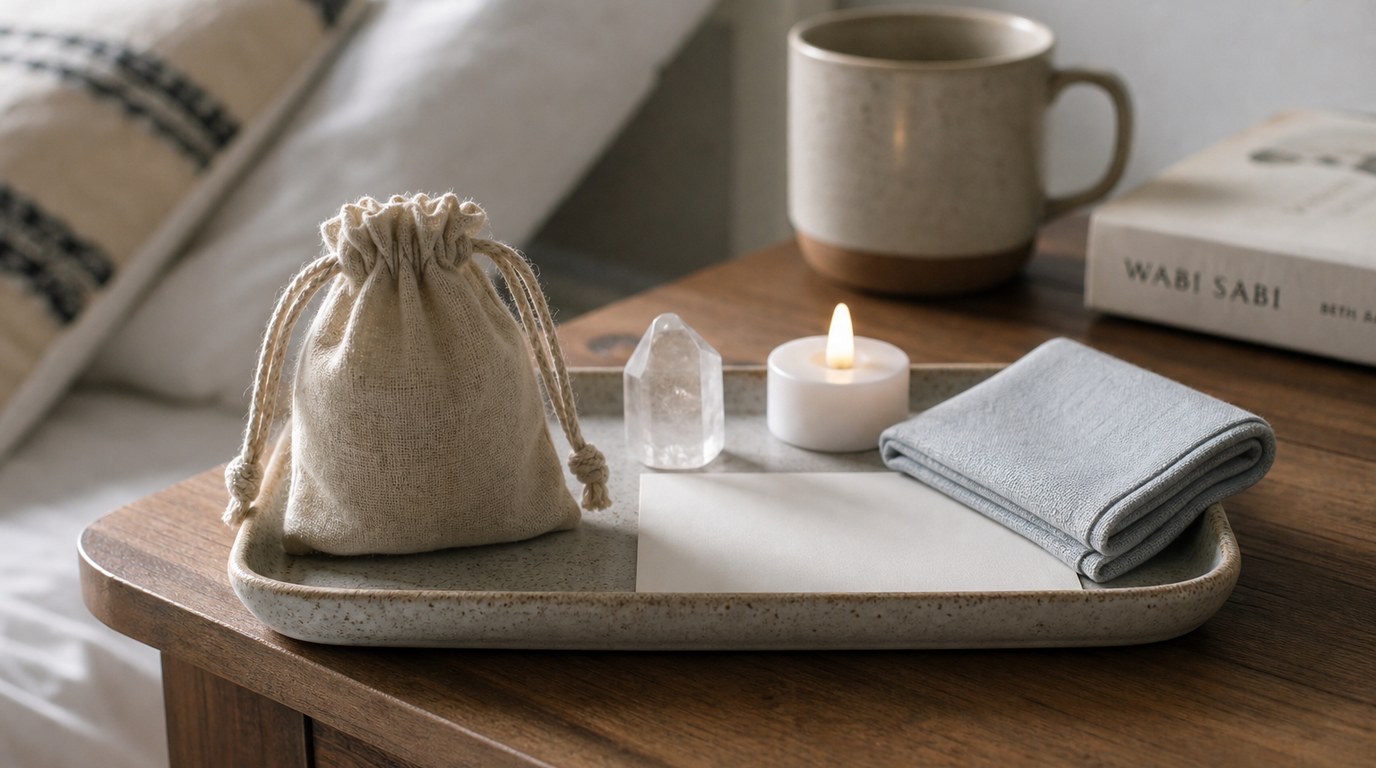
If you live in a small home, dorm, shared space, or travel often, create a portable sacred space. Use a small box, pouch, tray, or cloth.
Include one crystal, one written intention, one small candle or LED light, and a journal card. Set it up before meditation, use it with care, and pack it away afterward.
This still counts as a sacred space because intention and repeated use matter most. Your practice can have roots even when your physical space changes.
FAQ
What Is the Best Place to Create a Sacred Meditation Space?
The best place is a quiet, low-traffic area where you feel safe and can sit comfortably. It can be a bedroom corner, windowsill, chair, shelf, or bedside space. Choose the spot you will actually use, not the one that only looks beautiful.
Do I Need Crystals to Create a Sacred Space for Meditation?
No, crystals are optional. A sacred space comes from intention, care, and consistent use. Crystals can be supportive focal points, especially if you enjoy working with their symbolism, but you can meditate with only a chair, breath, and a clear intention.
Which Crystals Are Best for a Meditation Space?
Good beginner crystals include amethyst for calm, clear quartz for intention, rose quartz for compassion, black tourmaline for grounding, and selenite for cleansing. Start with one or two. Too many crystals can make the space feel cluttered or energetically busy.
How Often Should I Cleanse My Sacred Space?
Cleanse or reset your space whenever it feels cluttered, heavy, distracting, or unused. For many people, once a week is enough. You can wipe surfaces, ring a bell, open a window, refresh your intention, or remove items that no longer support meditation.
Can I Create a Sacred Space If I Live with Other People?
Yes. Use a portable tray, pouch, shelf, or small box if privacy is limited. Set it up when you meditate and put it away afterward. You can also use silent cues, such as touching a crystal or placing a hand on your heart.