
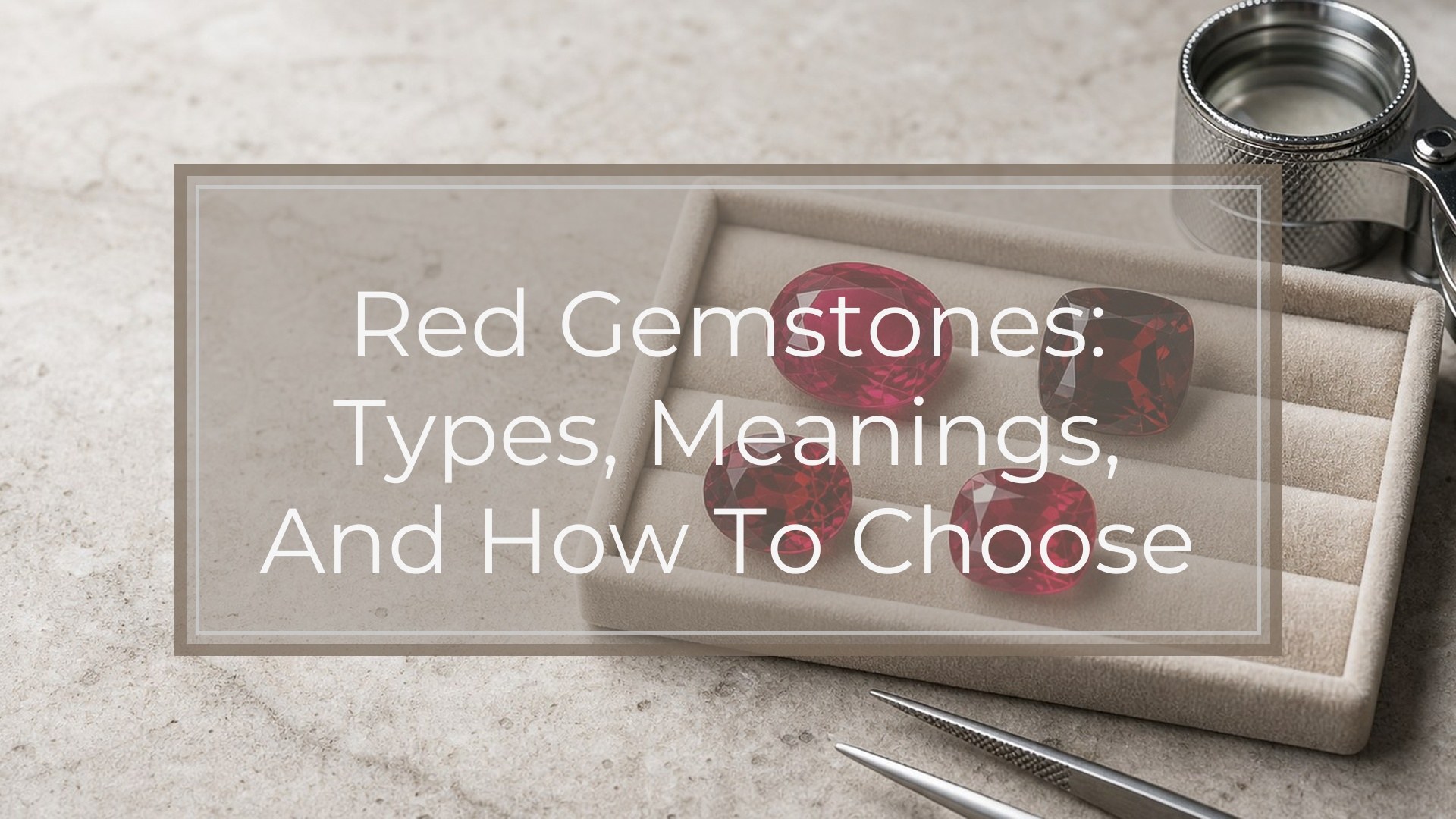
Red gemstones are gems, crystals, or organic materials whose main visual appeal is red, from bright cherry and ruby-red to deep wine, brick, and reddish-orange tones. They are not one single gemstone family. Instead, they are best understood by material type, durability, transparency, and common use. Some red gemstones are fine-jewelry stones, such as ruby and spinel. Others, like garnet, jasper, and carnelian, are popular in crystal collections, beads, meditation tools, and everyday adornment.
What Counts as a Red Gemstone?
A red gemstone is any natural or treated gem material that appears mainly red when cut, polished, or worn. The category includes transparent faceted gems, opaque crystals, banded stones, and even organic materials such as coral.
Color can vary widely. Some stones are pure red, while others lean pink, orange, brown, purple, or burgundy. A gemstone may still fit the red category if red is its dominant impression. For example, pyrope garnet is often deep red, carnelian is usually orange-red, and red jasper may look earthy brick-red. This guide focuses on stones commonly recognized, collected, or sold as red gemstones.
How Red Gemstones Are Classified
The clearest way to understand red gemstones is to classify them by material family and practical role. This avoids treating them as a random list of red stones.
First, there are precious and fine-jewelry red gemstones. These are usually transparent, durable, rare, or valuable enough for rings, pendants, and heirloom jewelry. Ruby, red spinel, and some red garnets belong here.
Second, there are classic red crystal and semi-precious gemstones. These are often more affordable, opaque or translucent, and widely used for beads, palm stones, carvings, and spiritual practices.
Third, there are organic and unusual red materials. These include non-mineral gems like coral or less common red stones that require special care or knowledge.
Types of Red Gemstones at a Glance
| Red gemstone | Main family/material | Typical look | Common use |
|---|---|---|---|
| Ruby | Corundum | Vivid red to pinkish red | Fine jewelry |
| Red spinel | Spinel | Bright red, often clear | Fine jewelry, collecting |
| Garnet | Garnet group | Deep red to wine-red | Jewelry, crystals |
| Carnelian | Chalcedony | Orange-red, translucent | Beads, energy work |
| Red jasper | Chalcedony/quartz | Opaque brick-red | Grounding stones, carvings |
| Red agate | Chalcedony | Banded red patterns | Beads, décor |
| Red tiger’s eye | Quartz | Silky red-brown shimmer | Bracelets, focus stones |
| Rhodochrosite | Carbonate mineral | Pink-red bands | Collecting, heart themes |
| Cuprite | Copper oxide | Dark red, metallic hints | Collecting |
| Red coral | Organic calcium carbonate | Warm red to orange-red | Traditional jewelry |
Precious and Fine-jewelry Red Gemstones
Precious and fine-jewelry red gemstones are valued for beauty, rarity, clarity, and wearability. They are the best fit when you want a red stone for a ring, pendant, earrings, or a long-lasting jewelry piece.
Ruby is the most famous red gemstone. It is the red variety of corundum and is prized for its hardness, rich color, and classic symbolism of passion, vitality, and courage. Fine rubies can be expensive, especially when they show strong red color without too much brown or purple.
Red spinel is another important fine gemstone. It can look similar to ruby but belongs to a different mineral family. Good red spinel is bright, lively, and often very collectible.
Red garnet, especially pyrope and almandine, is usually more affordable than ruby or spinel. It has a deep red, wine, or pomegranate tone and works well in many jewelry styles, though it is generally not as hard as ruby.
Classic Red Crystal and Semi-precious Gemstones
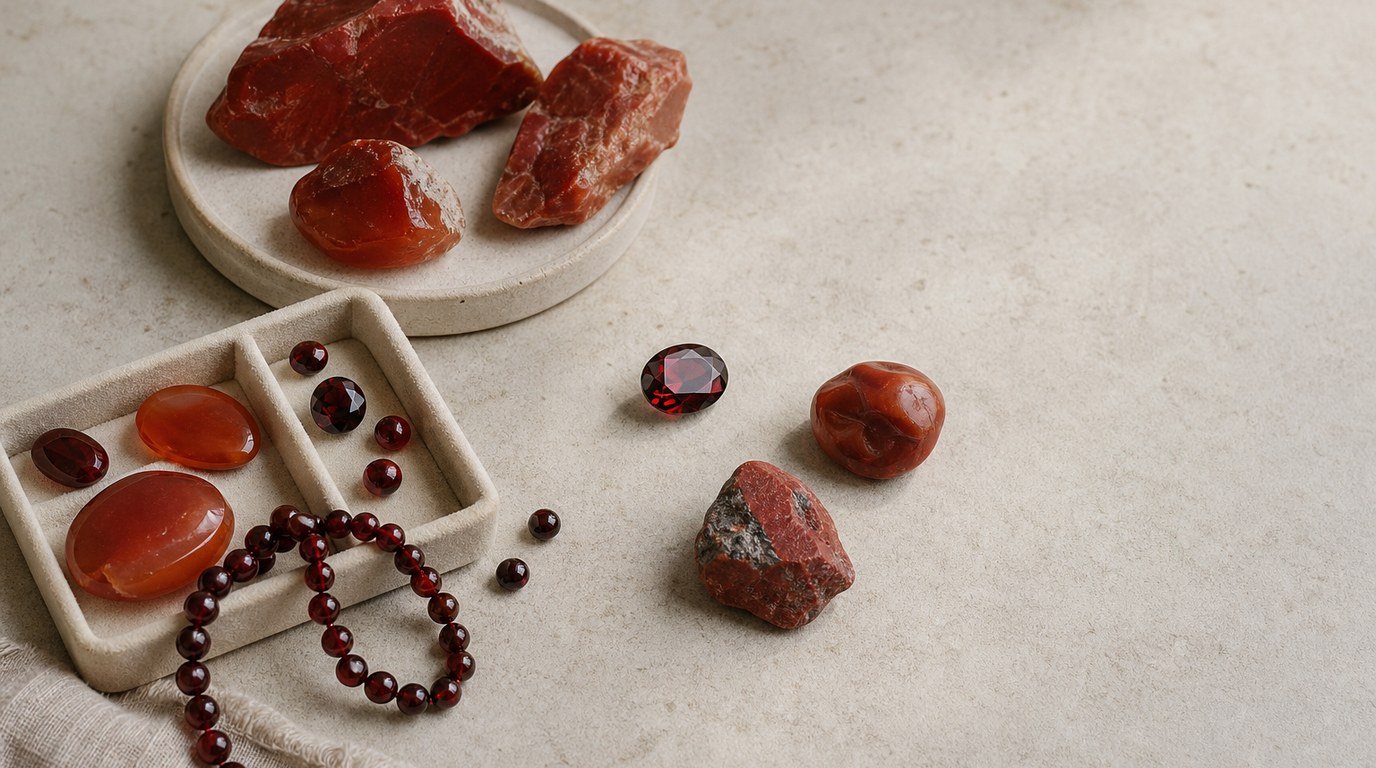
Classic red crystal and semi-precious gemstones are accessible, versatile, and popular among beginners. They may not always be as rare or transparent as fine jewelry gems, but they offer strong color, texture, and symbolic appeal.
Carnelian is a translucent orange-red to reddish-brown chalcedony. It is commonly associated with motivation, creativity, confidence, and warm life force energy. Because it is durable and widely available, it is excellent for bracelets, beads, worry stones, and pocket crystals.
Red jasper is opaque, earthy, and grounding in appearance. Its brick-red color comes from iron-rich inclusions. In crystal traditions, it is often linked with stability, endurance, physical strength, and a steady sense of presence.
Red agate is another chalcedony variety, usually showing bands, swirls, or layered patterns. It is often chosen for decorative pieces, beads, and calming yet strengthening energy themes.
Red tiger’s eye has a silky chatoyancy, or cat’s-eye shimmer. Much red tiger’s eye on the market is heat-treated from golden tiger’s eye, but it remains popular for focus, confidence, and protection symbolism.
Rhodochrosite often appears pink to raspberry-red with white banding. It is softer than quartz-based stones, so it is better for pendants, display pieces, or gentle handling.
Organic and Unusual Red Gemstones
Some red gemstones fall outside the main mineral categories. Red coral is organic, formed from marine coral skeletons, and has a long history in traditional jewelry. Because coral can raise ethical and environmental concerns, buyers should look for reputable sourcing or consider alternatives.
Cuprite is an unusual copper mineral with deep red tones, sometimes appearing almost black-red. It is more of a collector’s stone than an everyday jewelry gem because it can be soft and delicate. Other less common red materials include cinnabar and realgar, but these require caution and are best left to informed collectors.
Red Gemstone Meanings and Energy Themes
In spiritual and symbolic traditions, red gemstones are commonly linked with vitality, courage, passion, protection, strength, and grounded action. Their color connects them visually with blood, fire, warmth, and life force.
The meaning often depends on the stone family. Ruby is associated with devotion and noble courage. Garnet is linked with commitment and resilience. Carnelian is used for creativity and confidence. Red jasper is chosen for grounding and stamina. These meanings are traditional and intuitive, not guaranteed effects, so choose what resonates with your intention and experience.
How to Choose the Right Red Gemstone
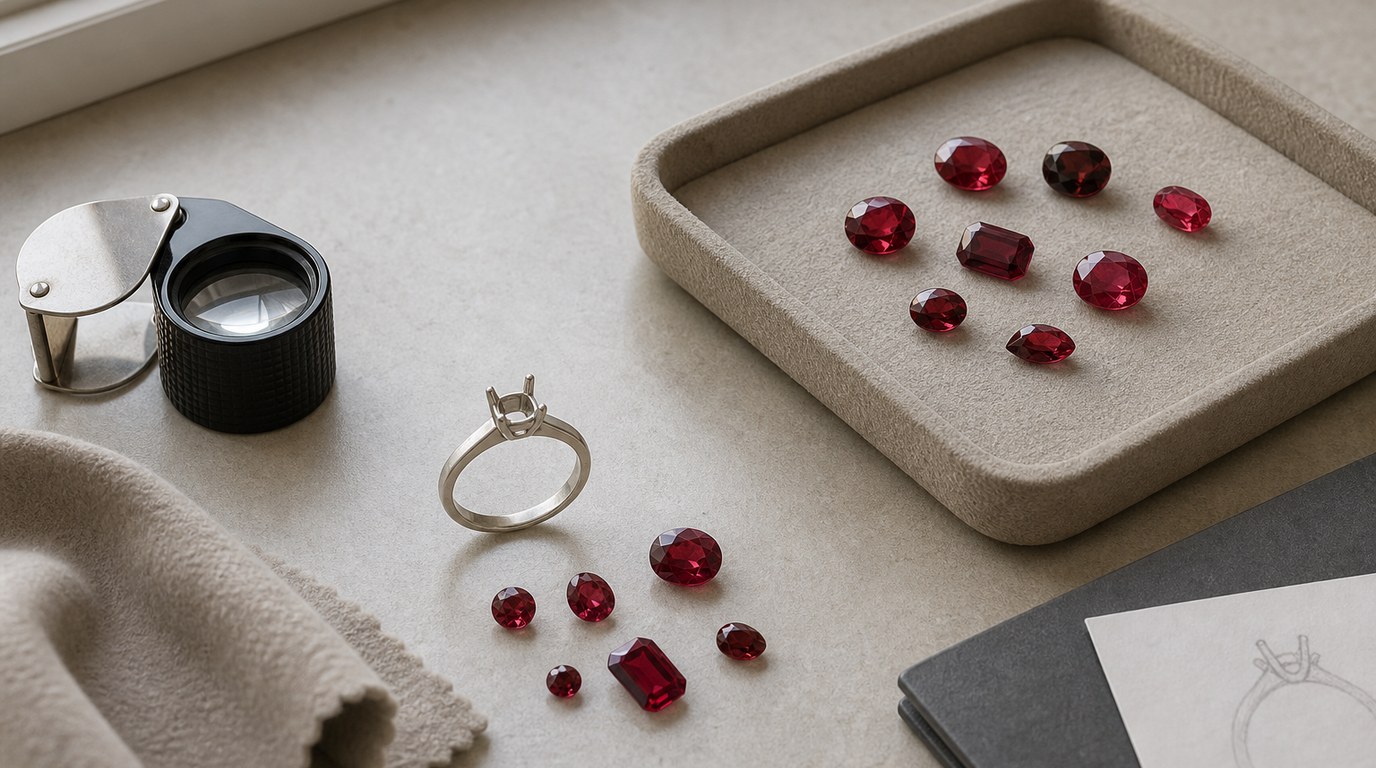
Choose a red gemstone by matching the stone type to your intended use. For fine jewelry, prioritize durability, setting style, and color stability. Ruby, red spinel, and garnet are better choices than soft or fragile stones for pieces that will be worn often.
For crystal practice, choose by feel, symbolism, and form. Carnelian suits creativity and energy work. Red jasper fits grounding and steadiness. Garnet supports commitment and strength themes.
For collecting, look at rarity, crystal structure, origin, and condition. Cuprite or fine red spinel may appeal more to collectors than casual wearers.
Also consider color preference. Bright red feels bold and passionate, burgundy feels deep and elegant, orange-red feels warm and active, and brick-red feels earthy and stabilizing.
Care Tips for Red Gemstones
Care depends on the material, not just the color. Ruby and spinel are durable, but they should still be protected from hard knocks. Garnet, carnelian, jasper, and agate are generally suitable for normal gentle cleaning with warm water and mild soap.
Softer or porous materials need more caution. Rhodochrosite, coral, cuprite, and unusual collector stones should be kept away from harsh chemicals, ultrasonic cleaners, long soaking, and rough wear. Store red gemstones separately to prevent scratching.
FAQ
What Should a Beginner Know First About Red Gemstones?
Beginners should know that red gemstones are a color category, not one single mineral family. Ruby, garnet, carnelian, jasper, and coral are all red gemstones, but they differ in durability, value, structure, care needs, and spiritual symbolism.
What Matters Most When Evaluating Red Gemstones?
The most important factors are gemstone type, color quality, durability, transparency, treatment, and intended use. A red stone for an everyday ring needs different qualities than a meditation crystal, bead bracelet, or collector specimen. Always evaluate the material first.
What Mistakes Should Readers Avoid with Red Gemstones?
Avoid assuming all red gemstones are rubies, equally durable, or suitable for daily jewelry. Also avoid judging by color alone. Some red stones are treated, soft, porous, rare, or fragile. Match the stone to its use before choosing.
What Is the Next Logical Step After Learning About Red Gemstones?
The next step is to narrow your purpose. Decide whether you want a red gemstone for jewelry, collecting, décor, or spiritual practice. Then compare stones within that category, such as ruby and spinel for fine jewelry or carnelian and red jasper for crystal work.