
Amethyst is one of the most loved crystals for calm, clarity, and spiritual awareness. In crystal healing, it is commonly associated with emotional balance, peaceful sleep, meditation, intuition, and energetic protection. Its purple color connects it symbolically with the mind, the spirit, and higher wisdom, making it a popular stone for beginners and experienced crystal users alike. Many people keep amethyst near the bed, on a meditation altar, or in a pocket during stressful days. While its healing properties are spiritual and metaphysical rather than medical, amethyst can be a meaningful support tool for slowing down, setting intentions, and creating a calmer daily rhythm.
What Is Amethyst?
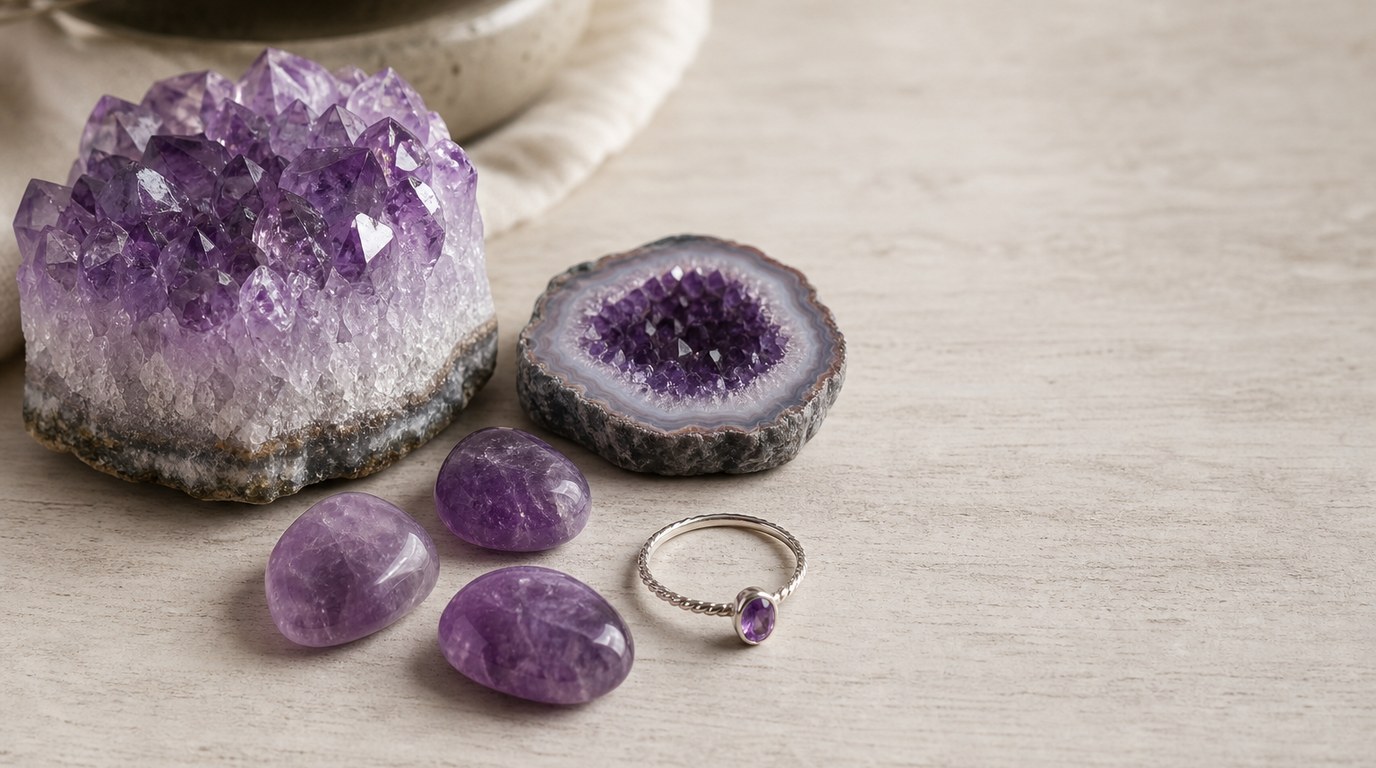
Amethyst is a purple variety of quartz known for its soothing appearance and strong place in crystal healing traditions. Its color can range from pale lavender to deep violet, and it often forms in clusters, points, tumbled stones, geodes, and jewelry.
Because amethyst is both beautiful and widely available, it is often one of the first crystals people choose. It has a gentle, calming reputation rather than an intense or overwhelming energy. This makes it easy to use in simple practices like meditation, intention setting, bedroom placement, and emotional grounding.
Amethyst is especially recognizable for its connection to peace, spiritual insight, and mental clarity. In a crystal collection, it often serves as a “calming center” stone.
Why Amethyst Matters in Crystal Healing
Amethyst matters in crystal healing because it is practical, beginner-friendly, and versatile. Many people reach for it when they want to feel calmer, think more clearly, or create a peaceful space.
It is especially relevant during stress, overthinking, emotional heaviness, spiritual practice, and bedtime routines. If you are new to crystals and do not know where to begin, amethyst is a strong first choice because its uses are easy to understand.
Rather than being limited to one purpose, amethyst can support several common intentions: rest, reflection, protection, meditation, and emotional balance.
Core Amethyst Healing Properties
The most common amethyst healing properties are connected to calm, clarity, intuition, and spiritual protection. These meanings come from crystal healing traditions and personal energetic practice, not from medical science.
Emotional calm: Amethyst is often used when emotions feel loud, scattered, or overwhelming. Holding it during deep breathing can become a simple reminder to pause before reacting.
Stress relief: Many people place amethyst on a desk, nightstand, or meditation space to encourage a softer atmosphere. It is not a cure for stress, but it can support calming rituals that help the mind slow down.
Mental clarity: Amethyst is associated with clearer thinking and less mental clutter. It may be useful during journaling, reflection, or quiet planning.
Sleep support: Because of its peaceful reputation, amethyst is commonly kept near the bed. Some people use it before sleep to release the day and invite rest.
Intuition: Amethyst is linked with inner knowing, dreams, and spiritual awareness. It is often used during meditation, tarot practice, or moments of self-reflection.
Energetic protection: In metaphysical practice, amethyst is believed to help create a protective field around the aura, especially against heavy or chaotic energy.
Amethyst Meaning and Chakra Associations
Amethyst meaning is closely tied to wisdom, peace, sobriety of thought, and spiritual connection. Its purple color gives it a symbolic link to higher awareness, making it a favorite stone for meditation and intuitive work.
Amethyst is most often associated with the third eye chakra and the crown chakra. The third eye chakra relates to insight, perception, and intuition. The crown chakra relates to spiritual connection, meaning, and a sense of guidance beyond the everyday mind.
When used in chakra practice, amethyst is often placed near the forehead or above the head during meditation to encourage stillness and inner listening.
How to Use Amethyst in Daily Life
Amethyst is easy to use because it fits naturally into everyday routines. You do not need advanced crystal knowledge to begin; simple, consistent practices are enough.
For emotional balance, hold a tumbled amethyst in your palm and take five slow breaths. As you breathe, name one feeling you are ready to soften or release.
For sleep, place amethyst on your nightstand rather than under your pillow if the stone feels too stimulating. Before bed, set an intention such as, “I allow my mind to rest.”
For focus, keep amethyst near your workspace. Use it as a visual cue to pause, unclench your shoulders, and return to one task at a time.
For meditation, hold amethyst or place it in front of you. Let its purple color become a point of attention when your mind wanders.
For spiritual protection, carry a small piece in your pocket during busy days, emotional conversations, or crowded environments.
Simple Amethyst Rituals for Beginners
A simple amethyst ritual can be as short as one minute. The purpose is not to make the crystal “do everything,” but to help you focus your intention.
Try a morning clarity ritual: hold your amethyst, take three breaths, and ask, “What energy do I want to bring into today?” Choose one word, such as calm, patience, or trust.
For an evening release ritual, place amethyst beside a journal. Write down one worry, then write one supportive thought beneath it.
For meditation, place amethyst near your third eye area while lying down, or simply hold it in your hand while repeating, “I listen inward.”
How to Cleanse and Charge Amethyst
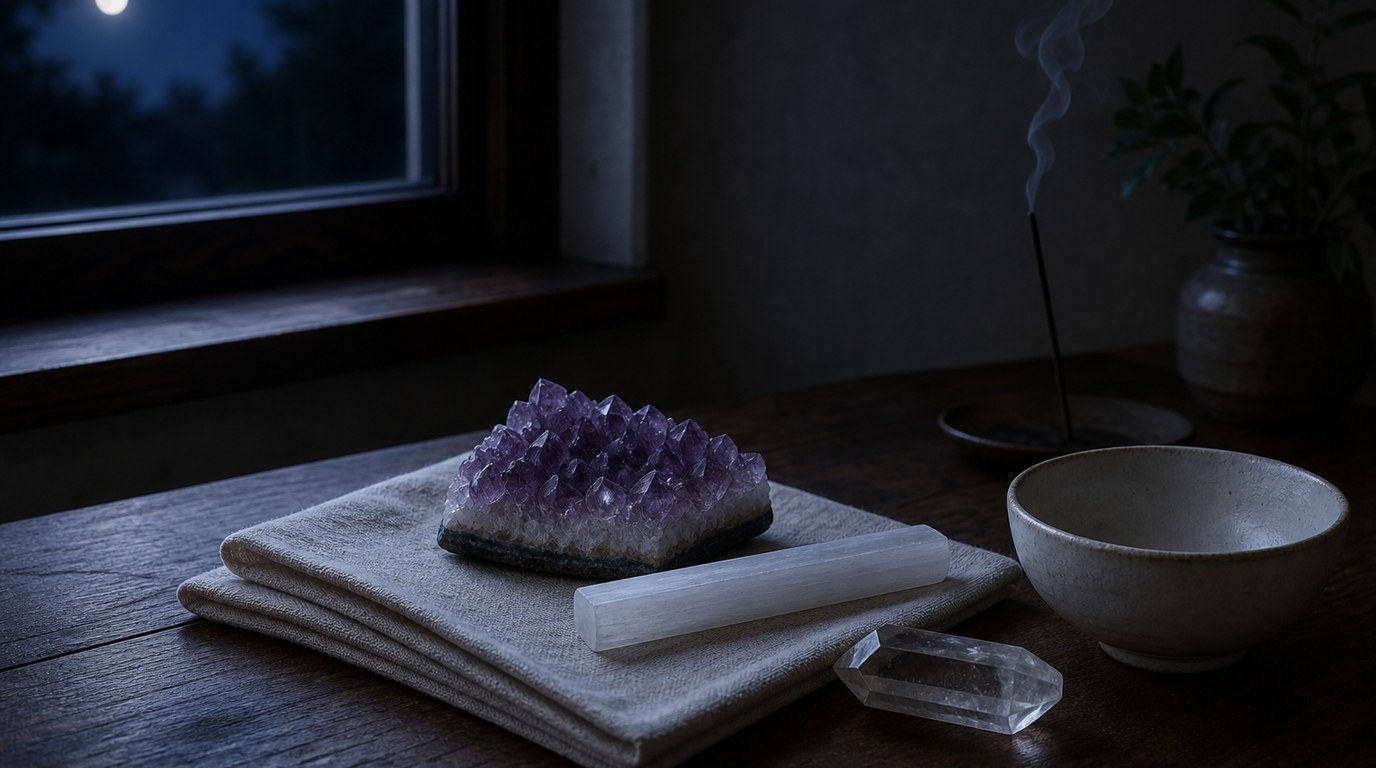
Amethyst is generally easy to care for, but it should be protected from harsh treatment. To cleanse it energetically, use smoke cleansing, sound, moonlight, breathwork, or place it near selenite or clear quartz.
Avoid leaving amethyst in strong direct sunlight for long periods, as its purple color may fade over time. Also avoid saltwater, especially for clusters or pieces with delicate points.
To charge amethyst, place it in moonlight overnight, set it on a clean altar, or hold it while repeating your intention. A simple intention could be, “May this stone support peace, clarity, and protection.”
Crystals That Pair Well with Amethyst
Amethyst pairs well with crystals that support calm, clarity, and spiritual growth. Clear quartz can amplify amethyst’s intention and make a simple meditation layout stronger. Rose quartz adds emotional softness, making the combination helpful for self-compassion and heart healing.
Selenite works well for cleansing and spiritual connection, especially on an altar. Lepidolite is often paired with amethyst for peaceful routines and emotional balance. Black tourmaline adds grounding and protection, which can balance amethyst’s higher-chakra energy.
The best pairing depends on your intention: calm, love, clarity, protection, or spiritual awareness.
FAQ
What Should a Beginner Know First About Amethyst Healing Properties?
A beginner should know that amethyst healing properties are usually connected to calm, clarity, sleep, intuition, and spiritual protection. These are metaphysical meanings, not medical promises. Start simply by holding amethyst during breathing, meditation, journaling, or bedtime intention setting.
What Matters Most When Evaluating Amethyst Healing Properties?
The most important thing is your intention. Amethyst is most useful when you connect it to a clear purpose, such as calming your mind, supporting meditation, or creating a peaceful sleep space. Notice how you feel during practice rather than expecting instant results.
What Mistakes Should Readers Avoid with Amethyst Healing Properties?
Avoid treating amethyst as a substitute for medical or mental health care. Also avoid overcomplicating your practice with too many crystals at once. Keep it simple, cleanse it gently, protect it from harsh sunlight, and use it as a supportive spiritual tool.
What Is the Next Logical Step After Learning About Amethyst Healing Properties?
The next step is to choose one simple amethyst practice and repeat it for a week. Try a bedtime ritual, a morning intention, or a short meditation. After that, you can explore pairings like clear quartz, rose quartz, selenite, or black tourmaline.