
Quick Answer
Shungite is a black, carbon-rich stone most often used metaphysically for grounding, energetic protection, emotional steadiness, and clearing heavy or stagnant energy. In crystal healing traditions, its main meaning is “stabilizing protection”: it is believed to help anchor your energy, create a calm boundary, and support a more balanced connection to the physical world.
Shungite is especially popular with beginners because its purpose is easy to understand. If you feel scattered, drained after social interaction, overwhelmed by your environment, or in need of a simple protective stone for your home or workspace, shungite is a practical choice. Many people place it near a doorway, desk, bedside table, meditation space, or in a pocket during stressful days.
An easy entity profile:
- Stone: Shungite
- Color: Black to dark gray, sometimes metallic or matte
- Main metaphysical themes: Grounding, protection, cleansing, stability
- Common chakra association: Root chakra
- Best for: Energetic boundaries, calm focus, home protection, emotional grounding
- Common pairings: Black tourmaline, smoky quartz, hematite, selenite, clear quartz
Shungite’s spiritual value is not about dramatic effects. It is more often used as a steady, everyday support stone: quiet, grounding, and protective.
How to Think About This Topic
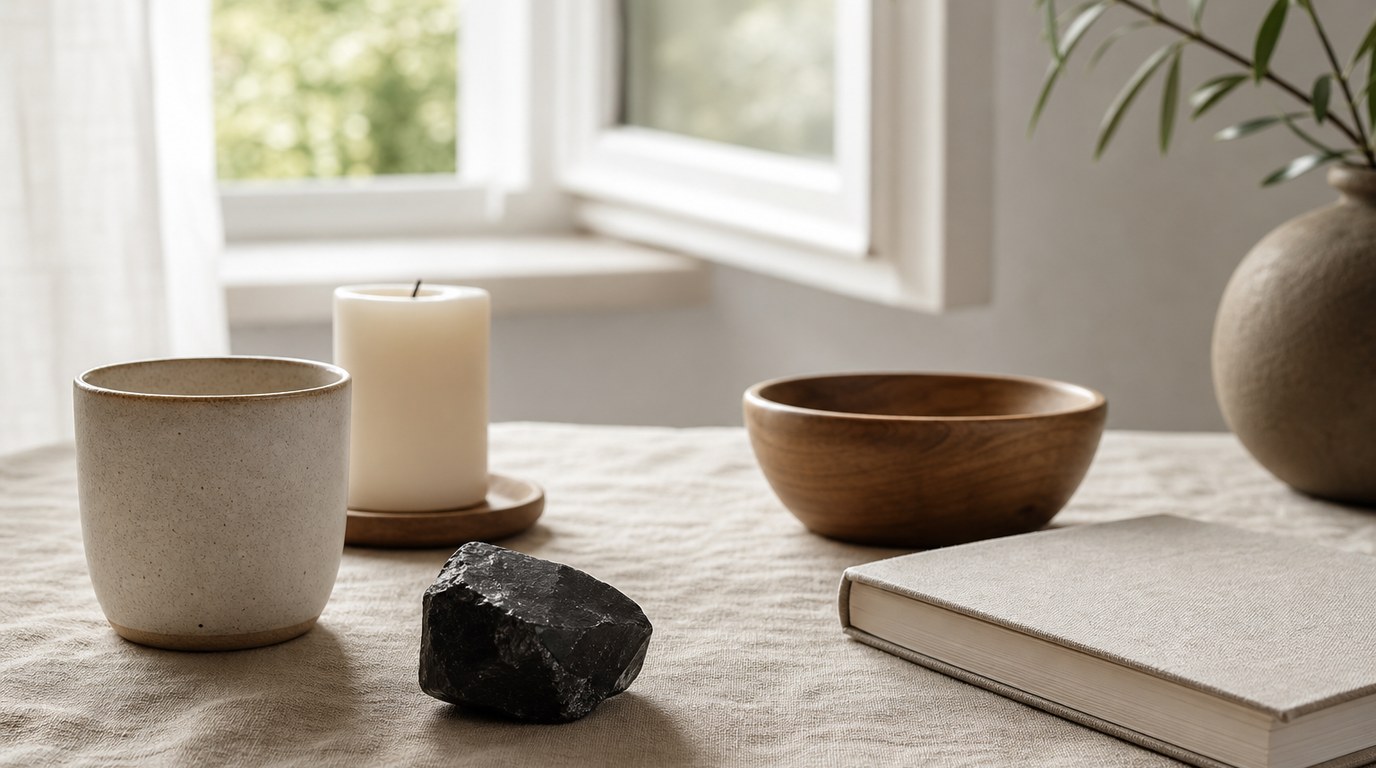
The simplest way to understand shungite metaphysical properties is to think of the stone as an energetic “anchor.” In spiritual practice, grounding means bringing your attention and energy back into the body, the present moment, and the physical world. Protective crystals are often used to help people feel less affected by emotional noise, stressful spaces, or other people’s moods. Shungite sits at the meeting point of both ideas.
Shungite is a naturally occurring black mineraloid associated mainly with the Karelia region of Russia. Its dark color and dense feel are part of why it has become linked with the root chakra, the energy center connected with safety, stability, survival, and feeling “at home” in your body. You do not need to be advanced in chakra work to use this idea. In practical terms, root chakra support means choosing tools that help you feel calmer, steadier, and less mentally scattered.
Spiritually, shungite is often used when you want a stronger boundary between your inner state and the outside world. For example, someone who works in a busy office might keep shungite on a desk as a reminder to stay centered. Someone who feels emotionally drained after conversations might carry a small tumbled piece in a pocket. Someone building a meditation habit might hold shungite for the first few minutes to settle the mind before deeper practice.
It is important to keep the claims balanced. Many people discuss shungite in relation to modern technology and EMF protection, but from a metaphysical perspective, it is better to frame this as energetic support rather than a guaranteed scientific shield. You might place shungite near electronics as part of a calming workspace ritual, but it should not be treated as a proven health or safety device.
Shungite matters because it gives beginners a clear, practical starting point. It is not a crystal that requires complicated interpretation. Its core message is simple: come back to center, clear what feels heavy, and strengthen your sense of energetic stability. That makes it relevant during stressful transitions, demanding work periods, emotional recovery, spiritual cleansing, or any season when you want to feel more grounded in daily life.
Practical Guidance
Use shungite when you want your crystal practice to feel simple and functional. The best uses are usually connected to location, intention, and repetition.
For personal grounding, carry a small shungite stone in your pocket, bag, or pouch. Before leaving home, hold it for a few breaths and set a short intention such as, “I stay steady and clear today.” This works well before meetings, travel, social events, or emotionally charged conversations. The stone becomes a tactile reminder to pause, breathe, and return to yourself.
For meditation, place shungite in your hand, on the floor near your feet, or at the base of your spine while seated. Because it is associated with the root chakra, it is often used at the beginning of meditation rather than the end. Try a simple practice: hold shungite, notice the weight of your body, relax your jaw and shoulders, and imagine excess tension moving down into the earth. This keeps the practice beginner-friendly and grounded.
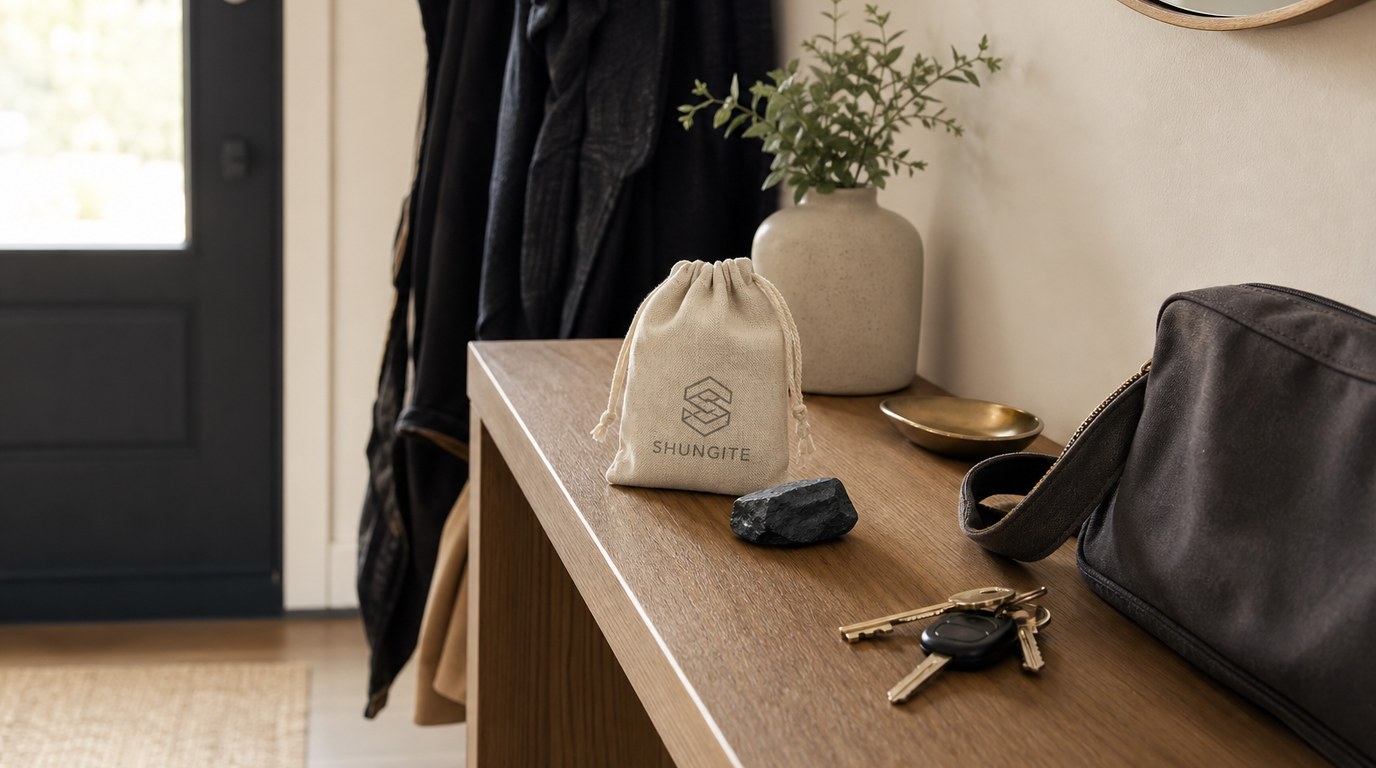
For home energy, place shungite near entry points, corners, or areas that feel busy or heavy. A piece near the front door can symbolize leaving stress outside. A stone in the living room can support a calm shared space. In a workspace, shungite may help you create a ritual boundary between focus time and distraction. If you work near many devices, you can place it on the desk as a visual cue for mindful technology use, breaks, and energetic balance.
For emotional boundaries, shungite can be paired with a short clearing routine. After a difficult day, hold the stone and say, “I release what is not mine to carry.” This does not replace emotional processing, but it can support a healthy transition from public energy to private rest. People who are sensitive to others’ moods often enjoy shungite for this reason.
When choosing shungite, look for a piece that feels practical for your use. Tumbled stones are good for pockets and daily carrying. Raw pieces suit altars, shelves, and home placement. Polished pyramids, spheres, or plates are often chosen for desks or meditation spaces. Elite or noble shungite has a shinier, more metallic look and is often prized by collectors, but ordinary shungite is still commonly used for spiritual purposes.
Shungite also pairs well with a few related crystals, as long as the pairing has a clear purpose. With black tourmaline, it supports stronger protective boundaries. With smoky quartz, it can help release stress and ground anxious energy. With hematite, it emphasizes focus, strength, and physical presence. With selenite, it balances protection with cleansing and lightness. With clear quartz, it can be used to amplify a specific intention.
Cleanse shungite in a simple way: place it near selenite, use sound, pass it through incense smoke, or set it somewhere quiet with an intention to reset. Avoid overcomplicating the ritual. Shungite’s metaphysical strength is its steadiness, so your use of it can be steady too.
FAQ
What Is Shungite Used for Spiritually?
Spiritually, shungite is used for grounding, energetic protection, cleansing heavy energy, and supporting emotional steadiness. Many people carry it during stressful days, place it near doorways or desks, or use it before meditation to feel more centered and present.
What Chakra Is Shungite Associated with?
Shungite is most commonly associated with the root chakra. This chakra relates to safety, stability, grounding, and your connection to the physical world. In practice, shungite is used when you want to feel calmer, more anchored, and less scattered.
Can Shungite Protect Against Negative Energy?
In metaphysical practice, shungite is believed to support protection from negative or draining energy by helping create a stronger energetic boundary. It is best understood as a spiritual support tool, not a guaranteed shield. Use it with grounding habits, rest, and clear personal boundaries.
Where Should I Place Shungite in My Home?
Good places for shungite include the front door, bedroom, workspace, meditation area, or any room that feels energetically heavy. Near an entrance, it can symbolize protection. On a desk, it can support focus, grounding, and a calmer relationship with work or technology.
What Crystals Pair Well with Shungite?
Shungite pairs well with black tourmaline for protection, smoky quartz for stress release, hematite for grounding and focus, selenite for cleansing, and clear quartz for intention-setting. Choose one pairing based on your goal instead of combining too many stones at once.