

Selenite is a soft, luminous crystal often associated with cleansing, clarity, peace, and spiritual connection. In crystal healing practices, people use selenite to clear stagnant energy, support meditation, calm the mind, and “charge” other crystals. Its bright white or translucent appearance makes it a popular choice for altars, bedrooms, healing spaces, and daily energy rituals. Selenite is especially beginner-friendly because it is simple to use: place it nearby, hold it during reflection, or use a wand to sweep energy around the body or a room.
What Is Selenite?
Selenite is a form of gypsum, a soft mineral known for its pearly, moonlike glow. It is commonly found in white, clear, satin-like, or fibrous forms, though some pieces may appear slightly peach, gray, or golden. Popular shapes include selenite wands, towers, plates, bowls, palm stones, and raw sticks.
The name “selenite” is often linked to Selene, the Greek goddess of the moon, which fits its gentle, luminous appearance. In spiritual practices, selenite is valued less for dramatic color and more for its clean, high-vibration feel. Because it is delicate and water-sensitive, it should be handled with more care than harder crystals like quartz or amethyst.
Why Selenite Matters in Crystal Healing
Selenite matters in crystal healing because it is commonly treated as a cleansing and clarifying stone. Many beginners choose it as one of their first crystals because it is easy to understand and has many simple uses: clearing a space, supporting meditation, refreshing other crystals, or creating a calm atmosphere.
Unlike crystals used mainly for protection, grounding, or emotional courage, selenite is often associated with lightness and energetic reset. It is the crystal people reach for when a room feels heavy, when the mind feels cluttered, or when a spiritual practice needs a sense of openness and calm. Its role is gentle but practical.
Selenite Crystal Healing Properties
The most common selenite crystals healing properties are energetic cleansing, mental clarity, peace, spiritual connection, and crystal charging. These are metaphysical associations, not guaranteed medical effects, but they are widely used in crystal healing traditions.
Energy cleansing: Selenite is believed to help clear stagnant, heavy, or unwanted energy. People place it near doorways, desks, beds, or altars to keep the energy of a space feeling fresh.
Mental clarity: Because of its clear, bright appearance, selenite is often connected with a clearer mind. It may be used during journaling, planning, meditation, or any moment when you want to feel less mentally scattered.
Calm and emotional ease: Selenite is often chosen for peaceful spaces. Some people keep it in the bedroom or meditation area to encourage stillness, softness, and emotional release.
Spiritual connection: Many crystal users associate selenite with higher guidance, intuition, and angelic or lunar energy. It is often used before prayer, meditation, tarot, or energy work.
Charging other crystals: Selenite plates, slabs, and bowls are popular for resting other stones on top. In crystal practice, this is believed to refresh or clear the energy of those crystals.
How to Use Selenite Crystals

Selenite is useful when you want a simple, low-effort crystal for cleansing, meditation, or setting a peaceful tone. You do not need a complicated ritual to work with it.
For personal energy, hold a selenite wand or palm stone while taking slow breaths. Set an intention such as, “I release what feels heavy and return to clarity.” You can also gently move a wand around the body, especially around the head, shoulders, and heart area, as a symbolic energy-clearing practice.
For your home, place selenite on a shelf, desk, windowsill, or altar. Many people keep it near entryways to represent clean energy entering the home. In a workspace, it can serve as a reminder to pause, breathe, and refocus.
To cleanse other crystals, place them on a selenite slab, plate, or bowl for several hours or overnight. This is especially common for stones used often, such as clear quartz, rose quartz, black tourmaline, or amethyst.
Avoid using selenite in water, baths, or outdoor weather rituals. It is too soft and can dissolve, scratch, or lose its finish.
Selenite and the Chakras
Selenite is most often associated with the crown chakra, the energy center linked with spiritual awareness, higher wisdom, and connection to something beyond the everyday mind. Some practitioners also connect it with the third eye chakra because of its relationship to intuition and inner clarity.
In chakra practices, selenite is commonly placed above the head, held during meditation, or used as a wand to sweep energy upward along the body. The goal is usually to create openness, calm, and a sense of lightness. Keep the practice simple: breathe slowly, focus on clarity, and let the crystal serve as a supportive symbol.
Practical Examples of Selenite Rituals
Try a one-minute reset by holding selenite in your hand, closing your eyes, and taking five slow breaths. Imagine mental clutter softening and leaving your body.
Create a crystal charging station by placing a selenite plate on your altar or nightstand. Rest frequently used stones on it overnight.
Use a room-clearing ritual by walking slowly through your space with a selenite wand. Pause in corners, near doors, and around your desk while setting the intention: “This space is clear, peaceful, and supportive.”
For bedtime, place selenite near your bed, not under your pillow where it may break.
How to Care for Selenite
Selenite needs gentle care because it is much softer than many common crystals. Do not rinse it under water, soak it, or use it in a bath. Moisture can damage the surface and weaken the stone over time.
To clean dust from selenite, use a soft dry cloth or a small brush. Store it away from sharp crystals that may scratch it, such as quartz points. If you carry it in a bag, wrap it in cloth or keep it in a pouch.
Selenite is also fragile, especially in wand or blade shapes, so avoid dropping it or placing it where it can be knocked over.
Related Crystals to Pair with Selenite
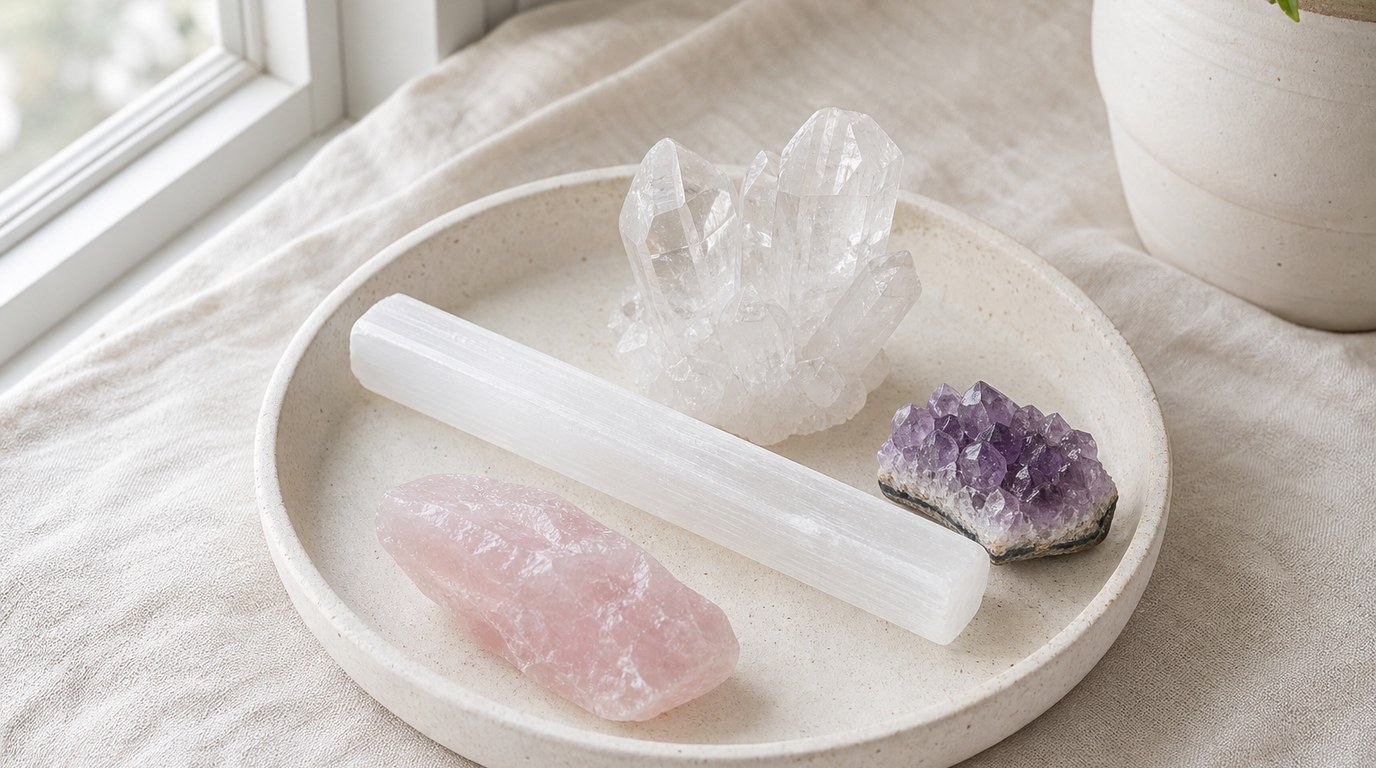
Selenite pairs well with crystals that benefit from clearing, calm, or spiritual focus. Clear quartz is a natural match because both are associated with clarity and amplification. Amethyst pairs nicely for meditation, peaceful sleep routines, and intuitive work. Rose quartz adds emotional softness and self-compassion to selenite’s cleansing quality.
For grounding, pair selenite with black tourmaline or smoky quartz. This combination can feel balanced: selenite brings lightness and clearing, while darker grounding stones support stability. Keep the focus on your intention, choosing one or two stones rather than making the practice overly complicated.
FAQ
What Should a Beginner Know First About Selenite Crystals Healing Properties?
Beginners should know that selenite is mainly associated with cleansing, clarity, calm, and spiritual connection. It is easy to use: hold it, place it in a room, or rest other crystals on it. Just remember that selenite is soft and should not be put in water.
What Matters Most When Evaluating Selenite Crystals Healing Properties?
The most important thing is how you plan to use it. Selenite is especially relevant for meditation, space clearing, crystal charging, and creating a peaceful environment. Its value comes from intentional use, not from expecting guaranteed results or treating it as a replacement for professional care.
What Mistakes Should Readers Avoid with Selenite Crystals Healing Properties?
Avoid soaking selenite, rinsing it under water, or using it in bath rituals. Also avoid making exaggerated claims about what it can do. In crystal healing, selenite is best used as a supportive spiritual tool for clarity, cleansing, and reflection, not as a medical cure.
What Is the Next Logical Step After Learning About Selenite Crystals Healing Properties?
Choose one simple use and try it consistently. Place selenite on your desk, use it before meditation, or create a small charging spot for your crystals. Notice how the ritual affects your mood, focus, and space, then build from there if it feels helpful.