
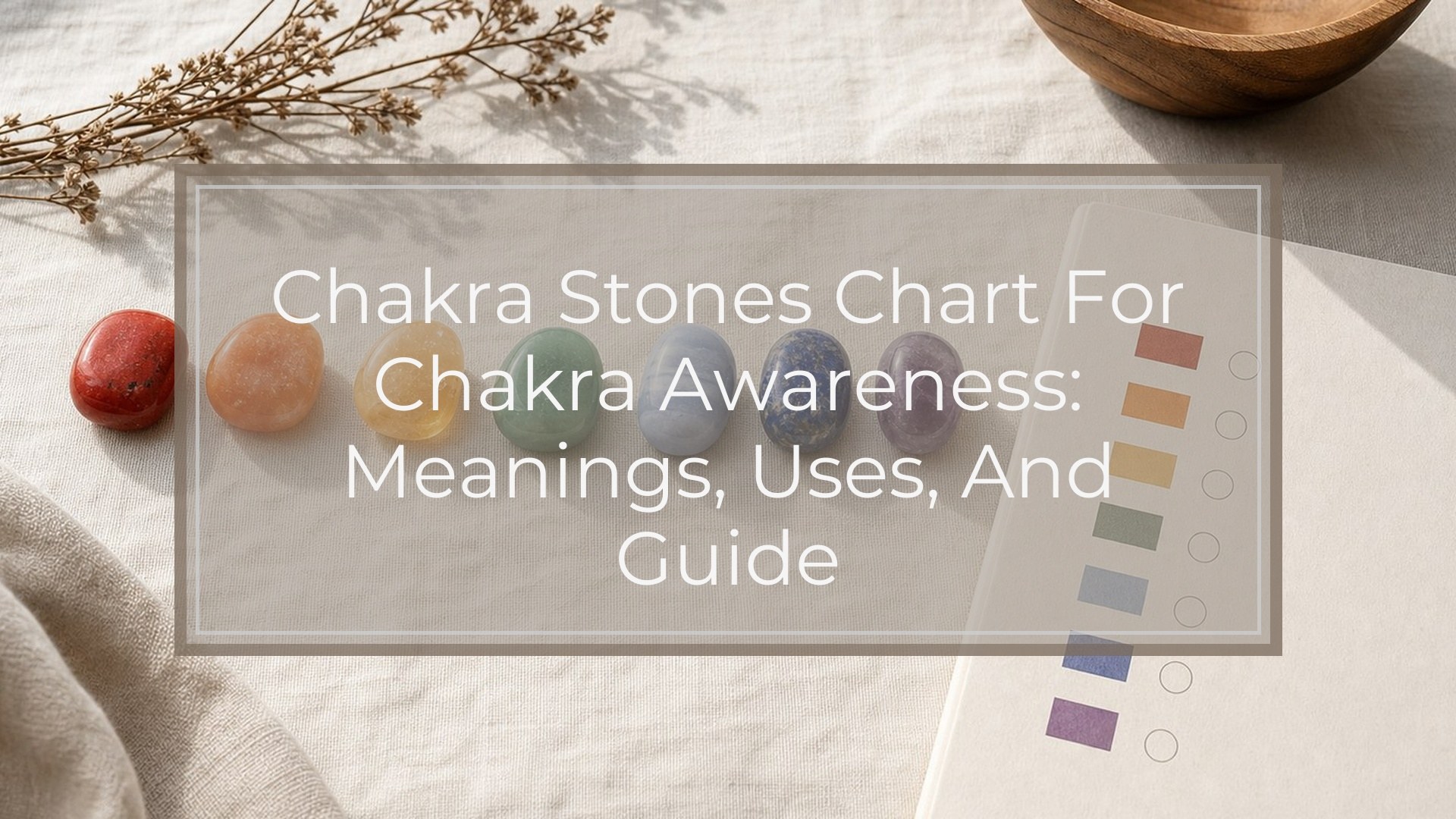
A chakra stones chart is a simple reference that matches the seven main chakras with supportive crystal options, colors, themes, and placement areas. Beginners use it to build chakra awareness: noticing how different parts of life, emotion, and energy may feel balanced, blocked, or overactive. The chart is not a rulebook. It is a starting point for reflection, meditation, journaling, and choosing stones with intention. Below, you’ll find a quick-reference chart, clear explanations, and an easy practice you can try right away.
What Is a Chakra Stones Chart?
A chakra stones chart is a visual or written guide that connects each chakra with crystals traditionally associated with that energy center. The seven main chakras are usually described from the base of the spine to the crown of the head.
The mental model is simple: each chakra relates to a life theme, such as grounding, creativity, confidence, love, communication, intuition, or spiritual connection. Stones are chosen by color, symbolic meaning, and traditional energetic associations.
For chakra awareness, the chart helps you ask, “What am I noticing in this area of my life?” Then you choose a stone as a focus tool for meditation, intention, or reflection.
Chakra Stones Chart for Quick Reference
Use this chakra stones chart as a beginner-friendly guide, not a strict formula. Many crystals can support more than one chakra, and personal connection matters.
| Chakra | Location | Color | Common Themes | Common Chakra Stones |
|---|---|---|---|---|
| — | — | —: | — | — |
| Root | Base of spine | Red/black | Safety, grounding, stability | Red jasper, black tourmaline, hematite, smoky quartz |
| Sacral | Lower abdomen | Orange | Creativity, pleasure, emotions | Carnelian, orange calcite, moonstone, sunstone |
| Solar Plexus | Upper abdomen | Yellow | Confidence, willpower, motivation | Citrine, tiger’s eye, yellow jasper, pyrite |
| Heart | Center of chest | Green/pink | Love, compassion, healing | Rose quartz, green aventurine, jade, rhodonite |
| Throat | Throat | Blue | Communication, truth, expression | Blue lace agate, sodalite, aquamarine, lapis lazuli |
| Third Eye | Brow | Indigo/purple | Intuition, insight, clarity | Amethyst, labradorite, lapis lazuli, fluorite |
| Crown | Top of head | Violet/white | Spirituality, connection, awareness | Clear quartz, selenite, amethyst, howlite |
If you are unsure where to begin, start with the chakra theme that feels most relevant today.
How to Read the Chakra Stones Chart
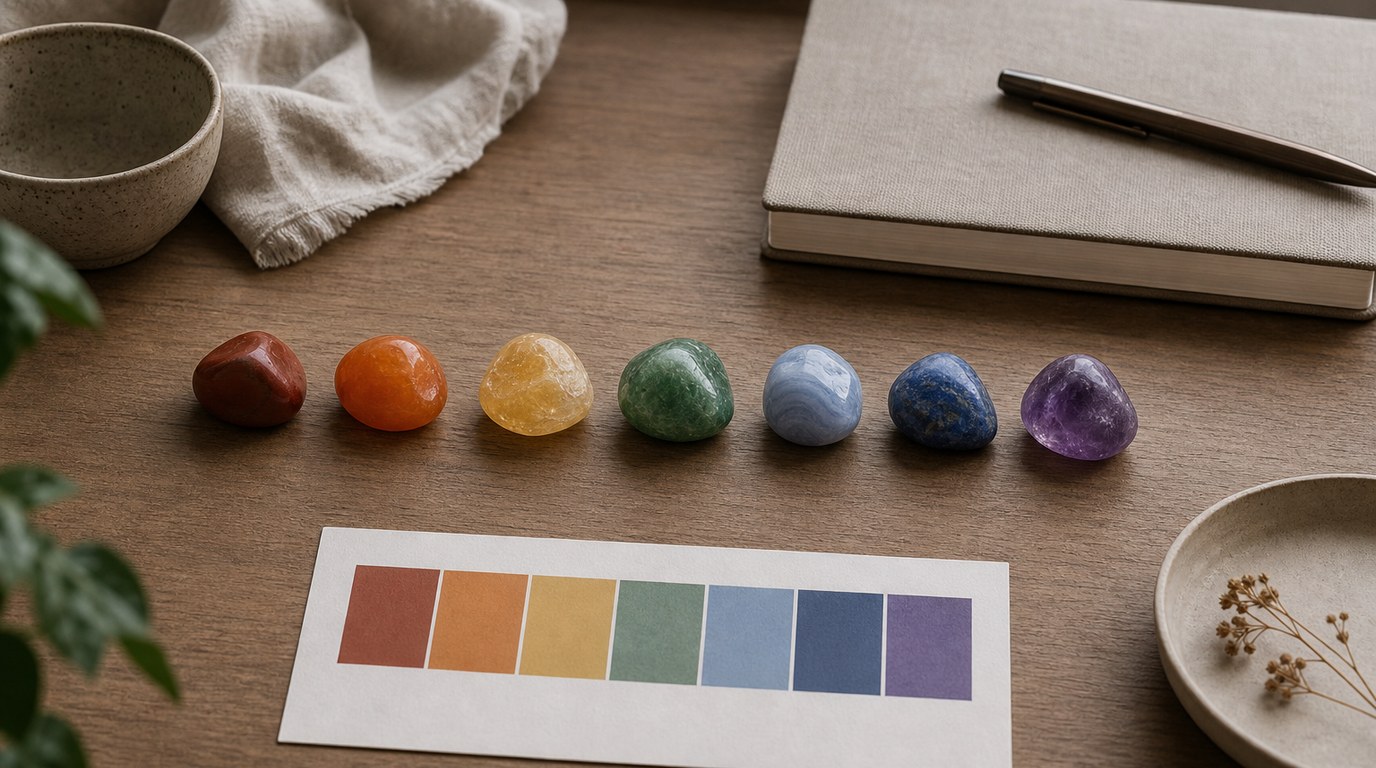
To read the chart, begin with the chakra name and theme rather than the crystal list. For example, if you want more steadiness, look at the root chakra. If you want clearer self-expression, look at the throat chakra.
Next, notice the color pattern. Traditional chakra systems often connect red with the root, orange with the sacral, yellow with the solar plexus, green or pink with the heart, blue with the throat, indigo with the third eye, and violet or white with the crown.
Finally, choose one stone from the list. You do not need every crystal. One meaningful stone used consistently is more helpful than many stones used without intention.
The Seven Chakras and Their Common Stones
Root Chakra
The root chakra is associated with grounding, physical presence, security, and feeling supported. It is often linked with red and black stones. Red jasper is a popular choice for steady, practical energy. Black tourmaline is often used for protection and energetic boundaries. Hematite can feel stabilizing because of its weight and metallic appearance. Smoky quartz is commonly chosen for releasing tension and returning attention to the present moment.
Sacral Chakra
The sacral chakra relates to creativity, emotional flow, pleasure, and connection with desire. Orange stones are common here. Carnelian is one of the classic sacral chakra stones, often associated with creativity and vitality. Orange calcite has a bright, uplifting feel and may support playful expression. Moonstone is also used when emotions, cycles, or sensitivity are part of the focus. Sunstone can be chosen for warmth and enthusiasm.
Solar Plexus Chakra
The solar plexus chakra is connected with confidence, choice, personal power, and motivation. Yellow and golden stones are often used. Citrine is a favorite for optimism and empowered action. Tiger’s eye may help with courage, focus, and decision-making. Yellow jasper has a steady quality that suits discipline and persistence. Pyrite is associated with confidence, abundance mindset, and boldness, especially when starting a goal.
Heart Chakra
The heart chakra centers on love, compassion, forgiveness, and emotional openness. Both green and pink stones are common. Rose quartz is the classic stone for gentleness, self-love, and kindness. Green aventurine is often used for emotional renewal and growth. Jade carries associations with harmony and balance. Rhodonite is a helpful choice when the heart focus includes compassion, repair, or working through old emotional patterns.
Throat Chakra
The throat chakra is linked with communication, honesty, listening, and self-expression. Blue stones are the usual match. Blue lace agate is often chosen for calm, gentle communication. Sodalite supports clear thinking and speaking with reason. Aquamarine is associated with courage in expression, especially when emotions are involved. Lapis lazuli can be used when the focus is truth, wisdom, and confident speech.
Third Eye Chakra
The third eye chakra relates to intuition, inner vision, perspective, and mental clarity. Indigo and purple stones are common. Amethyst is widely used for meditation, calm awareness, and intuitive reflection. Labradorite is associated with insight, mystery, and seeing beyond surface appearances. Lapis lazuli can also support this chakra because of its connection with wisdom. Fluorite may be chosen for focus, organization, and mental clarity.
Crown Chakra
The crown chakra is associated with spiritual awareness, meaning, connection, and higher perspective. Violet, white, and clear stones are often used. Clear quartz is a versatile crown chakra stone because it is linked with clarity and amplification. Selenite is commonly chosen for peaceful spiritual connection and energetic cleansing. Amethyst can support quiet meditation. Howlite may be used for stillness, patience, and reflective awareness.
How to Use Chakra Stones for Chakra Awareness
There are several simple ways to use chakra stones without making the practice complicated.
You can hold a stone during meditation and focus on the related chakra theme. For example, hold rose quartz while reflecting on self-compassion, or tiger’s eye while considering confidence.
You can place a stone near the chakra area while lying down. Keep the session short, comfortable, and relaxed. If a stone feels too heavy or distracting, place it beside you instead.
You can also use stones as journaling prompts. Write the chakra name at the top of a page, then ask: “Where do I feel balanced here? Where do I feel stuck? What small action would support this area?”
Another easy method is carrying one stone during the day as a reminder of your intention.
Choosing the Right Chakra Stone
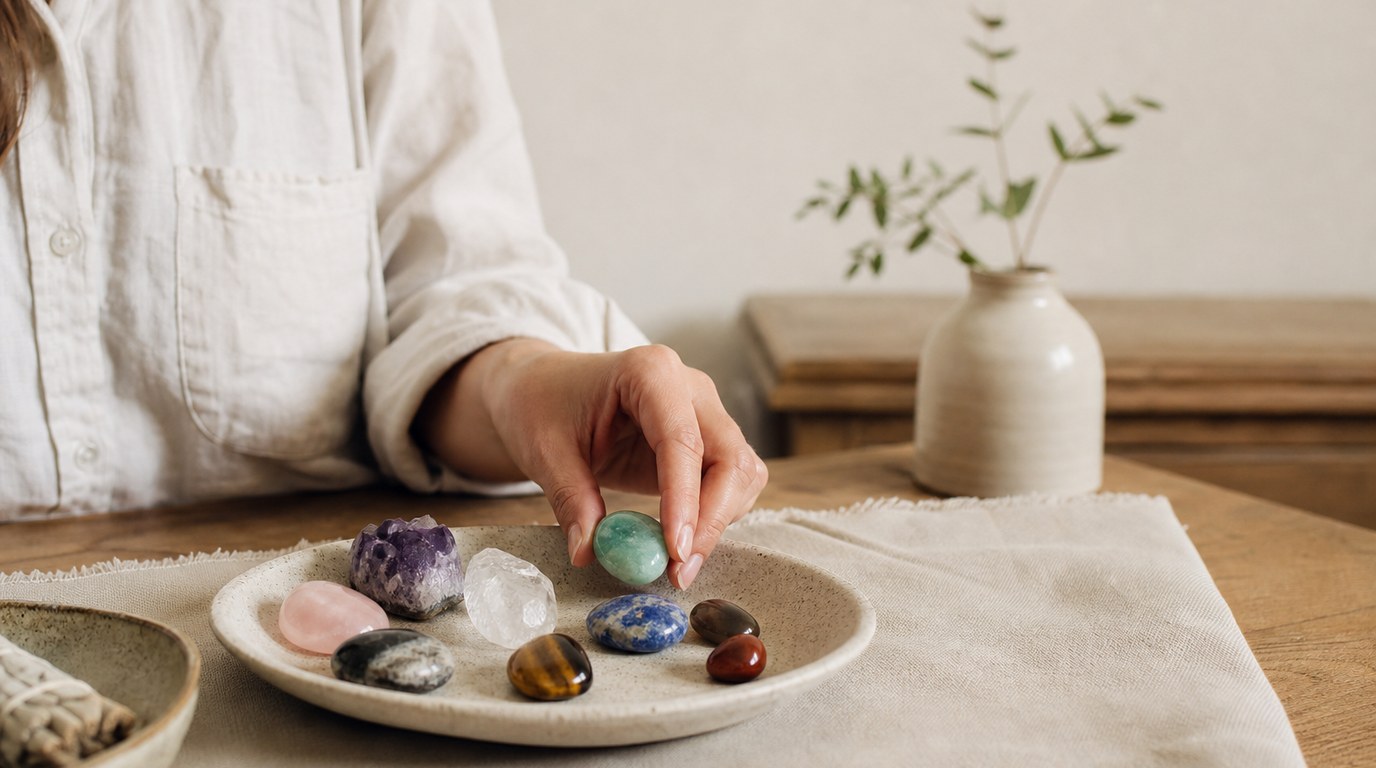
Choose a chakra stone by combining the chart with your own response. First, identify the chakra theme you want to explore. Second, look at the stones listed for that chakra. Third, notice which stone you feel drawn to by color, texture, meaning, or availability.
You do not need the “perfect” crystal. If you only have clear quartz, you can use it for any chakra by setting a clear intention. If you are buying a stone, start with one that matches your current focus rather than purchasing a full set immediately.
Simple Chakra Awareness Practice Using the Chart
Try this five-minute practice. Choose one chakra from the chart and one matching stone. Sit comfortably, hold the stone, and take three slow breaths. Name the chakra theme, such as “grounding” or “communication.”
Ask yourself: “How does this area feel today?” Notice thoughts, emotions, or body sensations without forcing an answer. Then set one simple intention, such as “I choose steadiness” or “I speak with honesty.” Close by placing the stone somewhere visible as a reminder.
Important Notes Before Working with Chakra Stones
Chakra stones are best used as tools for mindfulness, reflection, and intention. They should not replace medical care, therapy, or professional support for physical or mental health concerns.
Also, be careful with fragile or water-sensitive stones. Selenite, for example, should not be soaked. If placing stones on the body, use clean, smooth crystals and stop if anything feels uncomfortable. The goal is awareness, not pressure or perfection.
FAQ
What Should a Beginner Know First About Chakra Stones Chart Chakra Awareness?
A beginner should know that a chakra stones chart is a guide, not a fixed rule. It helps you match chakras with crystals, colors, and life themes. Start with one chakra, one stone, and one simple intention instead of trying to balance everything at once.
What Matters Most When Evaluating Chakra Stones Chart Chakra Awareness?
The most important thing is whether the chart helps you build clear, grounded awareness. Look for accurate chakra names, common color associations, useful stone examples, and practical guidance. A good chart should make choosing a stone easier, not more confusing.
What Mistakes Should Readers Avoid with Chakra Stones Chart Chakra Awareness?
Avoid thinking you need every stone, using crystals as a replacement for professional care, or assuming one chart is the only correct version. Also avoid overcomplicating the practice. Chakra awareness works best when it stays simple, reflective, and consistent.
What Is the Next Logical Step After Learning About Chakra Stones Chart Chakra Awareness?
The next step is to choose one chakra from the chart and practice with one stone for a few days. Notice your emotions, thoughts, and habits around that chakra’s theme. Journaling briefly after each session can help you track patterns and insights.