
Crystal clusters are groups of crystal points that grow together from one base, often called a matrix, which is the rock or mineral surface they formed on. People use them because they combine natural beauty with practical display value and, for some, spiritual meaning. A cluster can fill a room visually, support a meditation area, or serve as a place to rest smaller stones. If you are choosing one, focus on size, stability, mineral type, and how easy it will be to clean and place safely.
Quick Answer
A crystal cluster is a formation where many crystal points grow side by side from the same base instead of appearing as one single point. The main thing to know is that clusters are valued for their shared structure: they look fuller than a lone crystal, stand out as décor, and are often chosen for group spaces, altars, desks, or shelves.
If you are searching for everything you need to know about crystal clusters, start with this takeaway: a cluster is usually the better choice when you want visual impact, a natural “many points from one source” look, or a stable display piece that does not need extra shaping.
Common examples include quartz clusters, amethyst clusters, celestite clusters, apophyllite clusters, and pyrite clusters. Some people also choose clusters for spiritual practices because they believe the many points help spread or amplify energy through a space. That belief is personal, not guaranteed, but it explains why clusters are so popular in meditation and room-setting use.
How to Think About This Topic
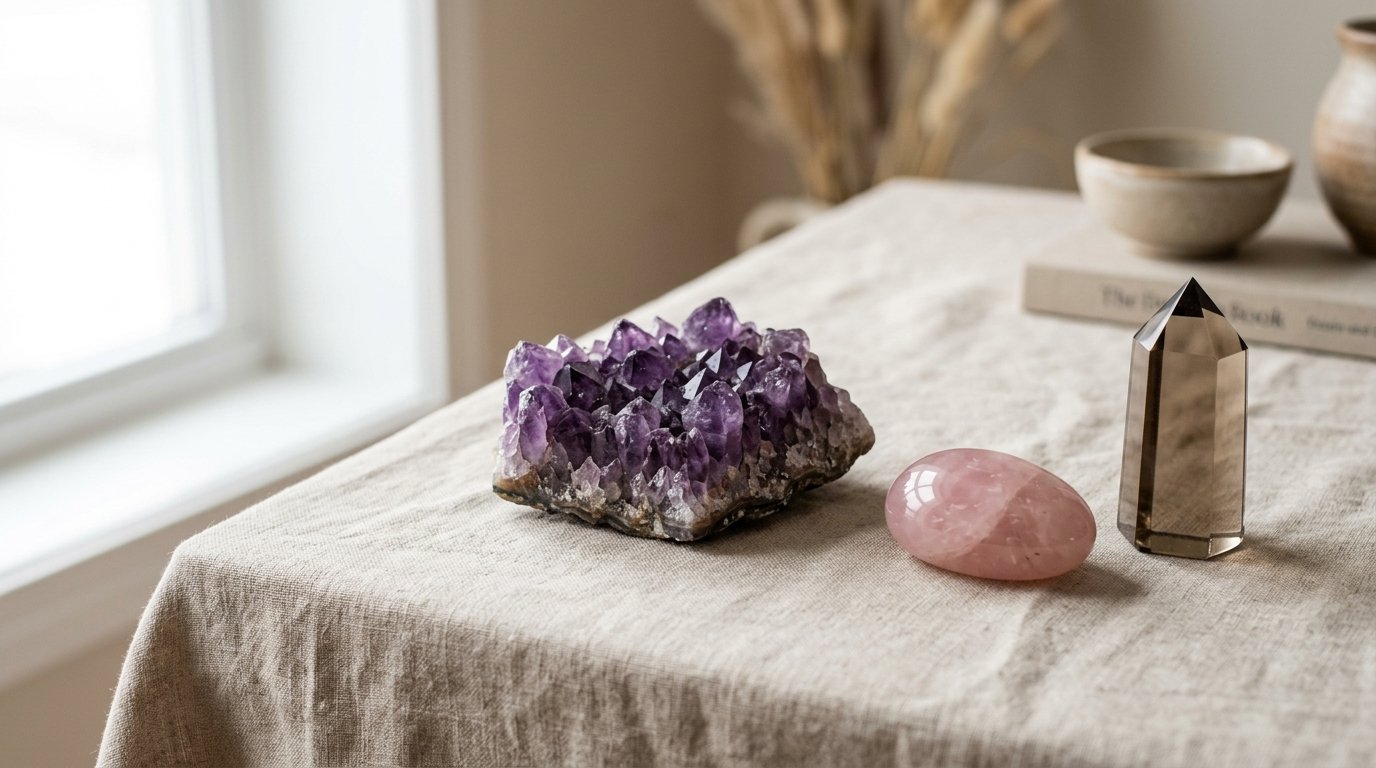
The easiest way to understand a crystal cluster is to think of it as a crystal community rather than a single specimen. Instead of one main point directing your attention, a cluster gives you many points working together. That structure is what makes it different from a polished stone, a tower, or a single terminated point.
Physically, clusters form when mineral-rich conditions allow multiple crystals to grow at once from the same surface. That surface is often the matrix, meaning the host rock or base material the crystals are attached to. In some pieces, the matrix is obvious and rough. In others, the crystal growth is so dense that the base is less visible.
You may also hear the word drusy or druzy. This means a fine coating of tiny crystals covering a surface. A drusy area can appear on clusters, but it is not the same thing as a full crystal cluster. A cluster usually has clearly visible points, while drusy looks more like a sparkling crust.
Why does this matter to a beginner? Because knowing the structure helps you choose the right formation for the right purpose. If you want a focused piece for carrying, a tumble or point may fit better. If you want a natural centerpiece, a shelf specimen, or a shared-space stone, a cluster is often more relevant.
Clusters also matter because they combine three benefits at once:
- Visual presence: multiple points create texture, sparkle, and depth.
- Display stability: many clusters sit securely because of their broad base.
- Versatility: they can be decorative, collectible, or part of a spiritual routine.
For spiritual users, clusters are often linked with harmony, cleansing, or group energy because they are many points in one formation. It is best to treat these as traditional or personal meanings, not promises. Their real-world value is easier to confirm: they are eye-catching, natural conversation pieces, and often easier to style than a single narrow point that tips over.
So when people ask what crystal clusters are and why they matter, the practical answer is simple: they are one of the most useful and approachable crystal formations for both beginners and collectors.
Practical Guidance
When choosing a crystal cluster, start with your actual use case rather than the prettiest photo. A beautiful cluster that sheds easily, wobbles on a shelf, or is too delicate to dust may not be the right beginner piece.
Here are the main selection criteria:
1. Mineral type
Quartz clusters are durable and beginner-friendly. Amethyst clusters add color and are popular for bedrooms or meditation corners. Celestite clusters are softer and more fragile, so they suit low-touch display. Apophyllite clusters often have bright reflective faces and are loved by collectors. Pyrite clusters feel bold and metallic but can need extra care around moisture.
2. Stability
Set the cluster on a flat surface if possible before buying. A broad, even base matters, especially for shelves, desks, and side tables. If the points make the piece top-heavy, it may need a stand.
3. Point condition
Natural variation is normal, but check for broken tips, loose growth, or heavy flaking if durability matters to you. Some collectors accept minor damage as part of a natural specimen. Beginners often prefer cleaner, sturdier pieces.
4. Size and placement
A palm-sized cluster works well on a desk or nightstand. A medium cluster suits a coffee table, bookshelf, or entryway console. Large clusters can anchor a room but need safe placement away from children, pets, or high-traffic edges.
5. Cleaning needs
Clusters with many tight points trap dust. If you want something easy to maintain, choose a sturdier quartz or amethyst cluster with open spacing between points rather than a very fragile specimen.
A few real-life examples make this easier:
- For a meditation corner: a medium amethyst or quartz cluster can act as a focal piece.
- For a shared living room: a stable quartz cluster is versatile and neutral.
- For a collector shelf: apophyllite offers more sparkle and specimen interest.
- For a calm bedroom display: celestite is beautiful, but place it somewhere protected.
- For a bold office piece: pyrite adds strong texture and shine.
Clusters are also one of the few formations people commonly use as a resting place for smaller crystals. If you do this, make sure the smaller stones do not scratch or chip the points. Harder stones placed on softer minerals can cause damage.
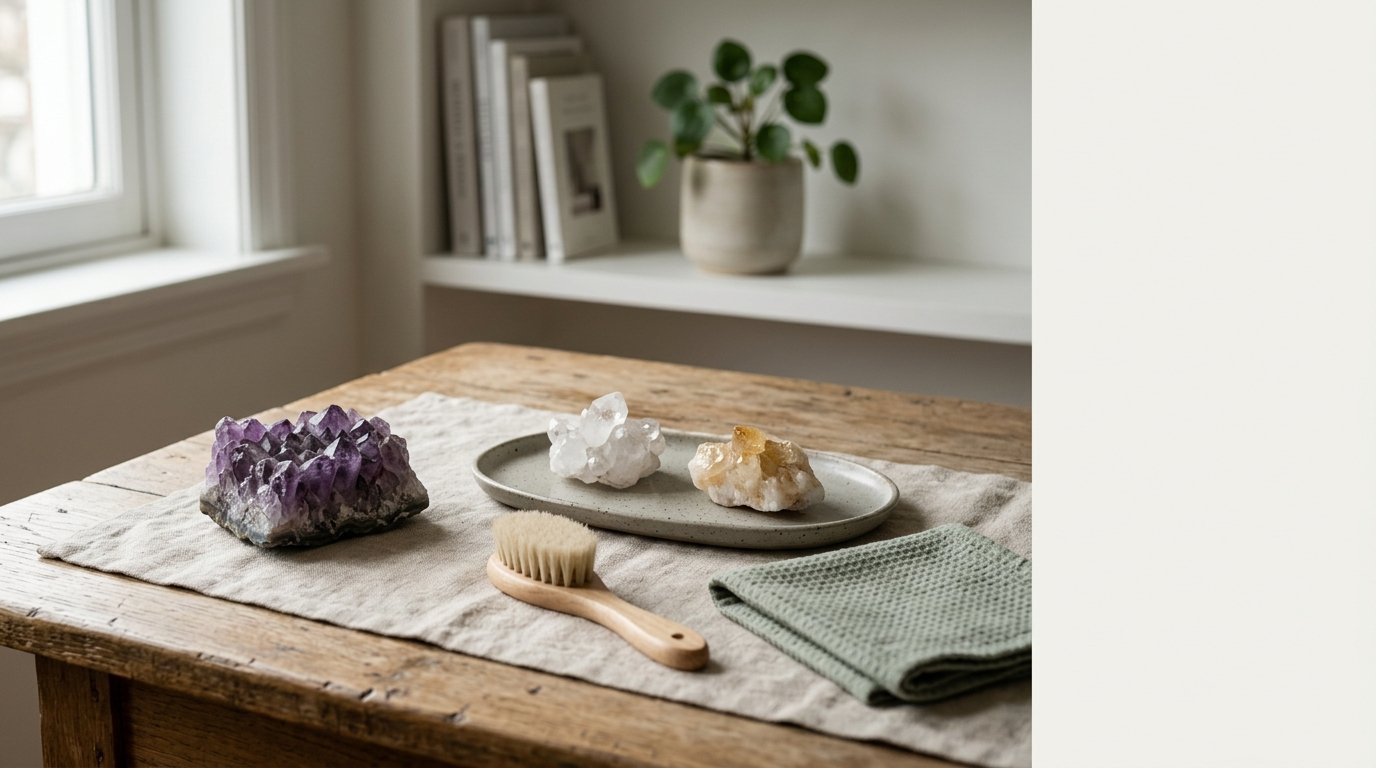
For care, the safest routine is gentle and simple: keep the cluster dry unless you know the mineral handles water well, dust it with a soft brush, and avoid direct harsh sunlight if the color can fade. Never assume all clusters can be cleansed the same way just because they look similar. Mineral type matters more than shape.
If your goal is “one cluster that does a lot,” a stable quartz or amethyst cluster is usually the best beginner choice. It gives you the classic look, works in many spaces, and is easier to live with than more delicate options.
FAQ
What Is the Difference Between a Crystal Cluster and a Geode?
A crystal cluster is a group of visible crystal points growing from a shared base. A geode is a hollow rock lined with crystals inside. Some geodes contain cluster-like growth, but the hollow cavity is the key feature that makes something a geode.
What Are Crystal Clusters Used for?
Crystal clusters are used for home décor, collecting, meditation spaces, altar setups, and sometimes as a place to rest smaller stones. Many people also value them for symbolic or spiritual reasons, especially in shared rooms where the multi-point structure feels visually and energetically expansive.
Can You Put Other Crystals on a Crystal Cluster?
Yes, many people place smaller crystals on a cluster, especially quartz. Just do it carefully. Make sure the cluster is sturdy and the smaller stones will not scratch, chip, or loosen delicate points. Softer minerals need more caution than durable quartz or amethyst.
Where Should I Place a Crystal Cluster in My Home?
Place a crystal cluster where it is stable, visible, and unlikely to be bumped. Common spots include a desk, shelf, meditation area, entry table, or living room. Avoid cramped edges, damp areas, and strong direct sun if the mineral is delicate or color-sensitive.
How Do You Clean a Crystal Cluster Safely?
Use a soft dry brush, gentle air blower, or microfiber cloth for light dust. Avoid soaking unless you know the specific mineral is water-safe. Many clusters have fragile points or moisture-sensitive minerals, so the safest beginner method is dry cleaning and careful handling.