
Meditating with crystals is simple: choose one crystal that matches your goal, settle into a quiet space, hold or place the crystal comfortably, and focus on your breath and intention for a few minutes. You do not need to “feel energy” for the practice to work. What matters most is consistency, comfort, and attention. Start with a short session, keep your goal specific, and avoid treating crystals as a replacement for medical or mental health care. The guide below walks you through what to prepare, a clear step-by-step process, one important caution, and how to tell whether your meditation was useful.
What You Need Before You Start
Before you begin, gather a few basics so the meditation feels calm instead of improvised.
You need:
- One crystal to start with
- A quiet place where you can sit or lie down for a few minutes
- A timer or clock
- A clear intention such as calm, focus, grounding, or emotional release
- Optional support items like a cushion, blanket, journal, or soft lighting
For beginners, keep crystal choice practical. Pick one based on the result you want:
- Clear quartz for clarity or general meditation
- Amethyst for calm and inner quiet
- Rose quartz for self-compassion and gentle emotional work
- Black tourmaline or smoky quartz for grounding
If your crystal is new or has been handled a lot, cleanse it in whatever simple way you prefer, such as smoke, sound, moonlight, or setting an intention over it. You do not need to turn cleansing into a long ritual.
Also set expectations. Crystal meditation is not about forcing a vision, a vibration, or a dramatic spiritual moment. Some sessions feel deep; others feel ordinary. Both can still be helpful.
A few practical conditions matter:
- Sit in a position you can maintain without strain.
- Silence distractions if possible.
- Avoid meditating while driving, bathing, or doing anything that requires full attention.
- If placing a crystal on your body, use a smooth, comfortable stone and stop if it feels distracting or uncomfortable.
The real prerequisite is willingness to slow down and pay attention.
Step 1: Prepare Your Crystal, Space, and Intention
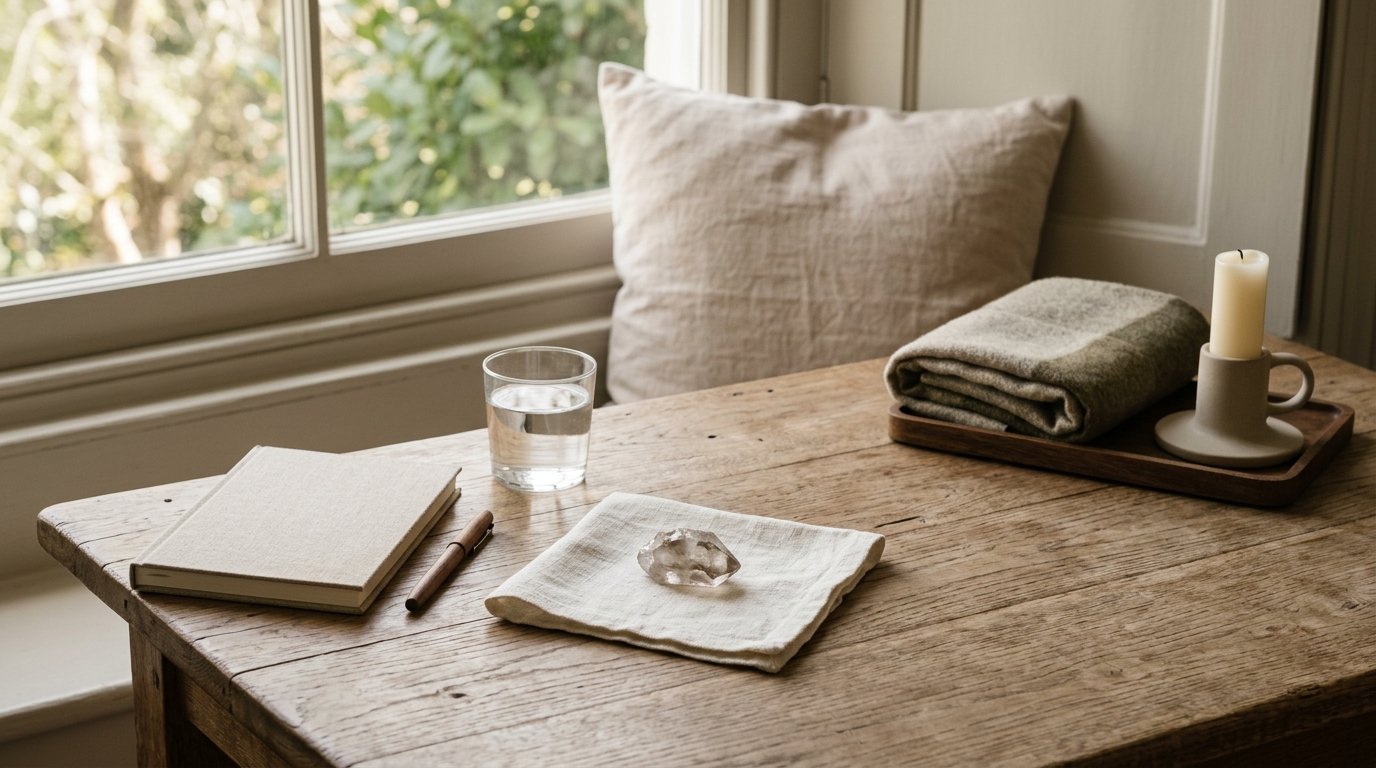
Use this first stage to set up the meditation clearly. Good preparation makes the actual sitting much easier.
1. Choose one crystal.
Start with a single stone instead of a handful. This keeps your attention from scattering. Match it to one goal only. For example: amethyst for calm before sleep, black tourmaline for grounding after a stressful day, or clear quartz when you want a neutral focus point.
2. Hold the crystal and name your intention.
Say your intention silently or out loud in one short sentence. Keep it direct:
- “I want to feel more steady.”
- “I am inviting calm.”
- “I want to release mental clutter.”
Avoid broad intentions like “I want my whole life to change.” Specific intentions give your mind a direction.
3. Prepare your space.
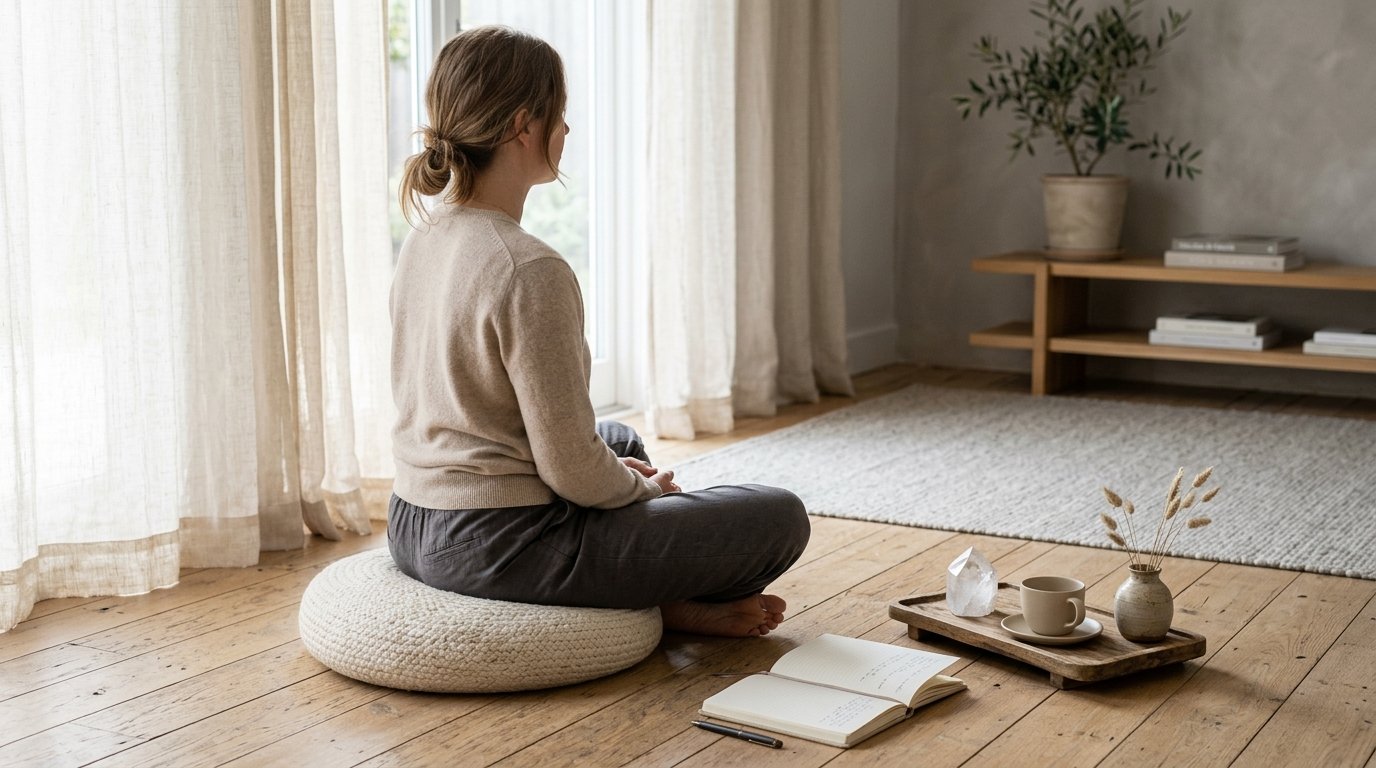
Sit in a chair with both feet down, cross-legged on a cushion, or lie flat if you can stay awake. Dim lights if that helps, but comfort matters more than atmosphere. Set a timer for 5 to 15 minutes if you are new. A shorter session done regularly works better than a long session that feels forced.
4. Decide where the crystal will go.
You can:
- Hold it in one or both hands
- Place it on your heart area, belly, or forehead while lying down
- Set it in front of you as a visual anchor
If you are unsure, holding it in your non-dominant hand is an easy starting point because it keeps your attention active without overcomplicating placement.
5. Take three settling breaths.
Inhale slowly through the nose, exhale without rushing, and let your shoulders drop. You are not trying to empty the mind. You are shifting from daily activity into deliberate stillness.
By the end of Step 1, you should know your crystal, your intention, your posture, your timer length, and where the crystal will rest.
Step 2: Begin the Meditation and Close It Well
Now move through the meditation itself in a simple sequence.
6. Focus on breath, body, and crystal.
Close your eyes or soften your gaze. Breathe naturally. Notice three things:
- the feeling of the breath moving in and out
- the weight of your body being supported
- the presence of the crystal in your hand or on your body
If your mind wanders, gently return to one anchor. You might repeat your intention with each exhale, or silently note: “breathing in, breathing out.”
After a minute or two, expand your awareness slightly. Notice whether the crystal feels cool, warm, heavy, smooth, or simply present. You do not need to sense anything mystical. Physical awareness is enough.
If thoughts come up, do not fight them. Let them pass and come back to the breath or the crystal. A simple rhythm helps:
- inhale: “I am here”
- exhale: “I am steady”
Stay with this for the rest of the timer.
Caution: do not press a crystal into your body, place sharp stones on sensitive areas, or keep going if you feel dizzy, emotionally overwhelmed, or physically uncomfortable. Stop, sit up, and ground yourself. Crystal meditation should support regulation, not push you past your limits.
7. Close the session on purpose.
When the timer ends, do not jump up immediately. Take two deeper breaths. Open your eyes slowly. Remove the crystal if it is on your body and notice how you feel before checking your phone or starting another task.
To close, do one of these:
- thank the crystal and set it aside
- place your hand on your chest and repeat your intention once more
- write one sentence in a journal about what you noticed
A good closing question is: “What is the strongest thing I noticed—physically, emotionally, or mentally?”
This final pause helps you integrate the session. Without it, the meditation can blur into the rest of the day and feel forgettable.
For a steady beginner routine, try meditating with the same crystal for five to seven days before switching. Repetition makes it easier to notice patterns.
How to Check the Result
A successful crystal meditation does not have to feel dramatic. Look for small, useful changes.
Signs the session worked:
- your breathing slowed or deepened
- your body felt heavier, looser, or more settled
- your thoughts became less urgent, even if they did not disappear
- your intention felt clearer afterward
- you noticed one honest emotion instead of feeling scattered
You may also feel nothing obvious during the session but still respond differently afterward, such as speaking more calmly, focusing better, or falling asleep more easily later. That still counts as a result.
If the session did not feel helpful, troubleshoot the basics first:
- Too distracted? Shorten the session to 3 to 5 minutes.
- Too sleepy? Sit upright instead of lying down.
- Too mentally busy? Use a spoken intention or count breaths.
- Uncomfortable crystal placement? Hold the crystal instead.
- Using too many stones? Go back to one crystal and one goal.
A useful result check is to ask yourself the same three questions after each session:
- Do I feel calmer, clearer, or more grounded than before?
- Was the crystal placement comfortable?
- Would I repeat this exact setup tomorrow?
If you answer yes to at least one, the practice is giving you something to build on.
FAQ
What Are the Best Crystals for Meditation for Beginners?
Clear quartz, amethyst, rose quartz, and black tourmaline are beginner-friendly choices. They are easy to match to simple goals like clarity, calm, self-compassion, and grounding. Start with one crystal only so your meditation feels focused rather than complicated.
How Long Should I Meditate with Crystals?
Start with 5 to 10 minutes. If that feels comfortable, extend to 15 or 20 minutes. A short session you can repeat several times a week is usually more effective than a long session that leaves you restless or discouraged.
Do I Need to Cleanse My Crystals Every Time Before Meditating?
No. You can cleanse them when they are new, after intense use, or whenever they feel neglected in your routine. What matters more is beginning with a clear intention and a calm setup instead of repeating a long cleansing ritual each time.
Can I Meditate with More Than One Crystal at a Time?
Yes, but beginners usually do better with one crystal. Using several at once can make it harder to notice what helps. Once you have a steady practice, you can combine stones with complementary goals, such as clear quartz with amethyst.
Where Should I Place a Crystal on My Body During Meditation?
Common placements are the hand, heart area, belly, or forehead. Choose the spot that feels comfortable and least distracting. If a crystal feels heavy, cold, sharp, or awkward on the body, hold it instead of forcing the placement.
What If I Do Not Feel Anything During Crystal Meditation?
That is normal. You do not need tingles, warmth, or visions for the practice to be useful. Look for quieter results like slower breathing, clearer thinking, or feeling slightly steadier afterward. Consistency usually matters more than immediate sensations.