
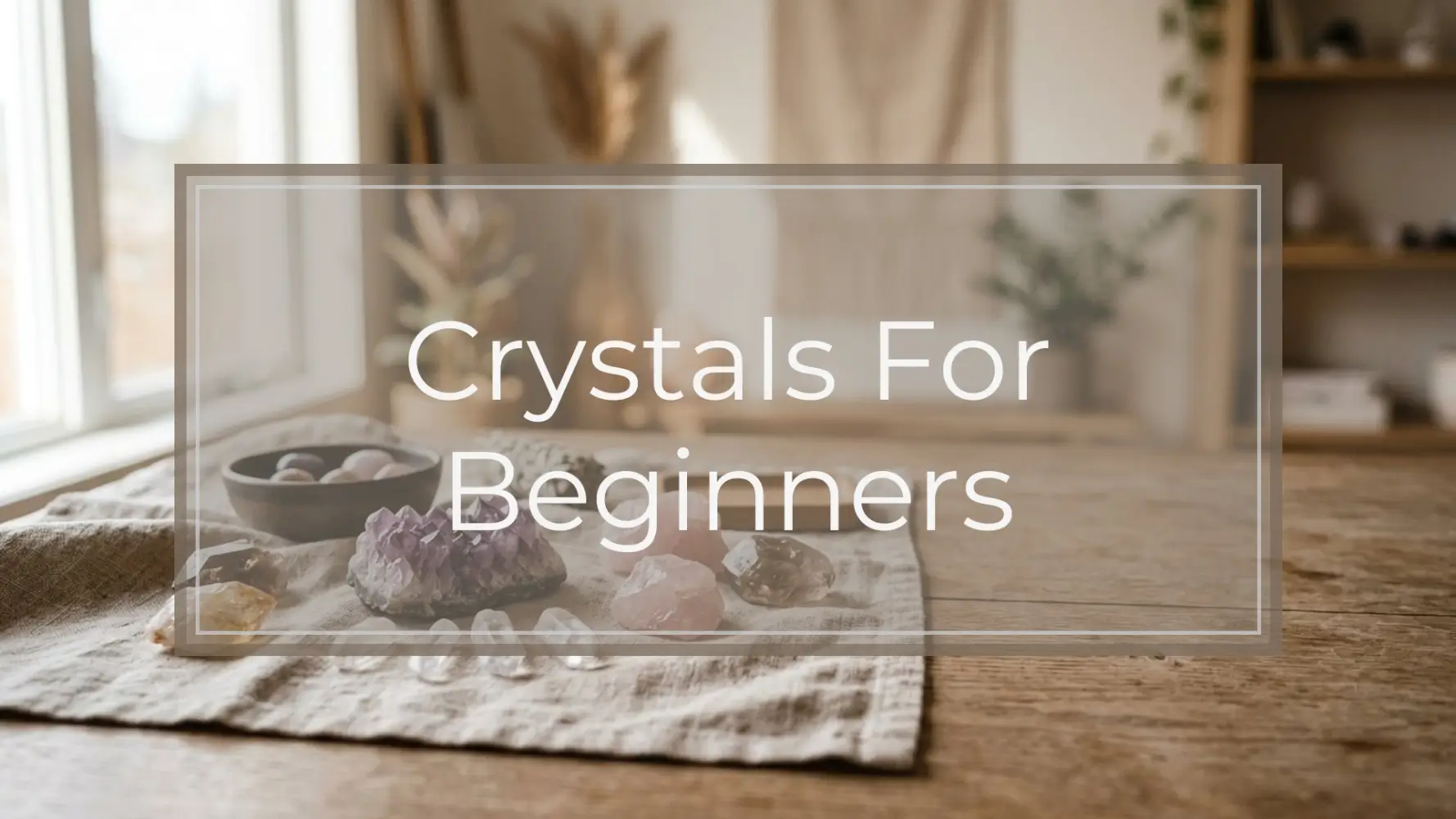
The best crystals for beginners are clear quartz, amethyst, rose quartz, citrine, black tourmaline, selenite, and hematite. They are widely available, easy to work with, and often associated with common intentions such as clarity, calm, self-love, confidence, grounding, cleansing, and protection.
Quick verdict: Start with one to three stones, not a huge collection. Choose them by intention or simple preference, cleanse them gently, and use them in practical ways such as meditation, carrying one in your pocket, placing one near your bed, or keeping one on your desk.
Crystals are not a substitute for medical, mental health, legal, or financial support. For many people, they are meaningful mindfulness tools: physical reminders of what they want to practice more often, such as calm breathing, self-compassion, focus, or a more peaceful space.
Best Crystals for Beginners: Start Here
Beginners do not need a large crystal collection. In fact, starting small usually makes the experience more useful. One to three crystals gives you enough variety to explore without feeling overwhelmed.
The most beginner-friendly crystals tend to be easy to find, simple to use, and connected with broad intentions. Clear quartz, amethyst, rose quartz, citrine, black tourmaline, selenite, and hematite are popular starting points because they cover many everyday needs: clarity, rest, emotional softness, confidence, grounding, energetic clearing, and stability.
Use the table below as a quick guide. The associations listed are traditional or common spiritual meanings, not guaranteed effects.
| Crystal | Common intention | Why beginners like it | Simple use |
|---|---|---|---|
| Clear quartz | Clarity, focus, amplifying intention | Versatile and easy to pair with other crystals | Hold during meditation or keep on your desk |
| Amethyst | Calm, rest, spiritual reflection | Popular, beautiful, and often used for evening routines | Place near your bed or use during wind-down time |
| Rose quartz | Self-love, compassion, emotional softness | Gentle meaning and easy daily use | Hold while journaling or keep near a mirror |
| Citrine | Confidence, optimism, abundance mindset | Bright, uplifting association | Place on a workspace or use before planning |
| Black tourmaline | Grounding, protection, boundaries | Often chosen for feeling steady and centered | Keep near an entryway or carry in a pouch |
| Selenite | Cleansing, clarity, peaceful space | Commonly used to refresh other crystals | Place near other stones or on a small altar |
| Hematite | Grounding, stability, focus | Dense feel and simple grounding association | Hold during breathing exercises or stressful moments |
If you want the simplest starter trio, choose clear quartz, amethyst, and either rose quartz or black tourmaline. Choose rose quartz if your focus is self-compassion or emotional support. Choose black tourmaline if you want a stone that symbolizes boundaries and grounding.
How to Choose Your First Crystal
There is no single “right” first crystal. The best choice is one you will actually use. Beginners can choose a crystal in three simple ways: by intention, by appearance or feel, or by where they plan to use it.
Choosing by intention means naming what you want the crystal to represent. For example:
- Choose amethyst if you want a calming bedside stone.
- Choose clear quartz if you want a general-purpose crystal for focus or meditation.
- Choose black tourmaline or hematite if you want something connected with grounding.
- Choose rose quartz if you want a reminder to practice self-kindness.
- Choose citrine if you want a cheerful stone for motivation or confidence.
Choosing by appearance is also valid. You might be drawn to the color, shape, texture, or weight of a crystal. Some people describe this as intuition, but you do not have to feel anything dramatic. A practical preference is enough.
Choosing by location can make your crystal habit easier. If you want something for your desk, clear quartz or citrine may be useful reminders to focus. If you want a stone near your bed, amethyst or rose quartz may fit a softer evening routine. If you want something near your door, black tourmaline is often used as a symbolic boundary stone.
Start with a need you can name: calm, focus, confidence, self-compassion, grounding, or a more peaceful space. Then pick one crystal that matches that intention and use it consistently for a week or two.
What Crystals Are Used For
Crystals are commonly used as mindfulness tools, symbolic reminders, meditation aids, decorative objects, and intention-setting objects. In spiritual practices, an intention is a clear statement of what you want to focus on or embody. Examples include “I want to feel grounded,” “I am practicing patience,” or “I am creating a calmer workspace.”
A crystal can help make that intention more visible. For instance, if you place rose quartz beside your journal, it can remind you to write with more self-compassion. If you keep hematite on your desk, it can remind you to pause, breathe, and return to one task at a time.
Common crystal intentions include:
- Calm: creating a peaceful routine or quiet moment
- Clarity: focusing your thoughts or decisions
- Protection: symbolizing boundaries and energetic steadiness
- Love: practicing kindness, compassion, or openness
- Abundance: supporting a mindset of possibility and gratitude
- Focus: returning attention to a task or goal
- Grounding: feeling present, steady, and connected to the moment
- Cleansing: refreshing a space, object, or routine symbolically
It is important to keep expectations realistic. Crystals should not replace professional support for health, mental health, legal, financial, or safety concerns. Think of them as part of a supportive personal ritual, not a guaranteed solution.
A simple example: choose amethyst for calm, place it by your bed, and take three slow breaths before sleep. The crystal becomes a reminder to practice the habit.
How to Cleanse, Charge, and Set an Intention
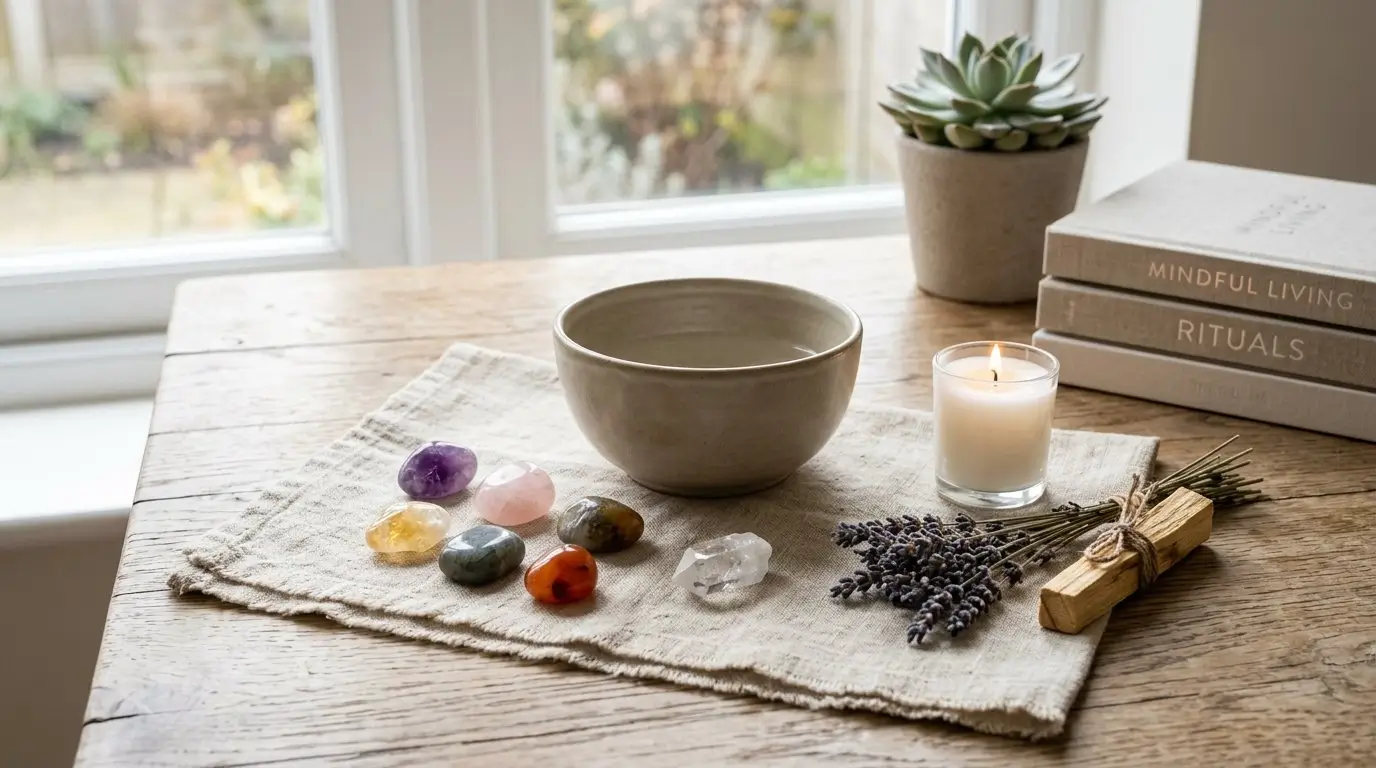
In crystal practice, cleansing means refreshing a crystal energetically or symbolically before use. Some people cleanse crystals when they first bring them home, after intense use, or whenever the stone feels like it needs a reset.
Beginner-safe cleansing methods include:
- Sound: Ring a bell, use a singing bowl, or play a clear tone nearby.
- Moonlight: Place the crystal near a window overnight.
- Selenite: Place the crystal beside or on a selenite plate or wand.
- Visualization: Imagine the crystal being surrounded by clear, bright light.
- Breathwork: Hold the crystal, breathe slowly, and imagine releasing stale energy.
- Smoke cleansing: Use smoke from herbs or incense only where it is safe, ventilated, and appropriate for your household.
Be careful with water and sunlight. Not all crystals are water-safe, and some may fade in direct sun. Selenite, for example, should not be soaked in water. Amethyst can fade with prolonged strong sunlight. When in doubt, avoid water and direct sun until you have checked the stone’s care needs.
Charging means reconnecting the crystal with a purpose. It does not need to be complicated. You can charge a crystal by holding it quietly, placing it in moonlight, setting it near selenite, or simply taking a mindful moment with it.
To set an intention, hold the crystal and say or think a clear sentence. For example:
“I use this crystal as a reminder to stay grounded and calm today.”
Other simple intention scripts include:
- “I use this crystal to remember my worth.”
- “I use this crystal as a reminder to focus on one step at a time.”
- “I use this crystal to support a peaceful evening routine.”
The words do not have to be perfect. What matters is that the intention feels understandable and useful to you.
Easy Ways to Use Crystals Every Day
The easiest way to use crystals is to connect them with habits you already have. Consistency matters more than complexity. You do not need an elaborate ritual, a large altar, or advanced knowledge to begin.
Here are simple beginner practices:
- Carry one in a pocket or pouch. Choose hematite, black tourmaline, or clear quartz as a small reminder during the day.
- Place one on your desk. Use citrine for motivation, clear quartz for clarity, or hematite for focus.
- Meditate with a crystal. Hold clear quartz or amethyst while breathing slowly for a few minutes.
- Keep one by the bed. Place amethyst or rose quartz nearby as part of an evening wind-down routine.
- Add one to journaling. Use rose quartz when writing about self-compassion or emotional reflection.
- Create a small altar or display. Arrange one to three crystals with a candle, note, or meaningful object.
Pairing crystals with small habits makes them more effective as reminders. For example, if you keep citrine on your workspace, let it remind you to choose your top priority for the day. If you use rose quartz while journaling, write one kind sentence to yourself. If you hold amethyst before bed, take three slow breaths and put your phone away.
Safety matters, especially with small stones. Keep crystals away from young children and pets, as they can be choking hazards. Do not place crystals in drinking water unless you have confirmed the stone is safe, non-toxic, and properly prepared for that purpose. Many beginners are better off keeping crystals beside a glass or bottle rather than inside it.
Building a Beginner Crystal Collection
Build your crystal collection slowly. It is tempting to buy a large kit right away, but a smaller collection is easier to understand and use. Start with a few stones, learn what you reach for, and expand based on your actual habits.
A strong beginner collection could include:
- Clear quartz for general intention, clarity, and meditation.
- Amethyst for calm, reflection, or evening routines.
- Rose quartz or black tourmaline depending on your focus.
Choose rose quartz if you want more self-compassion, gentleness, or emotional openness. Choose black tourmaline if you want a symbol of grounding, boundaries, or protection.
When buying crystals, look for reputable sellers who clearly label stones and avoid extreme promises. Natural crystals vary in color, pattern, shape, and clarity, so do not expect every stone to look identical. Some stones are dyed, heat-treated, or man-made; that is not always bad, but it should be disclosed honestly.
A few buying tips:
- Read the stone name carefully before purchasing.
- Expect natural variation, especially in color and inclusions.
- Be cautious of claims that sound too dramatic or guaranteed.
- Choose stones that fit your budget and purpose.
- Buy one meaningful crystal before buying many unused ones.
Storage can be simple. Use small pouches, bowls, trays, labeled boxes, or shelves. Keep delicate stones separate so they do not scratch or chip. Softer crystals, points, clusters, and polished shapes may need more careful handling than tumbled stones.
Common beginner mistakes include overcomplicating rituals, expecting instant outcomes, cleansing with unsafe methods, and buying too many crystals without using them. A better approach is to choose one stone, give it a purpose, and connect it with a repeatable habit.
FAQ
What crystal should a beginner start with?
Clear quartz is one of the best crystals for beginners because it is versatile, widely available, and often associated with clarity and intention. Amethyst is another excellent first choice if you want a calming stone for meditation, reflection, or an evening routine.
How many crystals do I need as a beginner?
One to three crystals is enough. Start with a small collection so you can learn how you actually use them. Clear quartz, amethyst, and either rose quartz or black tourmaline make a simple beginner trio.
Do I have to cleanse a crystal before using it?
You do not have to, but many people like to cleanse a new crystal as a symbolic reset. Beginner-friendly methods include sound, moonlight, selenite, visualization, or breathwork. Avoid water or sunlight unless you know the crystal is safe for that method.
Which crystals should beginners avoid putting in water?
Avoid soaking selenite, malachite, pyrite, lepidolite, celestite, and other soft, flaky, metallic, or porous stones. Some crystals can dissolve, rust, release unwanted substances, or become damaged. When unsure, use smoke, sound, moonlight, or visualization instead of water.
Can I use more than one crystal at a time?
Yes, you can use more than one crystal at a time. Keep it simple at first by pairing two stones with a clear intention, such as amethyst for calm and clear quartz for focus. If it feels confusing, return to one crystal.