
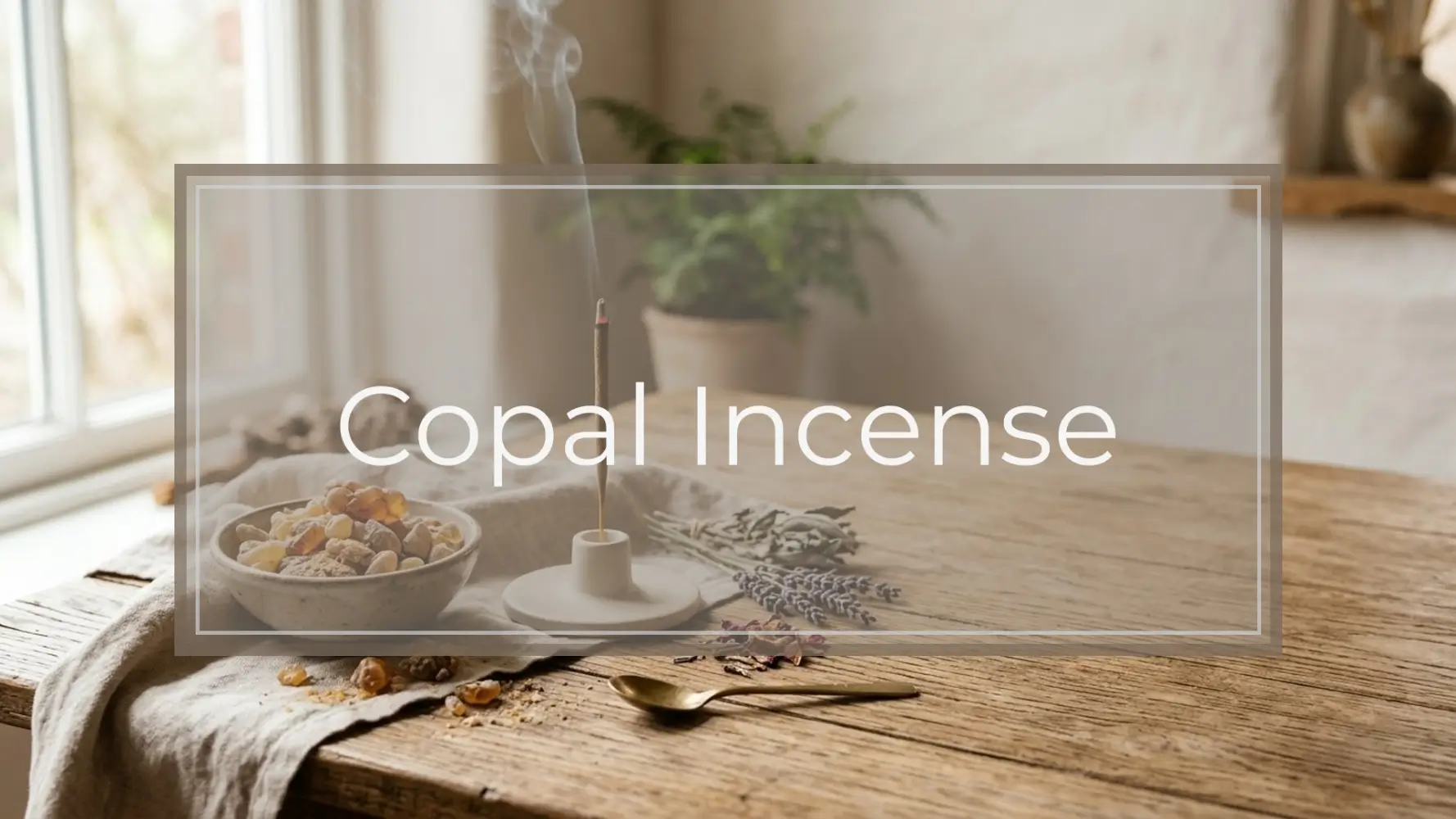
Copal incense is a natural resin incense made from aromatic tree sap. It is traditionally burned for cleansing, meditation, prayer, offerings, and creating a bright, uplifting atmosphere in a room or sacred space. Many spiritual practitioners use copal to clear stagnant energy, set intentions, prepare an altar, or begin a crystal cleansing ritual.
Copal can be burned as loose resin on charcoal, used in an electric resin burner, or enjoyed in easier formats like incense sticks and cones. Its scent is often resinous, citrusy, pine-like, lightly sweet, and smoky, depending on the type and blend.
Quick answer: copal incense is best for people who want a clear, ceremonial, energizing incense for spiritual cleansing and intention work. Use it with good ventilation, a heat-safe burner, and careful fire safety.
What Is Copal Incense?
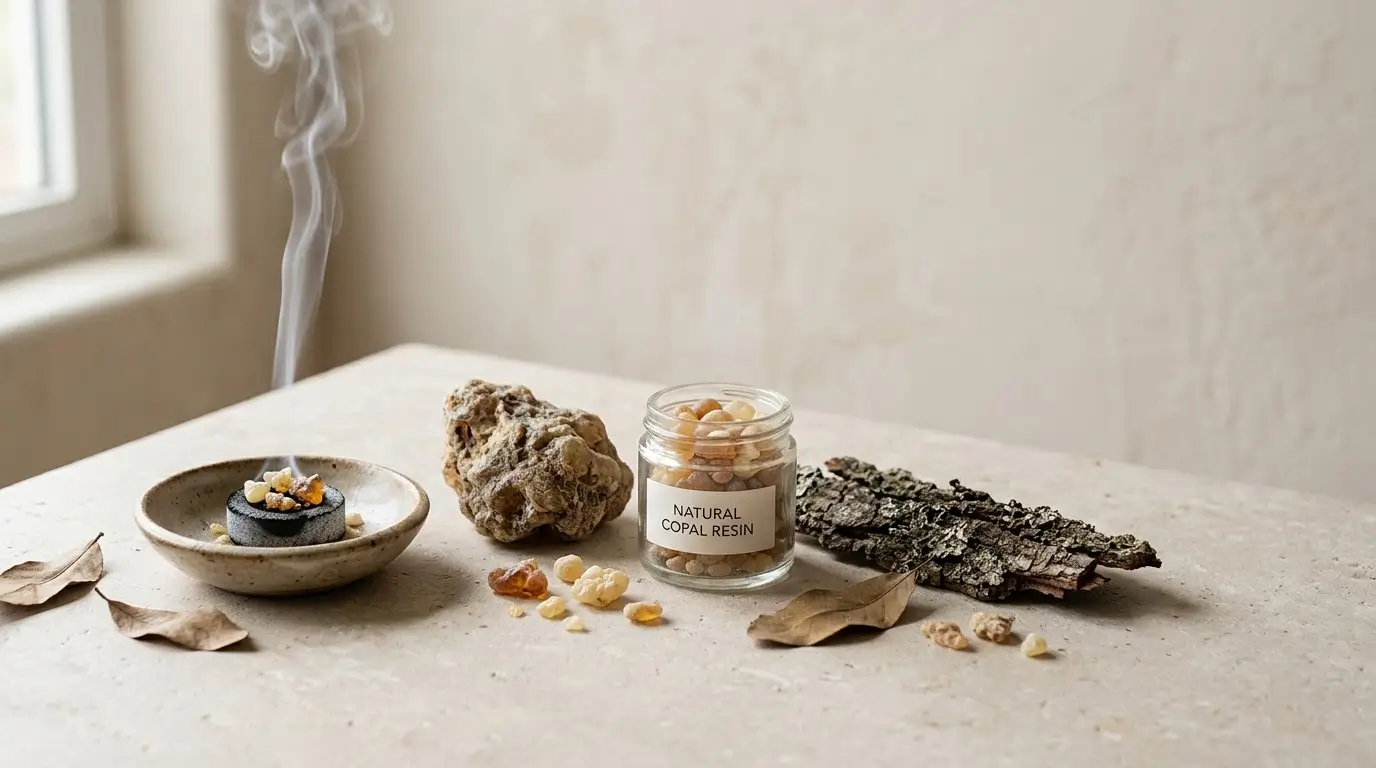
Copal incense is incense made from copal resin, a hardened aromatic sap collected from certain trees. When heated, the resin releases fragrant smoke that has been used in spiritual, ceremonial, and atmospheric practices for a very long time.
Copal is not one single standardized resin. Different trees, regions, harvest methods, ages, and processing styles can all affect the color, scent, texture, and smoke. This is why one bag of copal may smell bright and lemony, while another may feel deeper, smokier, or more pine-like.
You may see copal incense sold as:
- Raw resin tears
- Small resin granules
- Powdered resin blends
- Incense sticks
- Incense cones
- Mixed cleansing incense blends
Resin tears and granules are often the most traditional and aromatic form, but they usually require charcoal or a resin-safe heating method. Sticks and cones are more convenient for beginners because they burn like regular incense, though they may include binders, wood powder, fragrance oils, or other ingredients.
The scent of copal is one of its main appeals. It is usually described as bright, resinous, citrusy, slightly pine-like, sweet, clean, or smoky. For spiritual use, many people choose it when they want an incense that feels refreshing rather than heavy.
Why Copal Incense Matters in Spiritual Cleansing
Copal has a long history in ritual, prayer, offering, and cleansing practices across different Indigenous and traditional contexts, especially in parts of Mesoamerica. It is important to speak about this respectfully. Copal is not just a trendy scent; for many communities, it has deep cultural and ceremonial meaning.
In modern spiritual practice, people often use copal incense to mark a shift in energy or attention. Burning incense can signal that ordinary time is becoming ritual time. The fragrance, smoke, and act of lighting it can help you slow down, focus, and become more intentional.
From a practical spiritual perspective, copal incense is commonly used to:
- Refresh the feeling of a room after cleaning
- Prepare a meditation or journaling space
- Open or close altar work
- Set an intention before a ritual
- Support prayer, gratitude, or reflection
- Create a focused atmosphere before working with crystals
It is best to understand cleansing as symbolic, spiritual, and atmospheric rather than as a guaranteed scientific result. Copal smoke does not promise to remove every negative influence or physically purify objects. Instead, many practitioners use it as part of a mindful ritual that supports clarity, renewal, and transition.
Compared with heavier smoke aromas, copal is often perceived as brighter and more uplifting. If myrrh feels deep and grounding, and sandalwood feels soft and meditative, copal often feels fresh, clear, and ceremonial.
Types and Forms of Copal Incense
The best type of copal incense depends on how you want to use it. Beginners may prefer sticks or cones, while people who enjoy traditional resin incense may prefer raw tears or granules.
| Form | Scent Strength | Best For | Beginner Notes |
|---|---|---|---|
| Resin tears or granules | Strong | Rituals, altar work, space cleansing, ceremonial atmosphere | Requires charcoal or an electric resin burner |
| Powdered copal resin | Strong to very strong | Blends, quick bursts of scent, experienced incense users | Burns quickly; use a tiny amount |
| Copal sticks | Moderate | Daily use, meditation, simple cleansing routines | Easiest format for most beginners |
| Copal cones | Moderate to strong | Short rituals, compact spaces, quick resets | Can produce concentrated smoke |
| Blended incense | Varies | Layered scents with herbs, woods, or resins | Check ingredients if you prefer natural materials |
Raw copal resin usually gives the most direct and intense scent. You place a small piece or pinch of resin on a hot charcoal disk or resin burner, and it melts or smolders into fragrant smoke. This method can produce more smoke than sticks or cones, so it is best for ventilated spaces and short ritual use.
Sticks and cones are simpler. You light them, let the flame catch briefly, blow it out, and place them in a proper holder. They are convenient for daily routines, but quality varies. Some are made with natural resin, while others may include synthetic fragrance or heavy binders.
You may also see copal described by color or source, such as white copal, gold copal, black copal, Mexican copal, or regional varieties. These labels can be helpful for scent and buying decisions, but they should not be treated as rigid spiritual rankings. One type is not automatically “more powerful” than another.
When buying copal incense, look for simple ingredient lists, natural resin when possible, and sellers who are transparent about sourcing. If smoke sensitivity matters to you, start with sticks or a very small amount of resin before trying stronger formats.
How to Use Copal Incense Safely
Copal incense is simple to use, but safety matters. Resin incense can become very hot, and charcoal disks continue to burn long after the visible smoke slows down.
How to burn copal resin on charcoal
To burn loose copal resin, you will need a heat-safe burner, sand, charcoal, and a safe place to let everything cool.
- Choose a heat-safe vessel, such as a charcoal incense burner or fireproof bowl.
- Add a layer of sand to protect the vessel and absorb heat.
- Place a charcoal disk on the sand using tongs.
- Light the charcoal according to its instructions, keeping your hands away from sparks.
- Wait until the charcoal is hot and lightly ashed over.
- Add a tiny pinch of copal resin on top.
- Let the resin melt and release smoke.
- Add more only if needed.
A little resin goes a long way. Start smaller than you think, especially indoors. Too much resin can create thick smoke quickly.
How to use copal sticks or cones
For sticks and cones, the process is closer to regular incense:
- Place the stick or cone in a stable incense holder.
- Light the tip.
- Let it catch for a few seconds.
- Gently blow out the flame so it smolders.
- Keep it away from fabric, papers, curtains, dried herbs, and altar decorations.
- Let the ash fall safely into the holder.
Never leave burning incense unattended. Keep it away from children, pets, drafts, and anything flammable.
Ventilation and sensitivity
Open a window or door while burning copal incense, especially if you are using resin on charcoal. The goal is a pleasant ritual atmosphere, not smoke buildup.
Avoid incense smoke if you have asthma, respiratory irritation, smoke sensitivity, or other concerns that make smoke uncomfortable. If you are pregnant or have health-related questions, consult a qualified professional before using smoke-based rituals.
If you cannot burn incense, you can still create a cleansing ritual without smoke. Try opening windows, ringing a bell, using sound cleansing, setting an intention, wiping surfaces mindfully, or placing unscented ritual objects on your altar.
Practical Ways to Work With Copal Incense
Copal incense can be used in simple everyday rituals. You do not need an elaborate ceremony to benefit from its atmosphere. The key is to use it intentionally and safely.
Common ways to work with copal include:
- Before meditation to help shift into a focused state
- After cleaning a room to create a fresh feeling
- Before journaling, tarot, or reflection
- During altar setup or devotional work
- Before or after guests visit
- Before crystal practices or intention setting
- At the start of a new week, season, or personal chapter
Simple copal space-cleansing ritual
Here is a beginner-friendly example:
- Tidy the space first so the ritual feels grounded.
- Open a window for airflow.
- Light your copal incense safely.
- Set a clear intention, such as “I welcome clarity and renewal into this space.”
- Move slowly through the room, keeping the burner stable.
- Pay attention to corners, doorways, windows, and your altar area.
- Pause, breathe, and imagine the room feeling lighter.
- Close with gratitude and allow the incense to finish safely.
You can adapt the intention to your purpose. Examples include clarity, renewal, protection, gratitude, peace, focus, or fresh beginnings.
Using copal incense with crystals
Many crystal practitioners use copal incense as part of a crystal cleansing ritual. The safest approach is to pass crystals near the smoke briefly rather than placing them in heat, ash, melted resin, or dense smoke for a long time.
This is especially important for delicate, porous, or fragile stones. Keep crystals away from charcoal, flame, and resin residue. Copal smoke can support the symbolic cleansing ritual, but it should not be treated as a physical cleaning method or a guaranteed energetic reset.
For a simple crystal ritual, hold the crystal near the rising smoke for a few moments, name your intention, then place it on a clean cloth or altar.
Copal Incense Compared With Other Cleansing Incense
Copal incense is one of many tools used for spiritual cleansing and ritual atmosphere. It is not automatically better than other incense; it simply has a distinct scent and energetic feel.
Here is a practical comparison:
- Frankincense: resinous, sacred, meditative, often used for prayer and stillness.
- Myrrh: deeper, earthier, grounding, and more solemn.
- Palo santo: woody, sweet, and bright; sourcing should be considered carefully.
- Cedar: forest-like, protective in tone, and grounding.
- Sandalwood: soft, smooth, meditative, and calming.
- Sage: herbal and sharp, often associated with smoke cleansing traditions.
Choose copal when you want a bright reset, a ceremonial mood, or a focused beginning. Choose another incense if your main goal is grounding, relaxation, devotional prayer, or a softer scent.
The best option depends on scent tolerance, safety, sourcing, personal resonance, and the tradition or practice you are working within. If you are building a cleansing toolkit, copal pairs naturally with topics like incense cleansing basics, smoke cleansing safety, crystals for cleansing, altar setup, and meditation rituals.
FAQ
What is copal incense used for?
Copal incense is used for spiritual cleansing, meditation, prayer, altar work, intention setting, and creating a fresh ritual atmosphere. Many people burn it before crystal practices, journaling, or space-cleansing routines.
What does copal incense smell like?
Copal incense usually smells bright, resinous, citrusy, lightly sweet, pine-like, and smoky. The exact scent varies by resin type, region, age, and whether it is burned as raw resin, a stick, or a cone.
Is copal incense good for cleansing crystals?
Many practitioners use copal incense in crystal cleansing rituals. Pass crystals near the smoke briefly and keep them away from flame, charcoal, ash, heat, and resin. It supports symbolic energetic cleansing, not physical cleaning.
Can you burn copal incense without charcoal?
Yes. You can use copal incense sticks, cones, or an electric resin burner instead of charcoal. Raw resin tears and granules usually need charcoal or a resin-safe heating method to release their full aroma.
Is copal incense safe to use indoors?
Copal incense can be used indoors with ventilation, small amounts, and proper fire safety. Use a heat-safe burner, keep it away from flammable items, and never leave it unattended. Avoid smoke if you are sensitive to it.