
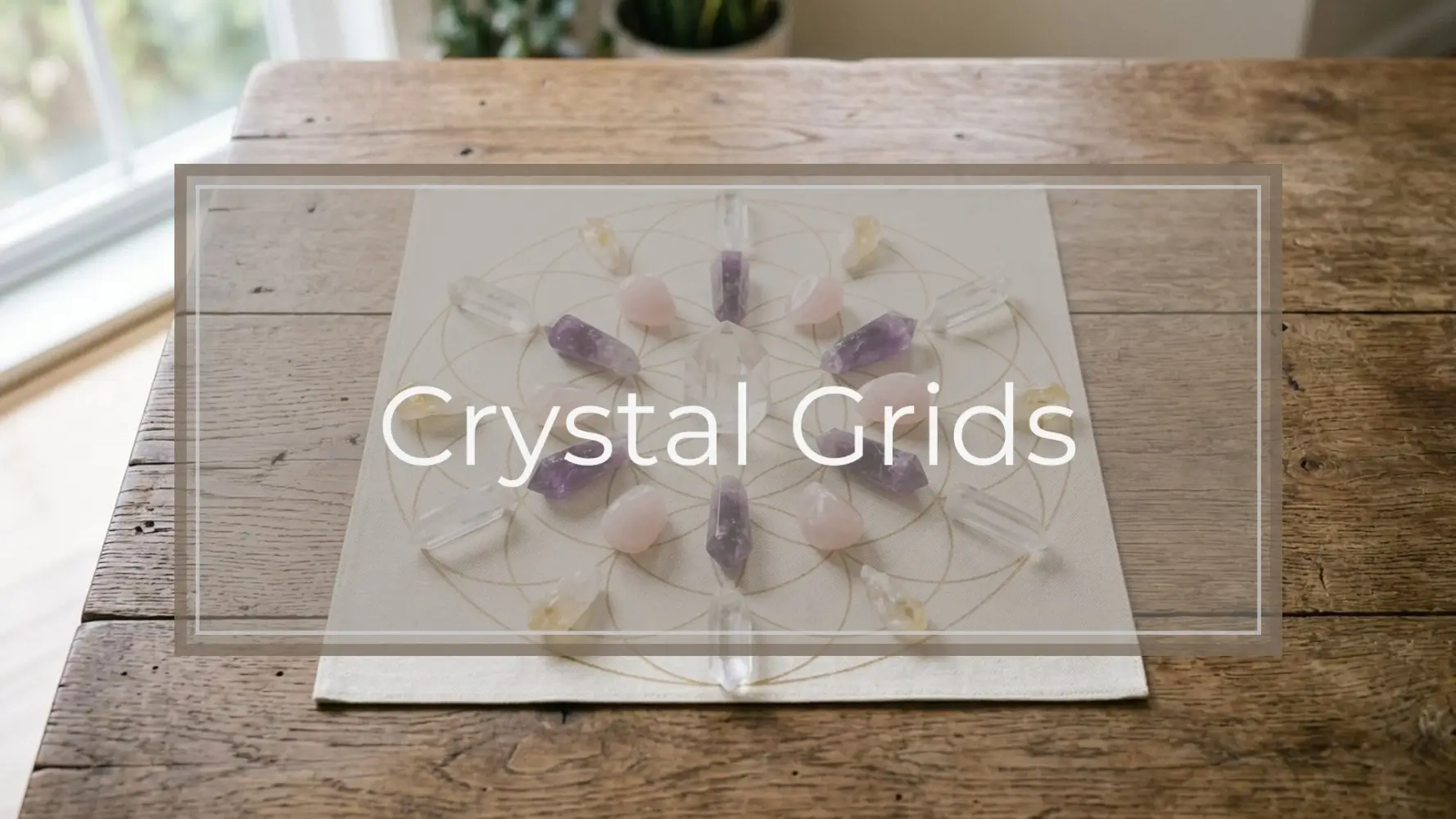
Crystal grids are intentional arrangements of crystals placed in a geometric pattern to focus your attention on a goal, meditation theme, or spiritual practice. To make one, choose an intention, select crystals that match that intention, place a center stone, arrange supporting stones in a pattern, and spend a few moments connecting with the grid.
Crystal grids are not a guaranteed way to create outcomes, but they can be a meaningful ritual for clarity, mindfulness, and symbolic energy work. Many people use them for calm, self-love, focus, protection, abundance, or spiritual reflection. The power of the practice comes from your intention, consistency, and personal connection with the stones rather than from perfection or expensive supplies.
What Is a Crystal Grid?
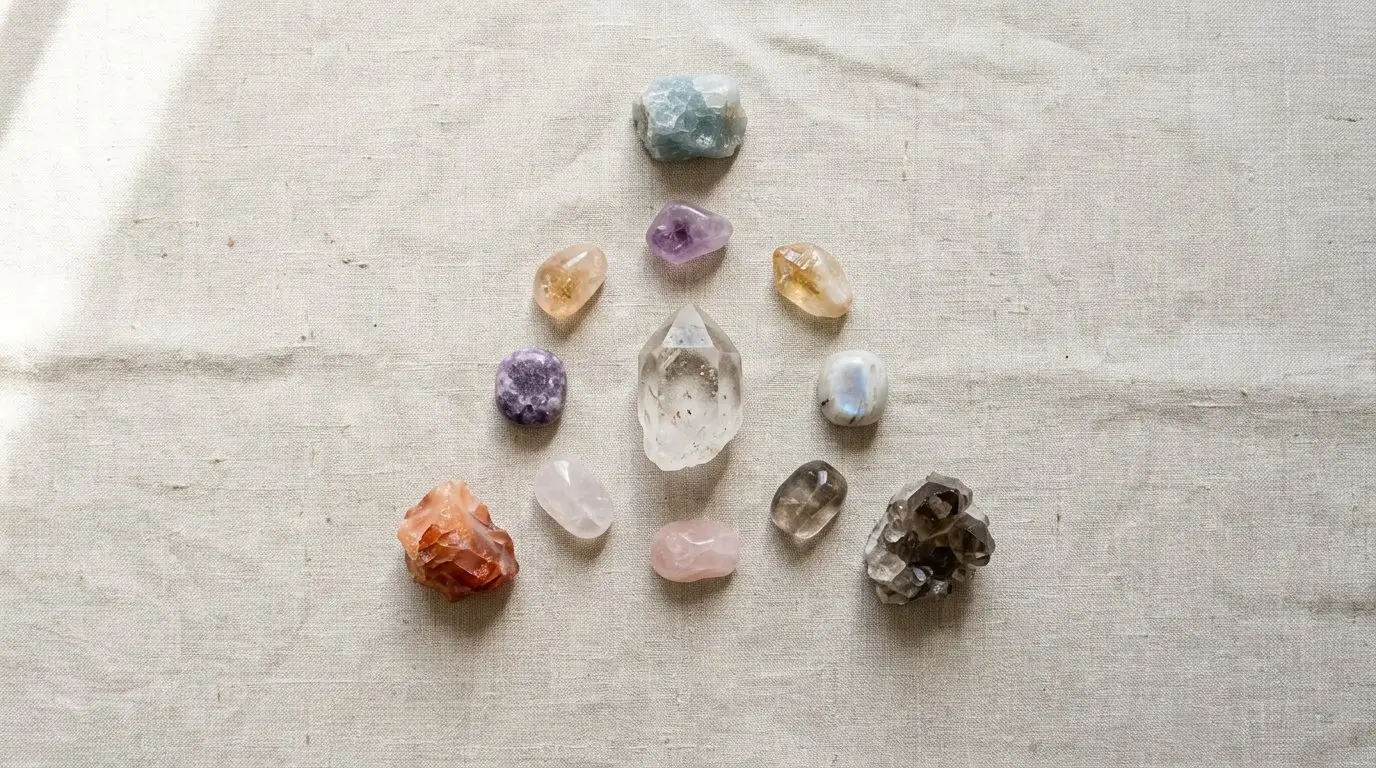
A crystal grid is a planned layout of crystals arranged around a specific intention. Most grids include a center stone, several supporting stones, and a simple shape such as a circle, triangle, square, spiral, or sacred geometry pattern. The layout gives the practice structure, while the crystals act as symbolic reminders of the qualities you want to focus on.
For example, someone might create a calming grid with amethyst in the center and clear quartz around it, then sit near the grid during meditation. Another person might place a rose quartz grid on an altar as a daily reminder to practice self-compassion.
A crystal grid is different from simply keeping crystals on a shelf. A shelf display can be beautiful, but a grid usually has three added elements:
- A clear intention
- A deliberate pattern or arrangement
- A ritual moment of focus, meditation, or reflection
In spiritual crystal practices, grids are often described as a way to combine crystal meanings with geometry and intention. More practically, they can help you slow down, clarify what matters, and create a visual anchor for a personal goal.
How Crystal Grids Are Commonly Used
Crystal grids can be used for many gentle, reflective purposes. Common themes include calm, protection, self-love, abundance, creativity, sleep, focus, and spiritual connection. These themes do not need to be dramatic or complicated. A simple intention such as “I return to calm” or “I stay focused on what matters” is enough.
Many people place crystal grids in areas where they will see them regularly, such as:
- A meditation space
- An altar or spiritual corner
- A bedside table
- A desk or creative workspace
- A quiet shelf
- Near an entryway, if the grid is for grounding or protection symbolism
The best crystal grid is one you can connect with and return to consistently. A large, elaborate grid may look impressive, but a small arrangement of five stones can be just as meaningful for daily practice.
It is also important to keep expectations balanced. Crystal grids should not be used as a replacement for professional medical, mental health, legal, or financial support. They are best understood as symbolic and mindful tools that can support reflection, intention-setting, and spiritual routine.
Crystal Grid Parts: Stones, Shapes, and Intention
Most crystal grids have three main parts: an intention, a center stone, and supporting stones. Optional additions such as candles, flowers, shells, herbs, written notes, or printed templates can make the ritual feel more personal, but they are not required.
The center stone is the focal point of the grid. It represents the heart of your intention. Many beginners choose clear quartz because it is traditionally associated with clarity and amplification. Other common center stones include amethyst for calm, rose quartz for self-love, citrine for abundance symbolism, and selenite for cleansing or spiritual clarity.
The supporting stones are placed around the center stone. They add related qualities to the theme. For example, a self-love grid might use rose quartz in the center, with rhodonite and clear quartz around it. A focus grid might use fluorite, tiger’s eye, and hematite.
The shape of the grid gives the arrangement structure. You do not need advanced knowledge of sacred geometry to begin. A circle can represent wholeness and flow. A triangle may feel supportive for direction and focus. A square can symbolize stability. A spiral may be used for growth or inward reflection. Some people enjoy using a Flower of Life template, but a hand-drawn circle on paper works just as well for a beginner.
Here are a few simple crystal grid combinations to help you start:
| Intention | Suggested Center Stone | Supporting Stones | Simple Layout Idea |
|---|---|---|---|
| Calm and relaxation | Amethyst | Clear quartz, moonstone, lepidolite | Circle around the center stone |
| Self-love | Rose quartz | Rhodonite, pink opal, clear quartz | Heart shape or soft circle |
| Focus and clarity | Fluorite | Tiger’s eye, hematite, clear quartz | Triangle or square |
| Protection symbolism | Black tourmaline | Smoky quartz, obsidian, selenite | Four-corner square layout |
| Abundance mindset | Citrine | Green aventurine, pyrite, clear quartz | Expanding circle or spiral |
| Sleep ritual | Selenite | Amethyst, moonstone, howlite | Small bedside circle |
These meanings are traditional associations, not fixed rules. If a crystal has personal meaning for you, it can belong in your grid.
How to Make a Crystal Grid Step by Step
Creating a crystal grid does not require a large crystal collection. Beginners can start with five to nine stones and a quiet place where the grid can remain undisturbed.
1. Choose one clear intention
Start with one intention rather than several competing goals. Keep it simple and specific. You can write it in plain language or present tense.
Examples:
- “I create a peaceful space for rest.”
- “I focus on one step at a time.”
- “I practice self-kindness today.”
- “I welcome clarity around my next choice.”
Write the intention on a small piece of paper if you like. This paper can go under the center stone.
2. Choose a calm location
Pick a clean, stable surface where the grid will not be easily knocked over. A desk, altar, shelf, tray, or bedside table can work well. If you have pets or children, choose a safe location away from curious hands and paws.
You may want to lightly clean the area first. This helps the space feel intentional and gives you a clear beginning to the ritual.
3. Cleanse or refresh your crystals
Many people like to cleanse or refresh crystals before making a grid. Choose a safe method for the stones you have. Options include:
- Passing the stones through smoke from incense or herbs
- Using sound, such as a bell, chime, or singing bowl
- Placing stones in moonlight
- Holding the stones and visualizing them being refreshed
- Resting compatible stones near selenite
Be careful with water. Some crystals can be damaged by water or become fragile over time, including selenite, malachite, lepidolite, and certain soft or porous stones. When in doubt, use a dry method.
4. Place the center stone
Place your written intention in the middle of the grid area, then set the center stone on top of it. If you are not using a written intention, simply place the center stone in the middle of your chosen pattern.
Take a breath and silently repeat your intention. This moment marks the center of the practice.
5. Arrange the supporting stones
Place your supporting stones around the center. You can follow a printed template, draw a simple pattern, or arrange the stones intuitively.
For a balanced grid, place matching stones opposite each other. For example, put four clear quartz points around the center in north, south, east, and west positions. For a more intuitive grid, let the pattern form naturally while keeping the intention in mind.
Start simple. A small grid may include:
- 1 center stone
- 4 supporting stones
- 4 smaller accent stones
That is enough for a complete beginner crystal grid.
6. Connect the stones to the intention
Once the stones are placed, pause and breathe slowly. You can imagine a line of light connecting the center stone to each supporting stone, or simply move your attention from stone to stone.
Some people use a clear quartz point or their finger to trace the pattern. Others prefer to sit quietly and repeat the intention. There is no single correct method. The goal is to focus your attention and create a mindful connection with the grid.
7. Revisit the grid regularly
A crystal grid is most meaningful when you return to it. You might sit beside it for a few minutes each morning, journal near it once a week, or use it as a visual reminder during meditation.
Try not to overthink whether the grid is “working.” Instead, notice whether it helps you feel more centered, intentional, or aware of your chosen theme.
Easy Crystal Grid Ideas for Beginners
If you are not sure what to make first, choose one of these beginner-friendly crystal grid ideas and adapt it with stones you already own.
Calm crystal grid
Use amethyst or lepidolite as the center stone. Add clear quartz and moonstone around it in a circle. This grid is often used for meditation, evening reflection, or creating a peaceful atmosphere.
A simple intention could be: “I give myself permission to slow down.”
Self-love crystal grid
Place rose quartz in the center. Add rhodonite, pink opal, and clear quartz in a heart shape or soft circle. If you do not have those exact stones, use any pink, white, or personally comforting crystals.
A simple intention could be: “I speak to myself with kindness.”
Focus crystal grid
Use fluorite or clear quartz as the center stone. Add tiger’s eye and hematite in a triangle or square. This grid can be placed near a desk or study area as a reminder to stay grounded and focused.
A simple intention could be: “I give my attention to one clear priority.”
Protection crystal grid
Place black tourmaline in the center, with smoky quartz, obsidian, and selenite around it. You can arrange the stones in a square on an altar or near an entryway, as long as the location is safe and stable.
A simple intention could be: “This space supports calm, grounded energy.”
Remember, substitutions are welcome. Your intention matters more than having a perfect crystal list.
Tips for Caring for and Closing a Crystal Grid
A crystal grid can stay up for a day, a week, a moon cycle, a season, or until the intention feels complete. There is no universal rule. Choose a timeframe that matches the purpose of the grid and the reality of your space.
To care for your grid, keep the area clean and stable. Dust around it gently, and reset stones if they are moved. If the grid is disturbed, you do not need to start over unless you want to. Simply place the stones back, take a breath, and reconnect with the intention.
You can refresh the grid by sitting with it, journaling about your intention, or repeating a short affirmation. Constantly rearranging the stones is not necessary. In fact, leaving the layout alone can help reinforce the feeling of commitment and continuity.
When you are ready to close the grid, do it with the same care you used to create it. You might:
- Pause and acknowledge the intention.
- Thank the practice in your own words.
- Remove the outer stones first, moving toward the center.
- Pick up the center stone last.
- Cleanse or refresh the stones if desired.
- Store them safely or return them to regular use.
For safety, keep small stones away from children and pets. Avoid placing fragile, soft, or water-soluble crystals where they may get wet, scratched, or knocked down.
FAQ
Do crystal grids really work?
Crystal grids can work as mindfulness tools, intention-setting rituals, and symbolic spiritual practices. They are not guaranteed to create specific outcomes. Many people find them helpful because they provide a visual focus, encourage reflection, and make an intention feel more present in daily life.
What crystals are best for a beginner crystal grid?
Clear quartz, amethyst, rose quartz, black tourmaline, selenite, citrine, fluorite, and smoky quartz are beginner-friendly choices. Start with stones that match your intention and feel meaningful to you. You do not need a large collection.
Can I make a crystal grid without a printed template?
Yes. A printed template is optional. You can arrange crystals in a circle, triangle, square, spiral, heart, or any balanced pattern. A hand-drawn shape on paper works well for beginners.
How long should I leave a crystal grid up?
You can leave a crystal grid up for a day, a week, a moon cycle, or longer. Close it when the intention feels complete, the space is needed, or you feel ready to refresh the practice.