
Healing crystals are natural stones people use as symbolic, meditative, and decorative tools for setting intentions, creating calming rituals, and connecting with personal goals. Beginners often use crystals by choosing a stone that matches an intention, cleansing it safely, setting a simple affirmation, and keeping it nearby during meditation, journaling, work, rest, or daily routines.
A grounded crystal practice does not need to be complicated. You can start with one or two stones, learn their basic care needs, and notice how they help you stay mindful of the qualities you want to invite into your life.
Quick answer: Healing crystals are natural minerals or stones used in spiritual, mindfulness, intention-setting, and decorative practices. A beginner-friendly approach is to choose one or two crystals by meaning or attraction, cleanse them in a safe way, set a clear intention, and use them consistently through meditation, journaling, carrying, or placing them in your space. Crystals should be used as supportive spiritual tools, not as a replacement for medical, mental health, legal, or financial care.
This healing crystals guide covers the basics: what crystals mean, how to choose them, how to cleanse and charge them safely, and how to build a small beginner collection without getting overwhelmed.
What Are Healing Crystals and How Do Beginners Use Them?
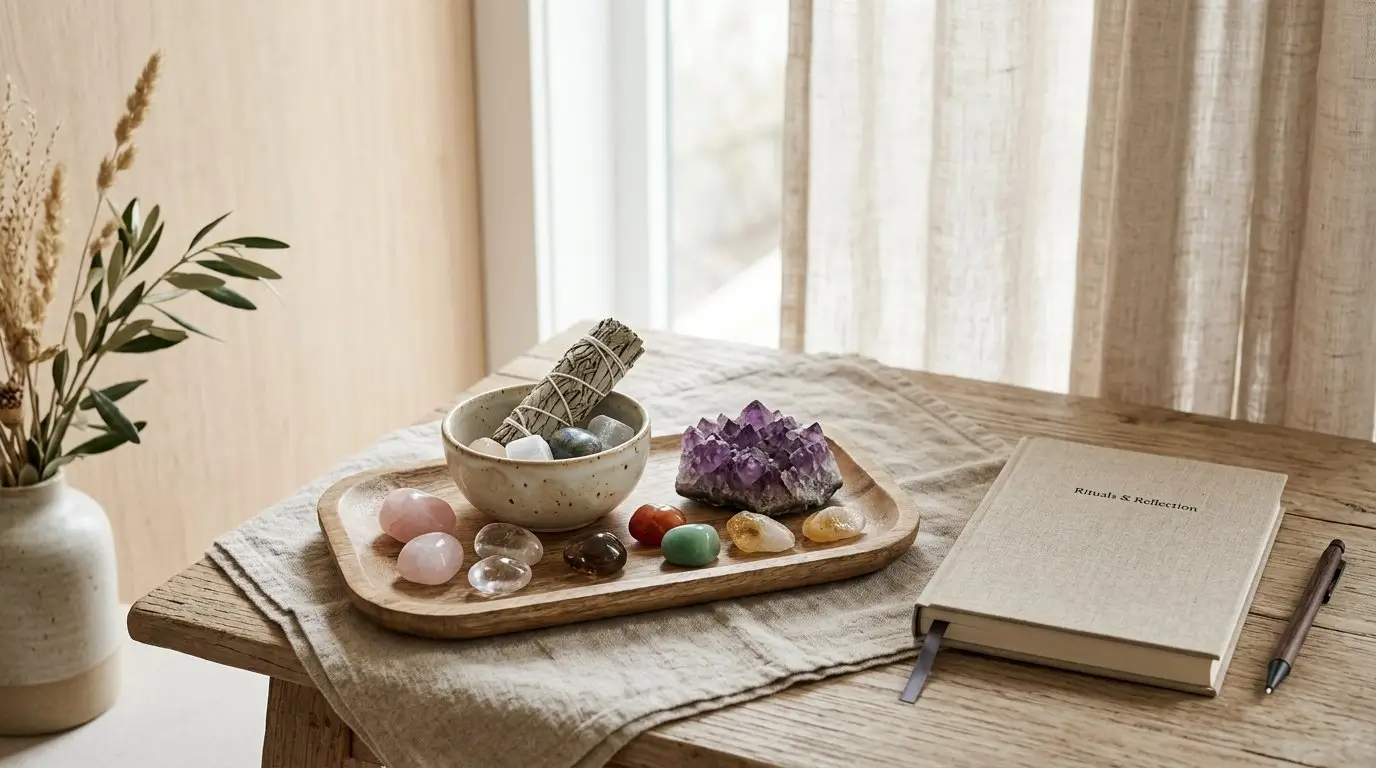
Healing crystals are natural minerals, stones, or crystal formations used in personal rituals, spiritual practices, home decor, and mindfulness routines. People often associate different crystals with qualities such as calm, clarity, grounding, compassion, confidence, or protection symbolism.
Crystal meanings come from a mix of traditional associations, color symbolism, spiritual systems, folklore, and personal experience. For example, purple amethyst is commonly linked with calm and reflection, while pink rose quartz is often connected with love and self-compassion. These meanings are best understood as symbolic supports, not guaranteed outcomes.
For beginners, the simplest process is:
- Choose a crystal based on your intention, attraction, or curiosity.
- Cleanse it safely using a method appropriate for that stone.
- Set an intention with a clear sentence or affirmation.
- Use it regularly in a practical routine.
- Reflect on your experience through journaling or quiet observation.
For example, you might keep amethyst on your bedside table as a reminder to slow down before sleep. You might hold rose quartz while journaling about self-kindness. You might place clear quartz on your desk while setting priorities for the day.
The value of crystal practice often comes from consistency. A stone can become a physical reminder of a choice you are trying to make: breathe before reacting, focus before starting work, rest without guilt, or return to compassion during a difficult moment.
It is also important to keep crystal use in perspective. Crystals can complement meditation, self-reflection, spiritual ritual, and calming routines. They should not replace professional medical care, mental health support, legal advice, financial guidance, or other qualified help when those are needed.
Popular Healing Crystals and Their Common Meanings
The table below is a beginner-friendly reference, not a fixed rulebook. Different traditions and practitioners may describe crystal meanings differently, and your own experience with a stone may become part of its meaning for you.
| Crystal | Common Meaning | Good For | Beginner Use | Care Note |
|---|---|---|---|---|
| Clear Quartz | Clarity, focus, amplification | Intention-setting, meditation, focus | Hold while stating an intention or place on a desk | Usually durable, but avoid harsh treatment |
| Amethyst | Calm, reflection, rest | Bedtime rituals, meditation, emotional balance | Keep near your bed or use during evening journaling | Can fade in prolonged harsh sunlight |
| Rose Quartz | Compassion, love, self-kindness | Self-care, forgiveness, heart-centered reflection | Hold during self-compassion journaling | Generally easy to care for; avoid rough handling |
| Citrine | Confidence, optimism, motivation | Creative work, abundance mindset, personal energy | Place near a workspace as a reminder of confidence | Some citrine is heat-treated amethyst; buy from clear sellers |
| Black Tourmaline | Grounding, protection symbolism, boundaries | Entryways, stressful spaces, energetic grounding | Keep near a doorway or carry in a pouch | Can be brittle; avoid dropping |
| Selenite / Satin Spar | Cleansing, clarity, gentle lightness | Cleansing rituals, altar spaces, meditation | Place near other crystals as a symbolic reset | Very water-sensitive; keep dry |
| Carnelian | Creativity, courage, action | Motivation, creative projects, confidence | Carry when starting a project or presentation | Usually stable; avoid extreme conditions |
| Aventurine | Growth, opportunity, heart balance | New beginnings, optimism, emotional steadiness | Keep with a journal or planning notebook | Generally easy care; research before water use |
| Lapis Lazuli | Wisdom, truth, communication | Honest expression, study, reflection | Hold before journaling or meaningful conversations | Avoid soaking; may be sensitive to chemicals |
| Tiger’s Eye | Confidence, courage, steady focus | Decision-making, personal power, discipline | Place on a desk or carry during challenging tasks | Usually durable; avoid harsh cleaners |
| Hematite | Grounding, stability, practical focus | Feeling centered, routines, body awareness | Hold during grounding breathwork | Avoid water; can rust or be damaged |
| Moonstone | Intuition, cycles, emotional reflection | New beginnings, lunar rituals, inner awareness | Use during moon journaling or quiet reflection | Can be delicate; avoid knocks and rough storage |
If you are unsure where to begin, choose three versatile stones:
- Clear quartz for clarity and intention-setting
- Amethyst for calm and reflection
- Black tourmaline for grounding, or rose quartz for compassion
This gives you a balanced starter set without needing a large collection. You can always add more later as your interests become clearer.
A few care notes matter from the start. Some stones are delicate, brittle, sunlight-sensitive, or water-sensitive. Selenite, satin spar, malachite, calcite, pyrite, lepidolite, and hematite are often listed as stones to keep away from water or moisture. Amethyst and some other colorful stones may fade with prolonged strong sunlight. When in doubt, use dry, gentle cleansing methods.
How to Choose the Right Crystal for Your Intention
Choosing a crystal should feel simple, not stressful. You do not need the “perfect” stone. You need a stone that helps you remember your intention and return to your practice.
There are three beginner-friendly ways to choose.
1. Choose by intention
Start by naming what you want support with. Examples include:
- Calm and rest
- Focus and clarity
- Self-love or compassion
- Confidence and courage
- Grounding and boundaries
- Creativity and motivation
- Emotional reflection
- Abundance mindset
Then choose a crystal with a common meaning that matches that theme. For calm, you might choose amethyst. For self-compassion, rose quartz. For grounding, black tourmaline, smoky quartz, or hematite. For motivation, citrine or carnelian.
2. Choose by color or symbolism
Color can be an easy entry point. Soft pink stones often feel connected to tenderness and compassion. Purple stones may feel reflective or spiritual. Yellow and orange stones often suggest energy, creativity, and confidence. Dark stones can feel grounding or protective.
These associations are not strict rules. They simply give you a starting language for your practice.
3. Choose by intuitive attraction
Sometimes you are simply drawn to a stone. You may like its color, shape, weight, sparkle, or texture. That attraction can be part of the practice. If a crystal makes you want to pause, breathe, or reflect, it may be useful for you.
Avoid pressure, though. You do not need to feel a dramatic pull or instant connection. A quiet curiosity is enough.
A simple decision framework can help:
- Name your goal: “I want to feel more grounded during busy mornings.”
- Pick one matching crystal: Black tourmaline, smoky quartz, or hematite.
- Choose a use method: Carry it in a pouch or place it by your keys.
- Use it for one to two weeks: Notice whether it helps you remember your intention.
- Reflect: Keep it, change the practice, or try a different stone.
When buying crystals, start small. Choose reputable sellers who clearly label stones and are honest about treatments. Some stones are dyed, enhanced, heat-treated, or sold under confusing trade names. That does not always make them “bad,” but you should know what you are buying.
When possible, consider sellers who share sourcing information and avoid overconsumption. A few meaningful stones used regularly are better than a large collection that sits forgotten.
How to Cleanse, Charge, and Set Intentions With Crystals
In crystal practice, cleansing usually means symbolically resetting a stone’s energy. Charging means refreshing it, dedicating it to a purpose, or aligning it with an intention. These rituals are personal and spiritual, so choose methods that feel respectful, safe, and practical.
Safe cleansing methods for beginners
The safest cleansing methods are usually dry and gentle. Good beginner options include:
- Sound: Ring a bell, use a singing bowl, or play a clear tone near the crystal.
- Visualization: Imagine light moving through the stone and clearing away stagnant energy.
- Breathwork: Hold the crystal, breathe slowly, and exhale with the intention to reset.
- Moonlight: Place stones near a window or in a safe moonlit space overnight.
- Selenite or clear quartz: Place stones near these crystals as a symbolic cleansing method.
- Gentle wiping: Use a soft, dry cloth to remove dust.
- Smoke cleansing: Use smoke only where appropriate, with ventilation and fire safety.
Avoid assuming every crystal can go in water, salt, sunlight, heat, or oils. Many popular methods are not safe for all stones.
Common stones to keep away from water or moisture include:
- Selenite and satin spar
- Malachite
- Calcite
- Pyrite
- Lepidolite
- Hematite
- Some soft, porous, or metallic minerals
Salt can scratch or damage some stones. Prolonged sunlight can fade amethyst and other color-sensitive crystals. Heat and oils may also damage surfaces or treatments. If you are unsure, use sound, visualization, moonlight, or a dry cloth.
How to set an intention
Setting an intention turns a crystal from a decorative object into part of your ritual. The process can be very simple:
- Hold the crystal in your hand.
- Take three slow breaths.
- Say a clear intention out loud or silently.
- Visualize the quality you want to practice.
- Place or carry the stone where you will see or feel it.
Sample intention statements:
- “I use this amethyst as a reminder to slow down and rest.”
- “I use this rose quartz as a reminder to speak to myself with kindness.”
- “I use this clear quartz to help me return to clarity before I begin.”
- “I use this black tourmaline as a reminder to stay grounded and keep healthy boundaries.”
- “I use this carnelian as a symbol of creative courage.”
Cleanse your crystals when you first bring them home, after emotionally intense use, after others handle them, or whenever cleansing feels meaningful as part of your routine. You do not need to overdo it. Consistency matters more than complicated rules.
Simple Ways to Use Healing Crystals Every Day
The easiest crystal practices fit naturally into your existing day. You do not need an elaborate altar, a large collection, or long rituals. A crystal can be useful because it gives your intention something physical to attach to.
Carry a crystal as a reminder
Place a small tumbled stone in your pocket, bag, or pouch. Each time you notice it, pause and remember your intention.
For example:
- Carry rose quartz when practicing self-kindness.
- Carry tiger’s eye before a challenging task.
- Carry smoky quartz or black tourmaline when you want to feel grounded.
- Carry clear quartz when you want to stay focused.
Avoid carrying fragile points or rough stones loose with keys, coins, or hard objects. Use a small pouch if needed.
Use crystals during meditation
Hold a crystal in your palm or place it nearby. Focus on your breath. When your mind wanders, let the stone remind you to return to the present moment.
You might meditate with:
- Amethyst for evening calm
- Clear quartz for clarity
- Hematite for grounding
- Moonstone for emotional reflection
The crystal does not need to “do” anything dramatic. It simply acts as an anchor for your attention.
Place crystals around your home
Home placement is one of the most practical ways to use crystals.
- Entryway: Black tourmaline or smoky quartz for grounding and boundary symbolism
- Desk: Clear quartz, citrine, or tiger’s eye for focus and motivation
- Bedside table: Amethyst or rose quartz for calming evening routines
- Self-care area: Rose quartz, moonstone, or selenite for reflection and gentleness
- Creative space: Carnelian or citrine for energy and inspiration
Keep safety in mind. Do not place delicate stones where they can fall, get wet, or be handled by children or pets.
Journal with crystals
Crystals pair well with journaling because both practices support reflection. Try prompts like:
- “What quality am I inviting today?”
- “What do I want this crystal to remind me of?”
- “How did this crystal support my intention today?”
- “Where did I feel grounded, calm, or courageous?”
- “What do I want to release before tomorrow?”
You can keep the crystal beside your notebook or hold it before writing.
Wear crystal jewelry
Crystal jewelry is a convenient way to keep an intention close. A rose quartz pendant can remind you of compassion. A black tourmaline bracelet can symbolize boundaries. A citrine ring can remind you to show up with confidence.
Choose jewelry that is comfortable and durable enough for daily wear. Remove delicate pieces before showering, swimming, exercising, or using harsh products.
Try a simple crystal grid
A crystal grid is an arrangement of stones in a pattern around a central intention. Beginners can keep it simple: place one central stone for your main goal, then surround it with two to six supporting stones.
For example, you might place clear quartz in the center for clarity, with amethyst for calm and rose quartz for compassion around it. The pattern matters less than the intention and attention you bring to it.
A 5-minute beginner ritual
Try this daily practice:
- Choose one crystal.
- Hold it while taking three slow breaths.
- Say one intention: “Today I return to calm before I react.”
- Place it in your pocket, on your desk, or beside your journal.
- At the end of the day, ask: “How did this intention show up?”
Keep sleep safety in mind. Avoid sharp, fragile, tiny, or breakable stones in bed. Do not place crystals where children or pets can swallow them. Do not use toxic or unknown stones in water bottles, elixirs, or drinks.
Building a Beginner Crystal Collection Without Getting Overwhelmed
A beginner crystal collection does not need to be large. In fact, starting small often makes the practice more meaningful. When you only have a few stones, you learn their names, uses, textures, and care needs more easily.
A balanced starter collection might include:
- Clear quartz for clarity and intention-setting
- Amethyst for calm and reflection
- Rose quartz for compassion and self-kindness
- Black tourmaline or smoky quartz for grounding and boundaries
- Citrine or carnelian for motivation, creativity, and confidence
That gives you a useful range of themes without creating confusion. You can use one stone each day or rotate them based on your intention.
Quality matters more than quantity. One crystal that you use consistently can become more meaningful than twenty stones you never touch. Choose stones you like looking at and holding. Learn how to care for them. Notice how they fit into your routines.
Storage also matters. Keep stones dry unless you know they are safe with moisture. Separate softer or delicate stones so they do not scratch or chip. Use pouches, small bowls, trays, or labeled boxes. If you are new to crystals, labels can be helpful until you remember each stone.
A basic crystal journal can make your practice clearer. Record:
- Crystal name
- Where you bought or found it
- Common meaning
- Your intention
- Cleansing method used
- Where you keep it
- Personal observations
Over time, your notes may show which practices feel most supportive. You may discover that amethyst helps you keep a steady evening ritual, or that carrying tiger’s eye reminds you to approach tasks with confidence.
Crystal practice is personal and flexible. You do not need to follow every rule you see online. Start with safe care, clear intentions, and a small number of stones. Let your collection grow slowly and intentionally.
FAQ
What is the best healing crystal for beginners?
Clear quartz is one of the best crystals for beginners because it is versatile, easy to find, and commonly associated with clarity and intention-setting. Amethyst and rose quartz are also beginner-friendly choices for calm, reflection, compassion, and self-care rituals.
Do healing crystals really work?
Healing crystals are best understood as spiritual, symbolic, and mindfulness tools. Many people find them helpful for setting intentions, creating calming rituals, and staying connected to personal goals. They should not be treated as guaranteed cures or replacements for medical or mental health care.
How do I cleanse my crystals safely?
Use gentle methods such as sound, visualization, moonlight, breathwork, or wiping with a soft dry cloth. Avoid putting crystals in water, salt, sunlight, heat, or oils unless you know the stone can handle it. Dry cleansing methods are safest for beginners.
Can I sleep with crystals under my pillow?
You can, but choose smooth, durable stones and avoid sharp points, fragile pieces, or tiny crystals that could get lost in bedding. Many people prefer placing crystals on a bedside table instead. Keep all crystals away from children and pets.
How many crystals should I start with?
Start with one to three crystals. A simple beginner set could include clear quartz for clarity, amethyst for calm, and rose quartz or black tourmaline depending on whether you want compassion or grounding.
Which crystals should not go in water?
Common water-sensitive stones include selenite, satin spar, malachite, calcite, pyrite, lepidolite, and hematite. Some stones may dissolve, rust, dull, crack, or release unwanted materials. When unsure, avoid water and use sound, visualization, moonlight, or a dry cloth instead.