
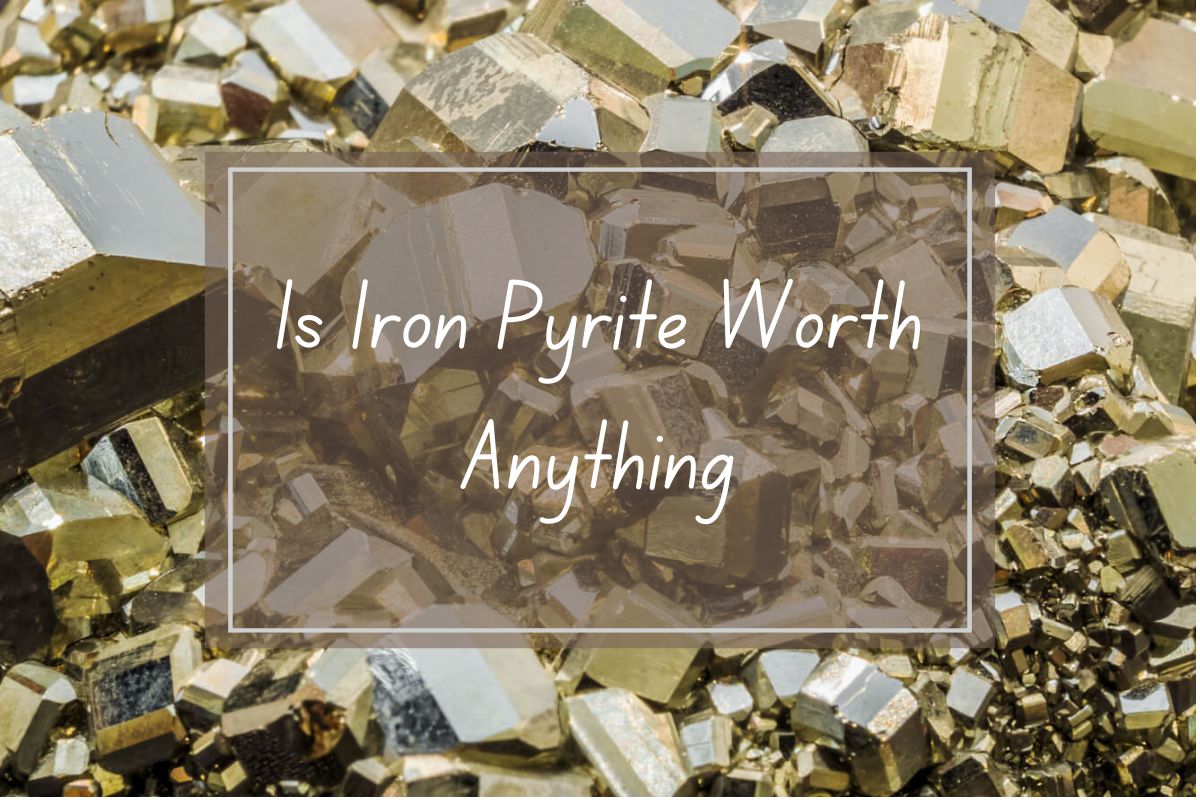
Iron pyrite catches your eye with its golden shimmer, leading many people to mistake it for real gold. You might have heard it called “fool’s gold” because of this striking resemblance to the precious metal.
While pyrite itself sells for only $0.50 to $2 per carat in its polished form, its real value lies in its growing importance for modern technology. Scientists have discovered that pyrite contains useful amounts of lithium, making it more valuable than previously thought.
You can find pyrite in various forms, from raw crystals to smooth cabochons used in jewelry. Its metallic shine and unique crystal shapes make it popular among mineral collectors and jewelry makers, even though it’s not worth much money on its own.
Understanding Pyrite
Pyrite shines like gold and forms beautiful crystals that catch your eye. Many people call it “fool’s gold” because of its sparkly yellow color.
The Basics of Pyrite
Pyrite belongs to the sulfide mineral family. You’ll often find it in rocks near gold deposits, which led to its famous nickname. The name “pyrite” comes from the Greek word “pyr,” meaning fire, because it makes sparks when struck against steel.
When you look at pyrite, you’ll notice its metallic luster and brass-yellow color. Fresh pieces shine brightly, but older specimens may look darker or have a tarnished surface.
You can find pyrite in many places worldwide. It forms in different environments, from deep underground in veins to near the surface in sedimentary rocks.
Chemical Composition and Crystal System
Pyrite’s chemical formula is FeS2, which means it contains iron (Fe) and sulfur (S). The iron and sulfur atoms connect in a specific pattern that creates its distinct crystal shape.
Pyrite forms perfect cubes and other geometric shapes in the cubic crystal system. You might see it as single cubes, clusters, or even as tiny crystals spread through rock.
The strong bonds between iron and sulfur make pyrite quite hard. You can test it with a nail – pyrite won’t scratch as easily as gold does.
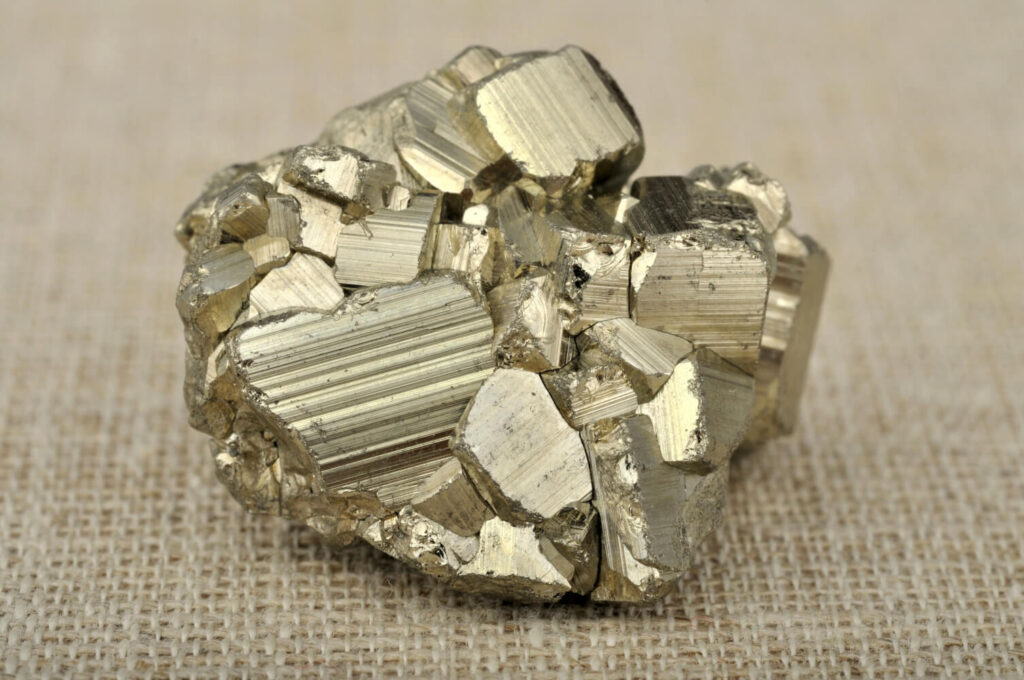
Each crystal face shows fine lines called striations, which run at right angles to each other. This is one way you can tell pyrite apart from gold.
Formation and Occurrence
Iron pyrite forms in rocks under specific conditions deep within the Earth. You can find this shiny mineral in many different geological settings.
Geological Conditions
Pyrite needs three main ingredients to form: iron, sulfur, and very little oxygen. You’ll often spot pyrite in dark sedimentary rocks where ancient plant and animal remains created the perfect low-oxygen environment.
The crystals grow best in spaces between other rocks. Think of it like filling in tiny gaps with golden-looking minerals.
You might see pyrite at mineral shows displaying perfect cube-shaped crystals. These formed when hot fluids moved through rock cracks and cooled slowly.
In sedimentary rocks, you’ll notice pyrite replacing plant fossils or creating rounded nodules. These formed when bacteria helped convert iron and sulfur into pyrite.
Look for pyrite in coal seams too. The dark, oxygen-poor conditions where plants turned into coal were perfect for pyrite formation.
Physical Properties of Pyrite
Pyrite displays distinctive physical traits that make it easy to identify in nature. Its characteristics range from unique crystal formations to specific optical qualities that set it apart from other minerals.
Crystal Habit and Form
Pyrite forms beautiful cubic crystals that often show perfect geometric shapes. You’ll find these crystals in various sizes, from tiny specks to impressive blocks several inches wide.
The most common crystal shapes you’ll see are:
- Perfect cubes with smooth faces
- Octahedral formations (eight-sided)
- Pentagon-shaped surfaces called pyritohedrons
- Combinations of multiple crystal forms
Sometimes pyrite creates fascinating clusters where many crystals grow together. These clusters can form impressive specimens that collectors love to display.
Luster and Hardness
Pyrite’s bright, metallic shine catches your eye immediately. Its brass-yellow color combined with its brilliant luster earned it the nickname “fool’s gold.”
Some key features include:
- Hardness: 6-6.5 on the Mohs scale
- Streak: Greenish-black to brownish-black
- Surface: Highly reflective and metallic
- Color: Consistent brass-yellow
You can scratch pyrite with a piece of quartz, which helps distinguish it from real gold. Its surface stays bright and shiny even after long exposure to air.
Specific Gravity and Pseudomorphs
Pyrite has a specific gravity of 5.0, making it noticeably heavier than many common rocks. You can feel this weight difference when holding a pyrite specimen.
Pyrite sometimes replaces other minerals or organic materials while keeping their original shape. These special formations are called pseudomorphs. Some examples include:
- Replaced shells
- Fossilized wood
- Ancient animal remains
The mineral can fill spaces left by decomposed organic matter, creating detailed copies of the original material’s structure.
Pyrite vs Gold
Iron pyrite earned its nickname “fool’s gold” because it looks a lot like real gold. The two minerals have some key features that set them apart.
Visual Differences
You can spot pyrite by its pale brass-yellow color and metallic shine. When you look closely, pyrite forms perfect cube-shaped crystals with smooth faces.
Gold has a richer yellow color that stays constant in different lighting. You’ll notice gold forms rounded or irregular shapes, never perfect cubes.
If you scratch pyrite across a white ceramic plate, it leaves a greenish-black streak. Gold leaves a pure yellow streak.
Practical Differences
Pyrite is much harder than gold. You can scratch gold with a copper penny, but pyrite will scratch the penny instead.
Gold is much more valuable than pyrite. A large, high-quality piece of pyrite might sell for $100, while even a small amount of gold is worth thousands.
You’ll often find pyrite in gold deposits, which is why early miners sometimes mistook it for gold. Pyrite appears in square crystals within rock formations, while gold nuggets are usually rounded from water movement.
Some pyrite pieces make beautiful jewelry or collector’s specimens. A polished pyrite cabochon typically costs $0.50 to $2 per carat.
The Value of Pyrite
Iron pyrite’s worth varies based on several key factors, with prices ranging from $1-2 per pound for basic specimens to $25 per ton for industrial-grade material.
Determining Pyrite Worth
Your pyrite’s value depends mainly on its grade and iron content. Higher-grade specimens with 40-50% iron content sell for more money since they work better for industrial uses.
The size and shape of your specimen play a big role too. Well-formed cubic crystals are worth more than rough pieces.
The source location of your pyrite can affect its price. Specimens from famous mining areas often have higher collector value.
Key Value Factors:
- Crystal quality and formation
- Size of the specimen
- Iron content percentage
- Visual appeal and shine
- Mining location
Market Influences on Pyrite Price
The industrial demand for pyrite changes its market price. Companies use it to make sulfuric acid and fertilizers, which affects its value.
Raw pyrite sells for much less than polished display pieces. A rough pyrite chunk might cost $1-2 per pound, while nice display specimens can fetch $10-20 each.
The collector market impacts prices too. More people collecting minerals means higher prices for good specimens.
Price Ranges by Type:
- Industrial grade: $10-25 per ton
- Rough specimens: $1-2 per pound
- Display pieces: $10-20 each
- Premium crystals: $20-50+ each
Pyrite in Jewelry and Decoration
Pyrite makes beautiful jewelry pieces thanks to its metallic shine and golden color. Many jewelry makers choose pyrite for its affordable price and eye-catching sparkle.
Pyrite as a Gemstone
Pyrite cabochons cost between $0.50 to $2 per carat, making them a budget-friendly choice for your jewelry collection. Jewelers often set these smooth, rounded stones in rings and pendants.
The most valuable pyrite specimens have a bright golden luster and few imperfections. You’ll find pyrite used in both modern and vintage-style pieces.
Your pyrite jewelry might include beaded necklaces, wire-wrapped pendants, or statement rings. The stone pairs well with both silver and gold settings.
Caring for Pyrite Jewelry
Keep your pyrite jewelry away from water since exposure can cause rust or tarnishing. Clean your pieces gently with a soft, dry cloth.
Store pyrite jewelry separately from other items to prevent scratches. The stone ranks 6-6.5 on the Mohs hardness scale, so it needs some protection.
Remove pyrite jewelry before exercising or doing household chores. The stone can be brittle and might break if bumped too hard.
A jewelry box with separate compartments works best for storing your pyrite pieces. This keeps them safe and ready to wear.
Environmental Considerations
Iron pyrite mining and processing affects the environment in both positive and negative ways. The mineral plays a key role in clean energy technologies while also requiring careful management of waste materials.
Pyrite and Sulfuric Acid
Your local environment benefits when pyrite processing follows strict safety rules. During pyrite breakdown, sulfuric acid forms naturally – and this acid production needs careful control.
Proper handling of pyrite prevents acid drainage into water sources. Modern facilities capture the sulfuric acid byproduct for useful purposes like:
- Manufacturing fertilizers
- Processing metals
- Creating industrial chemicals
- Producing lithium batteries
The controlled production of sulfuric acid from pyrite is more eco-friendly than some alternative sources. This process helps reduce reliance on other environmentally damaging acid production methods.
Mining Impact and Remediation
When you visit pyrite mining areas, you might notice special environmental protections in place. Mining companies must prevent acid mine drainage through careful techniques.
These protective measures include:
- Water treatment systems
- Waste rock containment
- Groundwater monitoring
- Site restoration plans
Modern pyrite mining supports green technology by providing materials for lithium batteries. The iron sulfide in pyrite offers an environmentally friendly source of iron compared to traditional iron mining.
Your local mining areas can thrive after pyrite extraction through proper land restoration. Many former mining sites now serve as wildlife habitats or recreational areas.
Collecting and Trading Pyrite
The mineral collecting community values high-quality pyrite specimens, with prices ranging from $5 to over $200 based on quality and size.
Collecting Tips
Start your pyrite collection by visiting mineral shows in your area. These events let you see specimens up close and talk with experienced collectors.
Look for pieces with sharp, well-formed cubic crystals and a bright, metallic luster. Specimens from famous localities like Peru or Spain often carry extra value.
Store your pyrite in dry conditions, as moisture can cause it to break down over time. Keep pieces in plastic or glass containers with silica gel packets to prevent damage.
Take photos and keep records of where each specimen comes from. The locality info adds value and helps you learn about different crystal forms.
Trade and Purchase
Check online marketplaces and mineral dealers for fair market prices before buying. Small, good-quality pieces typically cost $5-20, while larger museum-grade specimens can reach $100-200.
Local rock shops offer the advantage of seeing pieces in person. You can inspect the crystal faces and check for any damage.
Join mineral collecting groups on social media to find trading partners. Many collectors enjoy swapping specimens, which helps build your collection without spending money.
Watch for red flags like artificially enhanced colors or treated surfaces. Natural pyrite has a distinct brass-yellow color that shouldn’t look too golden or shiny.
Pyrite in Popular Culture
You might know pyrite best by its nickname “fool’s gold.” This name comes from its shiny, golden appearance that has tricked many hopeful gold prospectors throughout history.
The term “fool’s gold” has become a popular metaphor in books, movies, and songs. It represents something that seems valuable at first glance but turns out to be worthless.
Famous pirates and treasure hunters in stories often encounter pyrite during their adventures. You’ll find it mentioned in popular video games like Minecraft and Stardew Valley, where players can mine and collect it.
Musicians have used “fool’s gold” in their lyrics to symbolize fake love or false promises. The Stone Roses even named one of their famous songs “Fools Gold” in 1989.
In crystal healing communities, pyrite has gained popularity for its believed properties of protection and positive energy. You can find it featured in many spiritual wellness blogs and social media posts.
TV shows about mining and geology often showcase pyrite specimens. These shows teach viewers how to tell the difference between real gold and this lookalike mineral.
Future of Pyrite Utilization
Iron pyrite shows exciting potential in new industries and scientific fields. The crystal’s unique properties make it valuable for both practical applications and research breakthroughs.
Innovative Uses
The electronics industry has started using pyrite in solar panels and batteries. Your pyrite specimens could become more valuable as demand grows in these sectors.
Iron pyrite’s crystal structure makes it perfect for energy storage devices. You can find pyrite being tested in new lithium-ion batteries, where it helps improve capacity and performance.
Some companies now use pyrite in sustainable construction materials. When mixed with concrete, the crystal forms add strength and reduce environmental impact.
Scientific Research
Scientists study pyrite’s crystal forms to develop better electronic components. Your pieces might help researchers create more efficient semiconductors and circuit elements.
Labs examine pyrite’s molecular structure to understand its role in natural processes. This research helps improve mining methods and find new ways to use the mineral.
Recent studies show pyrite could help clean up pollution. The crystal structure allows it to trap harmful substances, making it useful for water and soil treatment.
Pyrite’s chemical properties interest scientists working on green energy solutions. You might see this mineral become important in future clean power technologies.