
Looking to explore divination cards? You might wonder about the differences between tarot and oracle cards – two popular tools for seeking guidance and self-reflection.
Oracle cards offer more flexibility and simpler readings with no fixed structure, while tarot cards follow a traditional 78-card system with specific meanings and symbols. Think of oracle cards like having a conversation with a wise friend, giving you straightforward messages. Tarot cards are more like reading a detailed story, with each card connecting to form deeper insights.
You can even use both types of cards together to enhance your readings. Many people start with oracle cards because they feel less complex, then move to tarot as they gain confidence. Both decks can help you tap into your intuition and find answers to life’s questions.
Understanding the Basics
Tarot and oracle cards serve as powerful tools for seeking guidance and insight, each with their own unique history and structure that makes them special.
History of Tarot Cards
Tarot cards first appeared in Italy during the 15th century as playing cards called tarocchi. These early decks were used for card games among noble families.
The cards gained popularity across Europe, spreading to France and other countries where they evolved into tools for divination.
In the late 1700s, occult scholars began linking tarot cards to ancient Egyptian mysteries and esoteric wisdom. This sparked their transformation into the spiritual tools we know today.
The Rider-Waite-Smith deck, created in 1909, became the most influential tarot design. Its symbols and artwork set the standard for modern tarot decks.
History of Oracle Cards
Oracle cards emerged in the late 19th century during the Spiritualist movement. They offered a simpler approach to card reading than traditional tarot.
The Lenormand deck, created by Marie Anne Lenormand in the early 1800s, became one of the first popular oracle systems.
Modern oracle decks gained widespread use in the 1970s as part of the New Age movement. Their free-form nature allowed creators to explore diverse themes and spiritual traditions.
Structure of a Tarot Deck
A traditional tarot deck contains 78 cards divided into two main groups:
- Major Arcana: 22 cards representing life’s major themes
- Minor Arcana: 56 cards split into four suits (Wands, Cups, Swords, Pentacles)
Each suit contains:
- 10 numbered cards
- 4 court cards (Page, Knight, Queen, King)
Structure of an Oracle Deck
Oracle decks don’t follow fixed rules about size or organization. A deck might have anywhere from 12 to 100 cards.
Each oracle card typically features:
- A central image
- A keyword or phrase
- Sometimes a number
- Often a guidebook meaning
Oracle cards use simpler symbols and more direct messages than tarot. Many decks focus on specific themes like angels, animals, or crystals.
Differences Between Tarot and Oracle Cards
Tarot and oracle cards each have their own special ways of helping you connect with your intuition and find guidance. These two types of decks differ in their structure, meanings, and how you can use them.
Card Meaning and Interpretation
Tarot cards follow set meanings based on traditional symbols and imagery. Each card has specific interpretations that stay consistent across different decks.
Oracle cards give you more freedom to use your intuition. Their meanings can change based on the deck’s theme and your personal connection to the images.
You’ll find that tarot cards often tell detailed stories through their artwork, while oracle cards usually share simpler, more direct messages.
Number of Cards in a Deck
Tarot decks always contain 78 cards, split into two main groups: 22 Major Arcana and 56 Minor Arcana cards.
Oracle decks can have any number of cards. Some decks might have 44 cards, while others could have 100 or more.
The fixed number in tarot helps create structured readings, while oracle decks’ varying sizes let you choose what feels right for you.
Themes and Imagery
Tarot decks use consistent symbols across different versions. You’ll see familiar elements like cups, swords, pentacles, and wands in most decks.
Oracle cards can focus on any theme:
- Angels and spiritual guides
- Animals and nature
- Affirmations
- Crystals
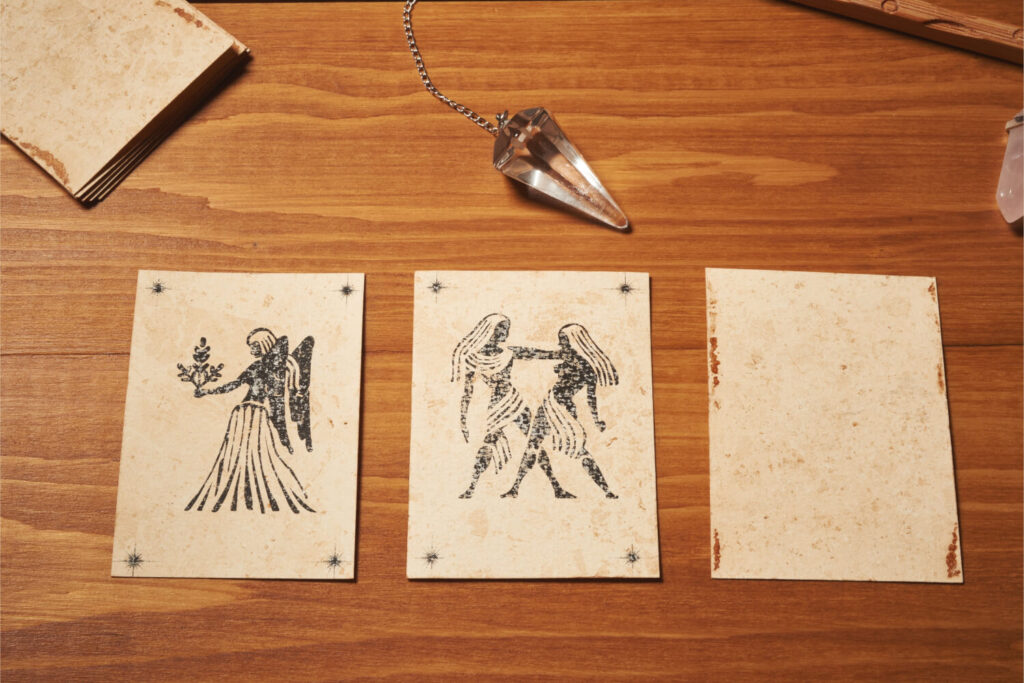
- Zodiac signs
Each oracle deck creates its own unique world of symbols and meanings.
Reading and Usage Techniques
With tarot cards, you can use traditional spreads like the Celtic Cross or Three-Card spread. These layouts have specific positions with set meanings.
Oracle cards work well for:
- Single card pulls
- Simple two or three card readings
- Creating your own spreads
You can mix oracle cards with your tarot readings or use them separately for quick daily guidance.
Choosing the Right Deck for You
Picking your first deck is a personal journey that connects with your inner wisdom and reading style. The right deck will feel natural in your hands and spark excitement when you look at the artwork.
Personal Intuition and Connection
Trust your gut feeling when selecting a deck. Pick up different decks and notice which ones draw you in naturally. If possible, hold the cards and shuffle them to test how they feel in your hands.
Some decks might give you an instant emotional response – either positive or negative. Pay attention to these reactions, as they often guide you to the right choice.
For tarot beginners, the Rider-Waite-Smith deck offers clear symbolism and traditional meanings. If you’re drawn to oracle cards, try simpler decks like Spirit Junkie that focus on positive messages.
Purpose of the Reading
Think about how you plan to use your cards:
- Daily guidance: Choose oracle cards with straightforward messages
- Deep spiritual work: Traditional tarot decks work well
- Self-reflection: Look for decks with detailed artwork that sparks your imagination
- Professional readings: Pick decks that your clients can relate to
Your reading style matters too. If you prefer structured readings, tarot cards provide a clear system. For more flexible interpretations, oracle cards give you freedom to explore.
Artistic Style Preference
The artwork on your cards should resonate with your personal taste. Modern decks come in countless styles:
- Minimalist designs
- Fantasy illustrations
- Nature-based imagery
- Abstract art
- Photography
Look through the entire deck before buying. Make sure the images speak to you and feel comfortable to interpret.
The Light Seer’s Tarot offers a modern take on traditional symbolism. For oracle cards, Moonology features beautiful celestial artwork that many readers connect with easily.