
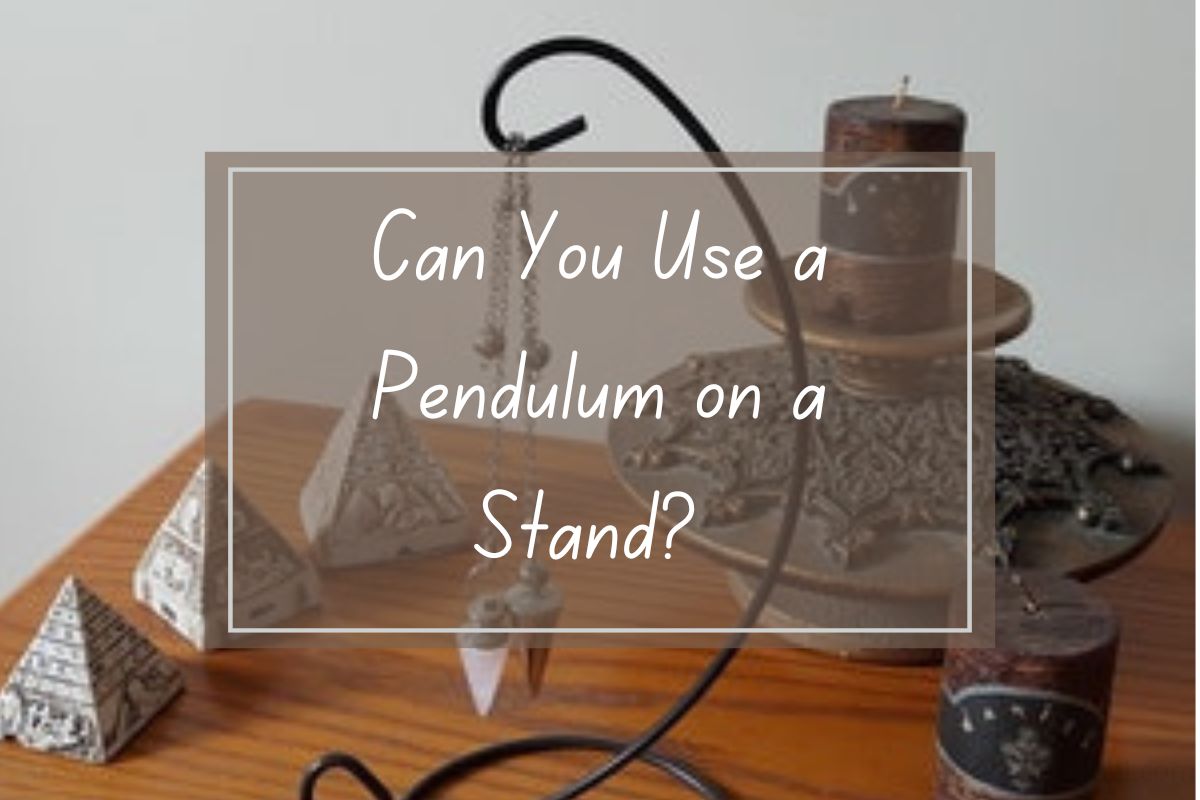
Pendulums can be powerful tools for seeking guidance and answers. Many people hold them in their hands, but did you know you can use a pendulum on a stand too? Using a stand can provide some key benefits.
You can use a pendulum on a stand to get steadier, more consistent movements. A stand keeps the pendulum perfectly still when not in use. This allows for clearer readings without the slight shaking that can happen when holding it by hand. The stand also lets you step back and view the pendulum’s swings from different angles.
A pendulum stand gives you free hands to take notes, shuffle cards, or do other tasks while using it. You can leave it set up on a table or altar between uses. This makes it easy to check in with your pendulum throughout the day. Stands come in many styles to match your decor and personal taste.
Understanding Pendulums
Pendulums are simple yet fascinating tools that have been used for centuries. They come in different types and have a rich history spanning science, timekeeping, and divination.
History and Background
Pendulums have been around for a long time. In the 1600s, Galileo Galilei noticed how church lamps swung back and forth. This led him to study pendulum motion. Later, in 1656, Christiaan Huygens made the first pendulum clock. It was much more accurate than other clocks of that time.
Pendulums became important in science and math. They helped measure gravity and the shape of the Earth. People also started using them for dowsing and fortune-telling.
Today, pendulums are still used in many ways. You can find them in grandfather clocks, seismographs, and even in some alternative healing practices.
Types of Pendulums
There are many kinds of pendulums you can use. Here are some common types:
- Crystal pendulums: Made from quartz, amethyst, or other crystals
- Metal pendulums: Often brass or copper
- Wooden pendulums: Can be plain or carved
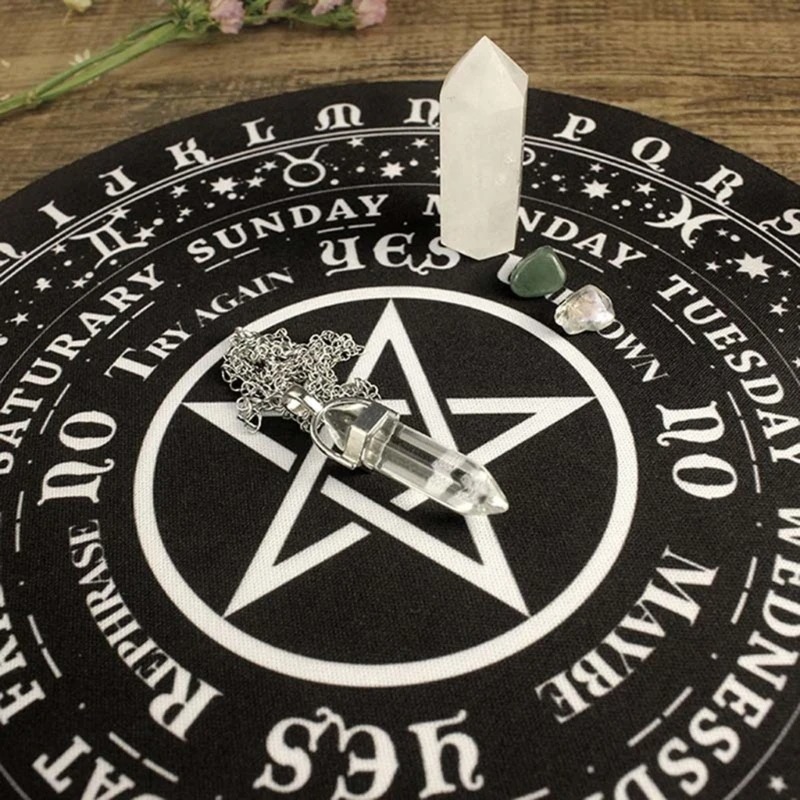
- Pendulum boards: Flat surfaces with markings to guide readings
The shape of pendulums can vary too. Some are pointed, while others are round or cylindrical. The material and shape you choose can depend on what feels right to you or what you plan to use it for.
You can use most pendulums with or without a stand. Stands can be helpful for keeping your hand steady or for specific types of readings.
The Science of Pendulum Motion
Pendulums follow predictable patterns based on physics principles. They showcase key concepts like gravity, energy transfer, and periodic motion.
Physics Concepts
A pendulum is a weight hung from a fixed point that swings back and forth. Gravity pulls the weight down, creating a swinging motion. As it swings, the pendulum transforms between potential and kinetic energy.
The length of the pendulum affects how fast it swings. Longer pendulums swing slower, while shorter ones swing faster. The weight of the bob doesn’t change the swing time for small angles.
Air resistance and friction slow the pendulum down over time. Without these forces, it would keep swinging forever.
Harmonic Motion
Pendulums display harmonic motion – a repeating back-and-forth movement. Each swing takes the same amount of time, called the period.
You can predict a pendulum’s period using this formula:
T = 2π√(L/g)
T is the period, L is length, and g is gravity’s acceleration.
This regular timing makes pendulums useful in clocks. They keep steady beats for timekeeping.
Pendulums also show how energy changes forms. At the highest points, they have the most potential energy. At the bottom, that becomes kinetic energy of motion.
Pendulum Stand Basics
Pendulum stands offer stability and consistency for your divination practice. They come in various designs and materials to suit different needs and preferences.
Design Elements
Pendulum stands typically have a base and an arm or hook to suspend the pendulum. Some stands are simple, with just a vertical rod and a hook. Others are more complex, featuring adjustable arms or multiple attachment points.
You might find stands with built-in storage for your pendulum when not in use. Some designs include a flat surface below the pendulum for placing charts or objects.
The height of the stand matters too. Taller stands allow for longer pendulums and more dramatic swings. Shorter ones are more portable and take up less space.
Material Considerations
Wood is a popular choice for pendulum stands. It’s natural, warm, and often affordable. Many users prefer its energy-conducting properties.
Metal stands, like those made of brass or copper, offer durability and a sleek look. They can be heavier, providing extra stability during use.
Crystal or stone stands are less common but prized for their beauty and metaphysical properties. They can enhance the energy of your pendulum work.
Plastic stands are lightweight and budget-friendly. They’re great for beginners or travel use.
Choose a material that feels right to you and matches your pendulum’s energy.
Setting Up Your Pendulum
Getting your pendulum ready involves two key steps. First, you’ll put the parts together. Then, you’ll make sure it’s working right.
Assembly Instructions
To set up your pendulum, you’ll need a stand, string, and a weight. Start by attaching the string to the stand. Make sure it’s secure and won’t slip. Tie the other end of the string to your weight.
Pick a spot where your pendulum can swing freely. A table edge works well. Clamp the stand to keep it steady. If you don’t have a clamp, hold it firmly with your hand.
Adjust the string length so the weight hangs just above the surface below. This gives you room to swing without hitting anything.
Calibration Techniques
Before using your pendulum, you need to “warm it up” and set its responses. Hold the string and let the weight hang still.
Ask the pendulum to show you “yes”. Watch how it moves. It might swing back and forth or in a circle. Next, ask for “no” and note the different movement.
Test it with simple questions you know the answers to. This helps you get familiar with its signals. Remember, the pendulum taps into your own energy and thoughts.
Practice makes perfect. The more you use your pendulum, the better you’ll understand its unique way of communicating with you.
Using a Pendulum on a Stand
A pendulum stand can make your divination practice easier and more consistent. It provides a stable base for smoother swinging motions. You’ll learn proper setup and usage techniques to get accurate results.
Operating Procedures
Start by placing your pendulum stand on a flat, stable surface. Make sure it’s clean and free of debris. Hang your pendulum from the stand’s hook or arm. Let it dangle freely without touching anything.
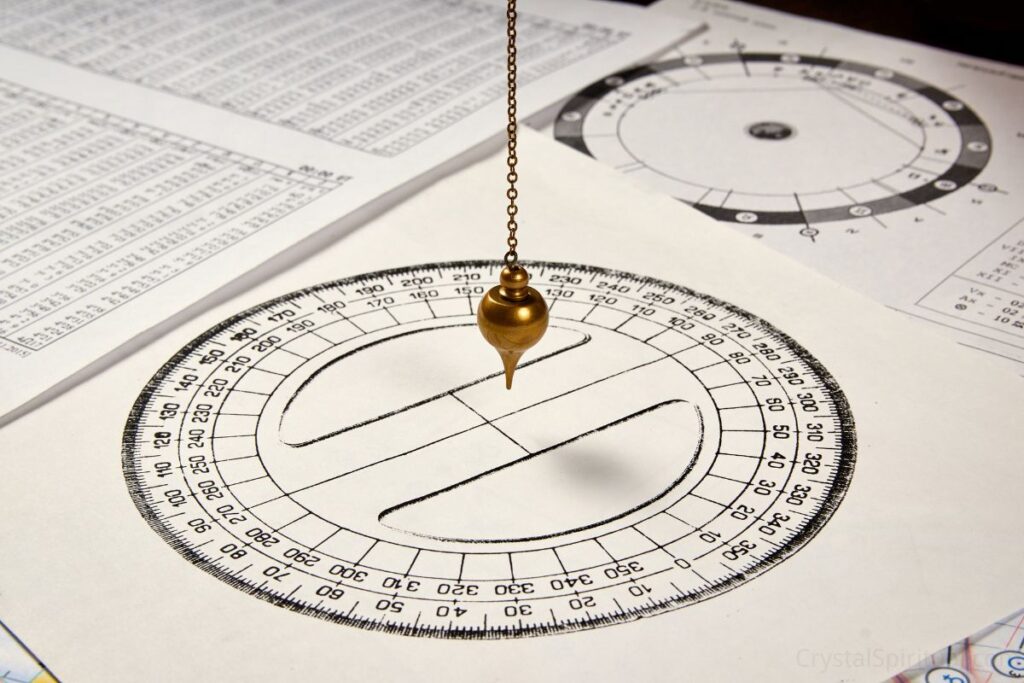
Center the pendulum over a pendulum chart if you’re using one. This helps interpret the swings. Hold your hand near the pendulum without touching it. Focus on your question and state it clearly in your mind.
Wait for the pendulum to start moving on its own. Watch its motions carefully. Circular swings often mean “yes” while back-and-forth swings mean “no”. But check your pendulum’s unique signals first.
Ask simple yes/no questions to start. As you get comfortable, try more complex queries. Remember to reset the pendulum between questions by stilling its motion.
Safety Tips
Always use your pendulum stand on a sturdy surface. Avoid wobbly tables or uneven ground. This prevents accidental falls that could damage your tools.
Keep your pendulum and stand clean. Wipe them down regularly with a soft cloth. This maintains their energy and prevents dirt buildup.
Store your items safely when not in use. A cloth bag or box protects them from scratches. It also keeps your tools’ energy clear between sessions.
Be mindful of your surroundings when using a pendulum stand. Choose a quiet spot with minimal distractions. This helps you focus and get clearer answers.
Don’t let others handle your pendulum without permission. Your tool builds a connection with you over time. Letting others use it can disrupt this bond.
Applications of Pendulums
Pendulums have many practical uses in the real world. They play key roles in science and timekeeping. Let’s look at how pendulums are applied in these areas.
Scientific Research
Pendulums help scientists study gravity and motion. You can use them to measure the strength of gravity in different places. This is handy for mapping the Earth’s shape.
Pendulums also show how the Earth rotates. The Foucault pendulum is a famous example. As it swings, you can see the Earth turning beneath it.
In physics class, you might use pendulums to learn about energy. They show how kinetic and potential energy change as the pendulum swings.
Timekeeping
Pendulums were a big deal for telling time. The first pendulum clock was made in the 1600s. It was the best way to keep time for almost 300 years.
You’ve probably seen grandfather clocks. They use pendulums to keep ticking. The pendulum swings back and forth at a steady pace. This keeps the clock hands moving right.
Pendulum clocks must stay still to work well. Even small movements can throw them off. That’s why they’re often big and heavy.
Today, we have more accurate ways to tell time. But pendulum clocks are still loved for their classic look and sound.
Maintenance and Care
Taking good care of your pendulum stand keeps it working well. Regular cleaning and careful use help it last longer.
Cleaning Guidelines
Clean your pendulum stand often to keep it in top shape. Use a soft cloth to wipe off dust. For tougher dirt, try a damp cloth with mild soap. Make sure to dry the stand fully after cleaning. Don’t use harsh chemicals that might damage the finish.
For wooden stands, use a wood cleaner to keep them looking nice. Metal stands can be polished with a special metal cleaner. Glass stands need extra care – use a glass cleaner and soft cloth.
Clean the pendulum too. Some crystals can be cleaned with water, while others need special care. Check what’s best for your type of pendulum.
Wear and Tear Management
Check your stand for signs of wear. Look for loose parts or cracks. Tighten any loose screws right away. If you see chips or cracks, fix them soon to stop more damage.
Store your stand in a safe place when not in use. Keep it away from direct sunlight and heat. These can cause fading or warping over time.
Handle your stand with care. Don’t drop it or bump it into things. When moving it, hold it gently but firmly. If your stand has moving parts, oil them now and then to keep them smooth.
Replace worn out parts if needed. This can make your stand last much longer.