
Pendulums have been used for centuries in various practices, from timekeeping to divination. Learning how to hold a pendulum correctly can help you get the most out of this fascinating tool. Whether you’re new to pendulums or looking to improve your technique, mastering the proper grip is key.
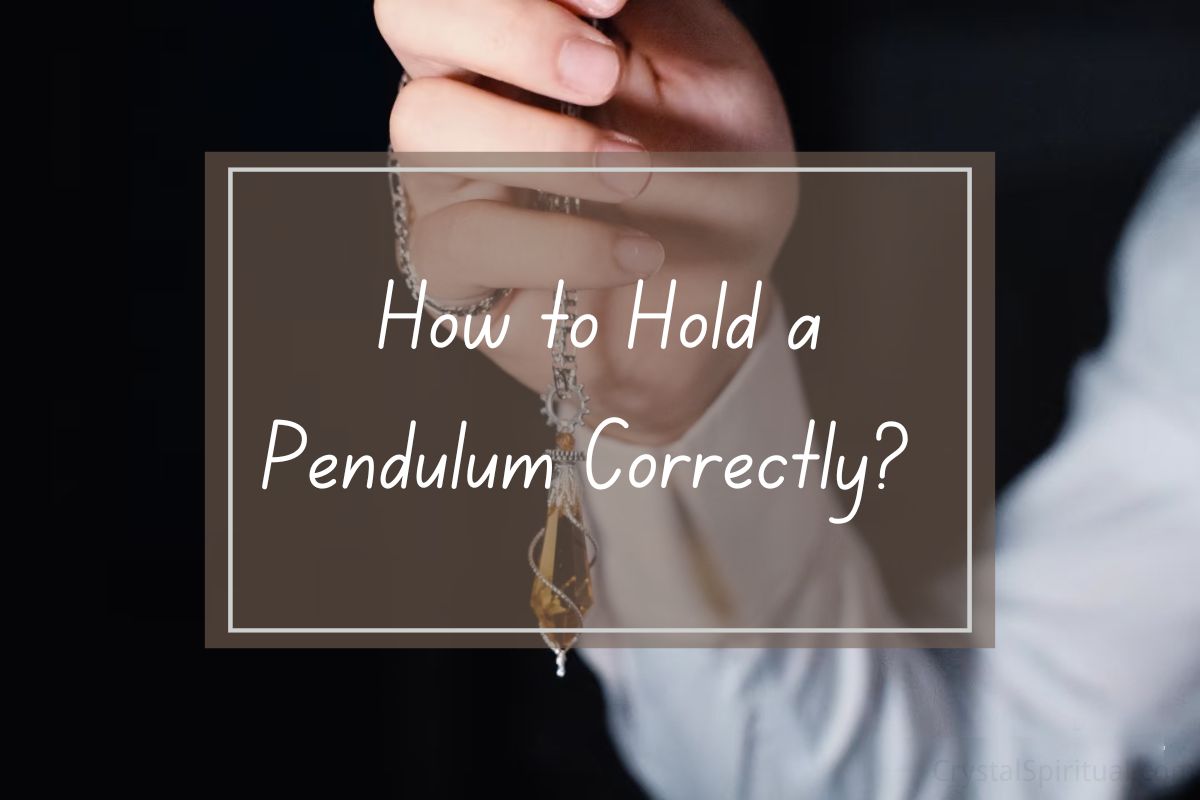
The right way to hold a pendulum is by grasping the chain or string about 2-3 inches above the weight with your thumb and forefinger. This grip allows for smooth, natural movement and helps you stay neutral as you use the pendulum. Your hand should be steady but relaxed, with your elbow resting on a table or your other hand for support.
Getting comfortable with your pendulum takes practice. Start by finding a quiet space where you can focus. Take a few deep breaths to center yourself before you begin. Remember, the goal is to let the pendulum move freely without conscious interference from you.
Key Takeaways
- Hold the pendulum 2-3 inches above the weight for best results
- Keep your grip relaxed and use a steady surface for support
- Practice in a quiet space to improve your technique
Understanding Pendulums
Pendulums are simple yet fascinating devices that have played important roles throughout history. They come in different forms and have many uses.
History and Uses
Pendulums have been around for centuries. In ancient times, people used them to keep track of time. The famous scientist Galileo studied how pendulums move in the 1600s. His work helped create more accurate clocks.
Pendulums became important tools in science and engineering. They helped measure gravity and the Earth’s rotation. Builders used them to make sure walls were straight.
Today, pendulums still have many uses. You can find them in grandfather clocks and in some modern timepieces. Some people use them for dowsing or in spiritual practices.

Types of Pendulums
There are several types of pendulums you might come across:
- Simple pendulum: A weight on a string or rod
- Compound pendulum: A rigid body that swings around a fixed point
- Torsion pendulum: Twists back and forth instead of swinging
Common pendulum materials:
- Metal (brass, copper)
- Crystal
- Wood
Pendulums can be small enough to fit in your hand or large like Foucault’s pendulum in museums. The size and weight affect how they move and what they’re used for.
Some pendulums have special designs for specific tasks. For example, pendulum seismometers help detect earthquakes. Others are made just for fun or decoration.
Preparing to Use Your Pendulum
Getting ready to use your pendulum involves picking the right one and making sure it’s clean. These steps help you connect better with your pendulum.
Selecting Your Pendulum
Choose a pendulum that feels right to you. You can pick from materials like crystal, metal, or wood. The shape and weight matter too. A heavier pendulum might swing more slowly, while a lighter one moves faster.
Try holding different pendulums to see which one you like best. Some people feel drawn to certain colors or stones. Trust your instincts when choosing.
You can buy pendulums at crystal shops or make your own. To make one, tie a small weight to a string or chain. The string should be about 6-8 inches long.
Cleansing Your Pendulum
Clean your pendulum before you use it. This helps remove any energy it might have picked up from others. You can use different methods to cleanse it.
One way is to hold it under running water for a few seconds. Another is to leave it in moonlight overnight. You can also use sage smoke to cleanse it.
Some people like to bury their pendulum in salt for a few hours. Others prefer to leave it in sunlight. Pick a method that feels right to you.
After cleansing, hold your pendulum and think good thoughts. This helps you connect with it. You’re now ready to start using your pendulum!
Holding the Pendulum Properly
Holding your pendulum correctly is key to getting accurate readings. The right grip and posture help you connect with the pendulum’s energy.
Grip Techniques
Hold your pendulum chain between your thumb and index finger. Pinch it about 2-3 inches from the top of the chain. Keep your grip loose and relaxed. This allows the pendulum to swing freely.
You can also try the “scissor grip.” Place the chain between your middle and index fingers. Let the pendulum dangle below. This method works well for some people.
Experiment with both grips to see which feels most natural to you. The best grip is one that feels comfortable and lets the pendulum move easily.
Posture and Arm Position
Sit up straight with both feet flat on the floor. Rest your elbow on a table or your knee. This gives you a stable base for your pendulum work.
Hold your arm at a 90-degree angle. Keep your wrist straight and relaxed. Let your hand hover about 6 inches above a flat surface.
Try to keep still. Small movements can affect the pendulum’s swing. Take a few deep breaths to center yourself before you begin. This helps you focus and connect with the pendulum’s energy.
Initiating Movement
Getting your pendulum moving is key to receiving clear responses. The right technique helps you connect with the pendulum’s energy.
Starting the Pendulum Swing
Hold the pendulum chain between your thumb and index finger. Let it hang straight down. Take a deep breath to center yourself. Ask the pendulum to show you a “yes” response. Wait patiently for movement to begin.
If nothing happens after a minute, give a tiny push to get it going. The motion should be very slight – just enough to break the stillness. Let go and allow the pendulum to swing freely.
Watch closely as the pendulum finds its rhythm. It may swing back and forth, side to side, or in circles. Each pendulum has its own way of moving.
Understanding Pendulum Responses
Pay attention to how your pendulum moves for “yes” and “no” answers. Most pendulums have distinct motions for each response. For example, back and forth might mean “yes” while side to side means “no”.
Try asking simple yes/no questions to learn your pendulum’s language. Start with things you already know the answer to. This helps you recognize the patterns.
Circular motions often mean “maybe” or “need more information”. If you get this response, try rephrasing your question. Be patient as you and your pendulum learn to work together.

Practices for Accuracy
Using a pendulum correctly helps you get better results. These tips will improve your accuracy and make your readings more reliable.
Asking Clear Questions
Frame your questions carefully before using the pendulum. Use simple yes or no questions. Avoid complex or vague wording. For example, ask “Will it rain tomorrow?” instead of “What will the weather be like?”
Write your questions down if needed. This keeps your mind focused. Take a deep breath and clear your thoughts before each question. Repeat the question in your mind as you hold the pendulum.
Wait for a clear answer before moving on. If you’re unsure, ask again or rephrase the question. Patience is key for accurate results.
Minimizing External Influences
Find a quiet space free from distractions. Turn off your phone and any noisy devices nearby. Sit comfortably in a chair with your feet flat on the ground.
Hold the pendulum with a relaxed grip. Rest your elbow on a table for stability. Keep your hand steady and avoid moving it.
Don’t watch the clock or rush your session. Give the pendulum time to respond naturally. Avoid swinging it yourself or trying to force a certain answer.
Stay neutral about the outcome. Your own hopes or fears can affect the results. Try to clear your mind and accept whatever answer comes.
Caring for the Pendulum
Taking good care of your pendulum keeps it in top shape for accurate readings. A well-maintained pendulum will serve you better and last longer.
Regular Cleaning and Energizing
Clean your pendulum often to remove dirt and negative energy. Use a soft cloth to wipe it gently. For deeper cleaning, rinse it under cool water. Dry it well with a clean towel.
Energize your pendulum in sunlight or moonlight. Leave it outside for a few hours or overnight. You can also place it on a crystal cluster to recharge.
Some people like to smudge their pendulum with sage smoke. This clears any lingering energies. Hold the pendulum in the smoke for a few seconds.
Storing Your Pendulum
Keep your pendulum safe when you’re not using it. A soft pouch or box works well. Avoid leaving it out in the open where it might get damaged.
Store it away from electronics and strong magnets. These can interfere with its energy.
Some people keep their pendulum with a special crystal. This helps maintain its positive energy.
When traveling, wrap your pendulum in a soft cloth. Then place it in a sturdy container. This protects it from bumps and scratches.
Remember to handle your pendulum with care. Treat it as a special tool, and it will serve you well for years to come.